10 Things to Do with Your Wedding Dress After the Big Day
Photo: PINTEREST
Once the morning-after brunch concludes and the honeymoon luggage is put away, an evocative silhouette remains in your private suite. Hanging from the wardrobe rail is a monumental composition of silk, tulle, or hand-corded lace that served its architectural purpose beautifully for roughly ten hours.
Confronting a couture gown post-celebration requires an intentional shift in perspective. Leaving a masterpiece of delicate fibers zipped inside a commercial plastic dry-cleaning bag at the back of a closet is an administrative oversight; it invites premature fiber yellowing and allows structural creases to set permanently. Today, the approach to the post-wedding wardrobe is undergoing a sophisticated evolution. Modern brides are rejecting passive storage in favor of intelligent, sustainable curation.
Whether your aesthetic dictates locking its pristine condition in a textile vault, repurposing the raw materials into contemporary eveningwear, or liberating your archive entirely, here are 10 definitive paths for preserving or transforming your bridal gown.
1. Archival Preservation and Heirlooming
If you view your gown as a historic artifact meant for your personal archive or future generations, standard dry cleaning is out of the question. True museum-grade preservation is an intensive stabilization process. It meticulously treats latent, invisible chemical spills – such as champagne, white wine, or perfume – that dry completely clear on the wedding night but oxidize into deep amber stains over a five-to-ten-year horizon. Following deep stabilization, the gown is layered with unbuffered, acid-free tissue inside an airtight, museum-grade archival chest designed to block out degradation from UV light and relative humidity.
Photo: PINTEREST
2. Navigating the Archival Investment
Before committing your gown to long-term storage, integrate the actual cost of textile conservation into your post-wedding financial planning. A reputable, high-end preservation house generally commands between $250 and $800+. This price scales strictly based on fiber fragility (such as heavy silk duchesse satin versus delicate French Chantilly lace), the weight of the train, and the presence of intricate, hand-applied beadwork. Foregoing this specialized step to save on immediate costs frequently results in irreversible fabric breakdown down the line.
Photo: PINTEREST
3. The Imperative of Immediate Cleaning
If you are still undecided on whether to preserve, resell, or alter your gown, your default action should always be immediate, meticulous cleaning. This should ideally occur within two weeks of your walk down the aisle. Hemline oils from the dancefloor, outdoor grass stains, and subtle makeup transfers along the inner neckline accumulate quickly. The longer these foreign particles dwell within the organic fibers, the more difficult they become to lift without compromising the integrity of the weave. Seek out a boutique textile restoration expert who explicitly treats bridal couture.
Photo: PINTEREST
4. Master the Art of Home Wardrobe Storage
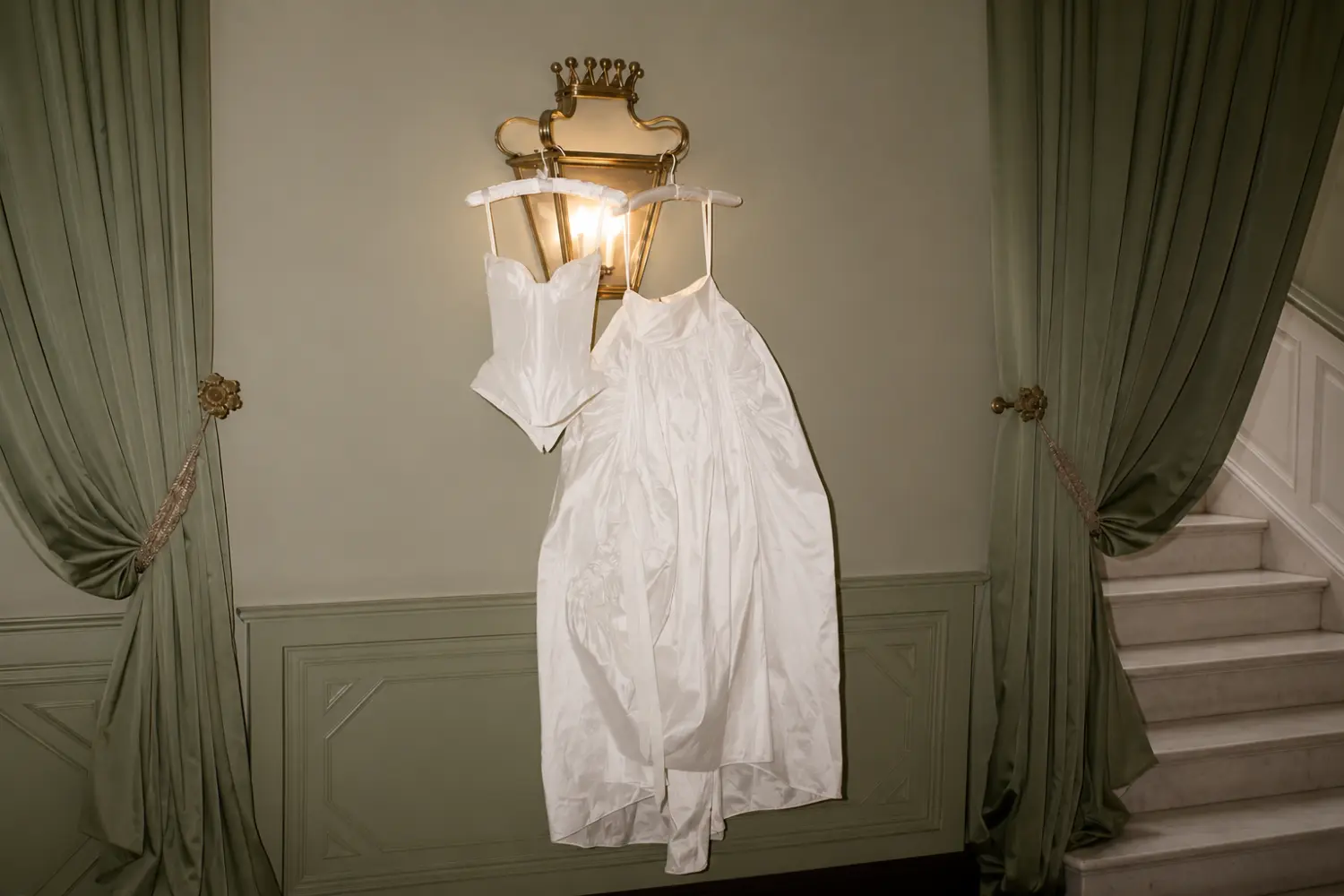
If you opt to forgo sealed archival boxes and prefer to keep the garment loose in your dressing room, avoid standard plastic or vinyl garment bags at all costs. Synthetic plastics trap micro-moisture and emit volatile organic compounds (VOCs) that drastically accelerate the yellowing of white textiles. Instead, protect the gown by enveloping it in a breathable, unbleached, 100% cotton garment sleeve. Suspend the weight of the gown entirely by its interior grosgrain security straps – never the delicate illusion tulle or silk shoulder seams – and ensure it resides in a dark, climate-stable wardrobe. Attics and basements are notorious for structural humidity swings that ruin fine couture.
Photo: PINTEREST
5. Curate a Placement on the Luxury Resale Market
For the bride who prefers the fluidity of a circular wardrobe over sentimental storage, passing the gown along to the secondary market has become an incredibly sharp, sophisticated move. Elite digital marketplaces like Stillwhite, BravoBride, and PreOwnedWeddingDresses specialize in connecting international sellers directly with discerning buyers. Current-season silhouettes and easily identifiable luxury houses hold their value remarkably well, allowing you to recoup a significant portion of your wardrobe capital while granting another global bride access to exceptional, high-end design.
Photo: PINTEREST
6. Align with a Philanthropic Textorial Placement
If your philosophy favors philanthropy over capital recoupment, an intentional gown donation ensures your piece continues a profound narrative. Organizations like Brides Across America gift pristine wedding attire to military brides and first responders, while Adorned in Grace direct the proceeds of their curated sales toward human trafficking prevention initiatives. To align with most luxury charity standards, the gown must be professionally cleaned, immaculate, and typically under five years old to ensure the silhouette remains contemporary and relevant.
Photo: PINTEREST
7. Deconstruct, Dye, and Repurpose into Haute Couture
One of the most intelligent and rewarding options is collaborating with a master tailor to edit your gown into a piece of contemporary eveningwear. A floor-length silk column can be cropped into a sleek midi cocktail dress; alternatively, a heavily embroidered lace bodice can be separated from its tulle skirt to be styled alongside sharp, tailored trousers for future anniversaries. Dyeing the silk a sophisticated shade of midnight navy, rich forest green, or deep charcoal completely strips away the bridal connotation, securing the textile a permanent home in your formal wardrobe rotation.
Photo: PINTEREST
8. Evolve the Fabric into a Multigenerational Legacy
If you appreciate the sentiment of keeping the textile close to your family history but wish to minimize its physical footprint, downcycling the material into a smaller ceremonial piece is a beautiful alternative. Brides frequently repurpose the pure silk panels or lace overlays from their skirts to construct exquisite baptismal gowns, blessing garments, or the delicate inner lining for heirloom christening baskets. This practice carries the emotional lineage of your wedding day forward into future milestones without occupying an entire closet wing.
Photo: PINTEREST
9. Commission an Editorial Portrait Session
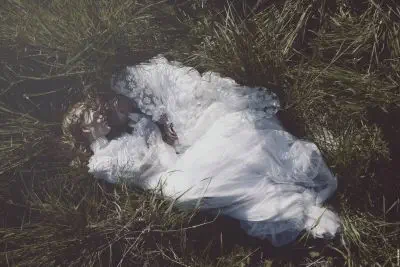
The concept of "trashing the dress" has evolved far beyond the unrefined, paint-and-mud clichés of the past decade. Modern brides treat this as an opportunity for high-fashion, cinematic photography that simply isn't feasible within the strict constraints of a wedding-day timeline. Booking a separate editorial session allows you to capture the gown’s movement against dramatic, minimalist landscapes – think a remote desert expanse, a raw craggy coastline, or a sharp, industrial concrete gallery.
Photo: PINTEREST
10. Frame a Fragment of the Textile Artistry
If you ultimately decide to part with the physical dress through sale or donation but still crave a physical token of its craftsmanship, have an artisan carefully remove a small, signature swatch of the lace or hand-beading. You can custom-frame this fragment within an archival shadowbox alongside your minimalist invitation suite or a favorite black-and-white documentary photograph from the evening. It serves as a striking, gallery-style piece of modern art on your wall while completely freeing up your physical square footage.
Photo: PINTEREST
Post-Wedding Wardrobe Timelines
Managing a couture bridal archive requires precise timing:
The Archivist Path: Secure a specialized textile conservator within 2 to 4 weeks post-wedding to treat organic stains before they bond permanently with the yarn.
The Secondary Market Path: Clean the garment immediately and list it digitally within 6 months to capitalize on current runway relevance and maximizing resale value.
The Philanthropic Path: Vet your chosen organization and ship the immaculate gown within 1 year to keep the silhouette fresh for incoming brides.
The Atelier Transformation: Take your time researching an avant-garde couturier who works extensively with high-end silk manipulation or corsetry before initiating the first cut.
Photo: PINTEREST
Where can I find more inspiration regarding sustainable luxury fashion shifts and authentic wedding design?
For a highly curated look into modern bridal fashion movements, sustainable industry shifts, and international real wedding features, visit the BrideLifestyle.com Style & FashionSection.
Can a standard premium dry cleaner handle a couture silk gown?
Standard commercial dry cleaning can inadvertently strip the natural luster from organic silk, warp fine illusion netting, and dissolve the adhesives used in vintage beadwork. Standard dry cleaning also fails to address sugar-based stains, which dry entirely clear but caramelize into dark brown spots years down the line. We recommend sourcing certified textile restoration experts through our curated network in the BrideLifestyle.com Planning directory.
What is the typical market depreciation for a pre-loved luxury gown?
On average, a pre-owned wedding gown in immaculate condition commands roughly 40% to 60% of its original retail value on the secondary market. Gowns from highly coveted global fashion houses – such as Vera Wang, Oscar de la Renta, or Monique Lhuillier – retain their capital value exceptionally well, particularly if they are introduced to the market shortly after the collection's seasonal debut. For further financial curation and wardrobe insights, explore the BrideLifestyle.com Ideas & Tips archive.
This website uses cookies to improve the user experience and optimize its performance. By continuing to use this website, you agree to the use of cookies on this website.
Read more

 share
share



.webp)
.webp)
.webp)
.webp)
.webp)
.webp)
.webp)
.webp)
.webp)
.webp)
.webp)