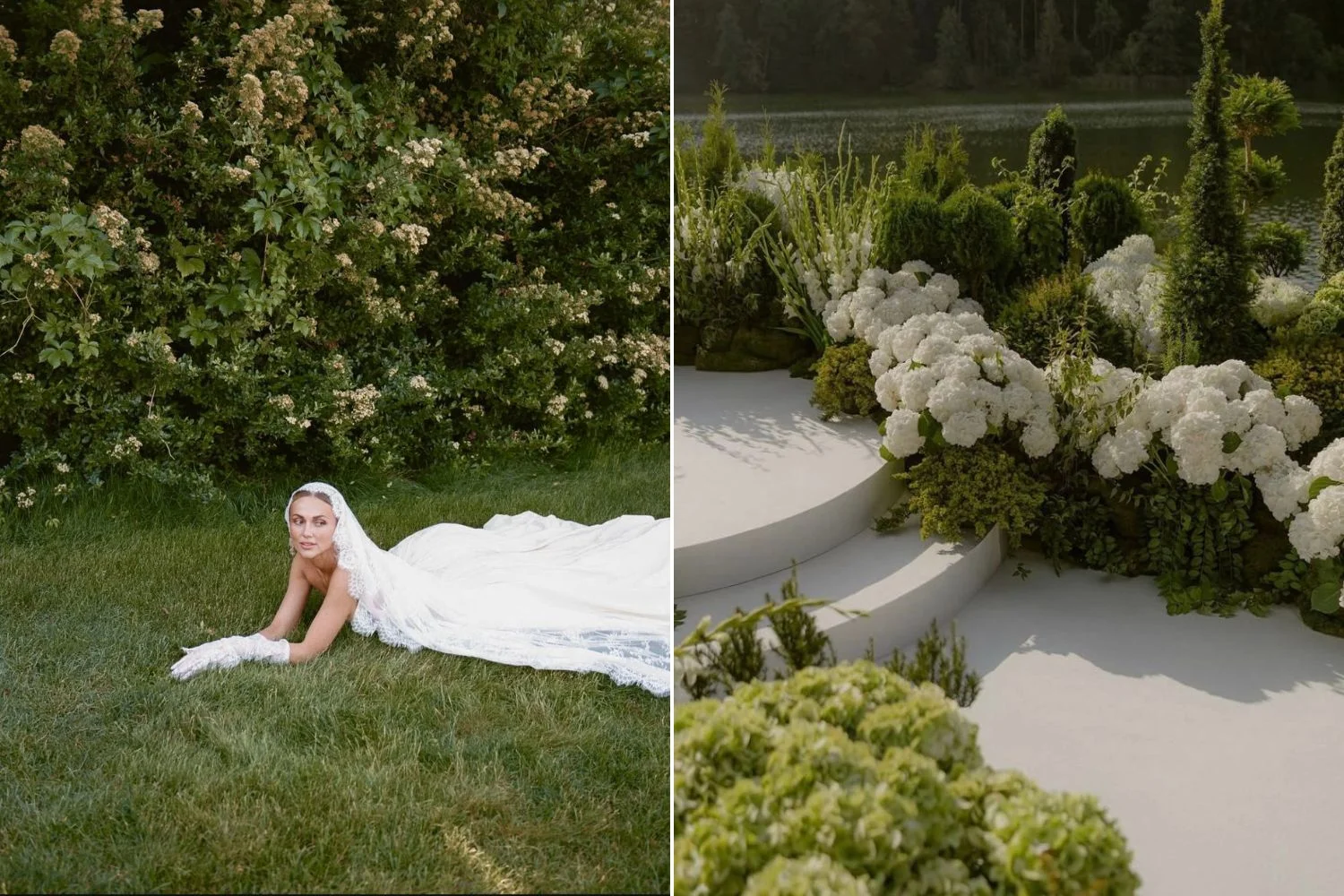
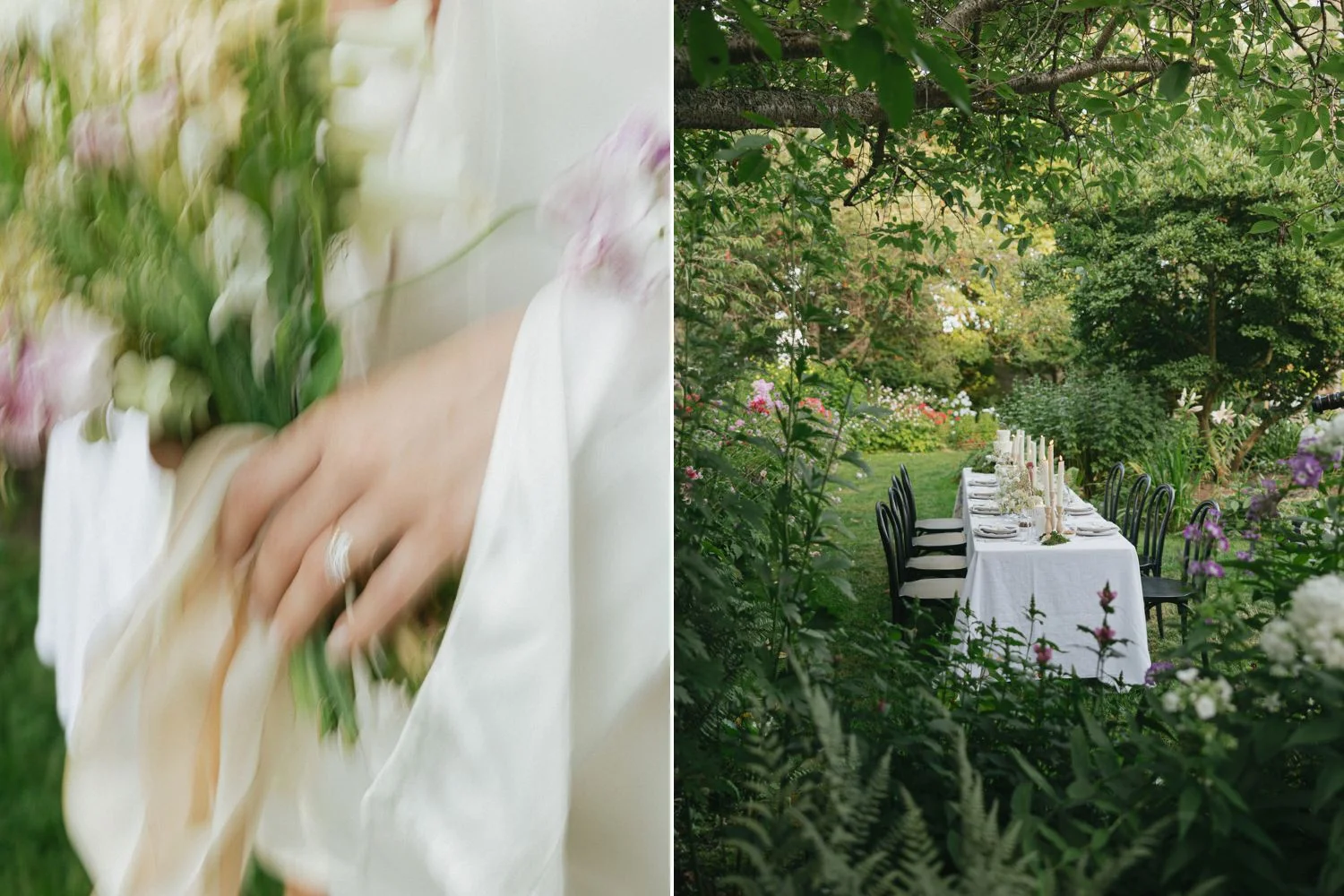
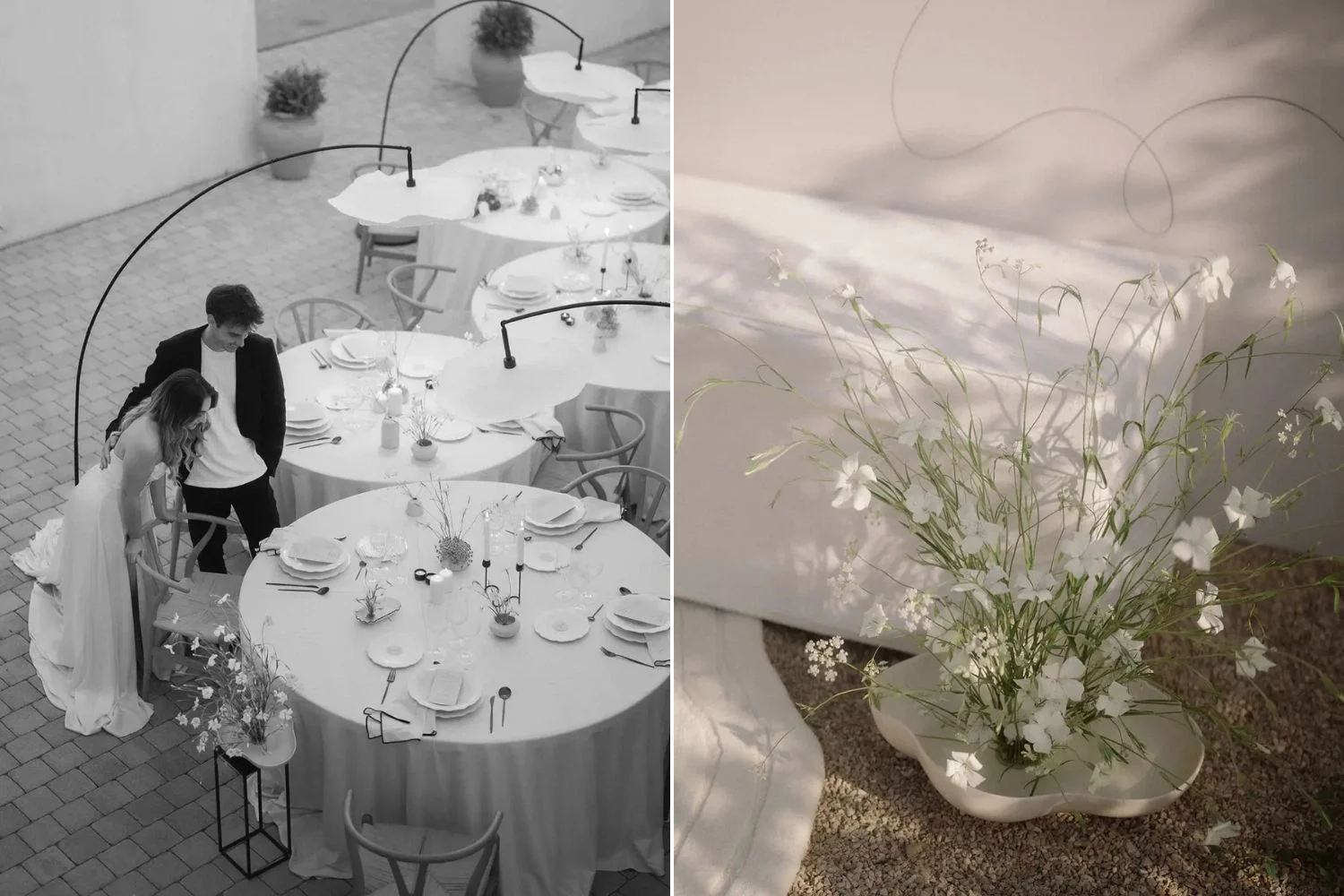
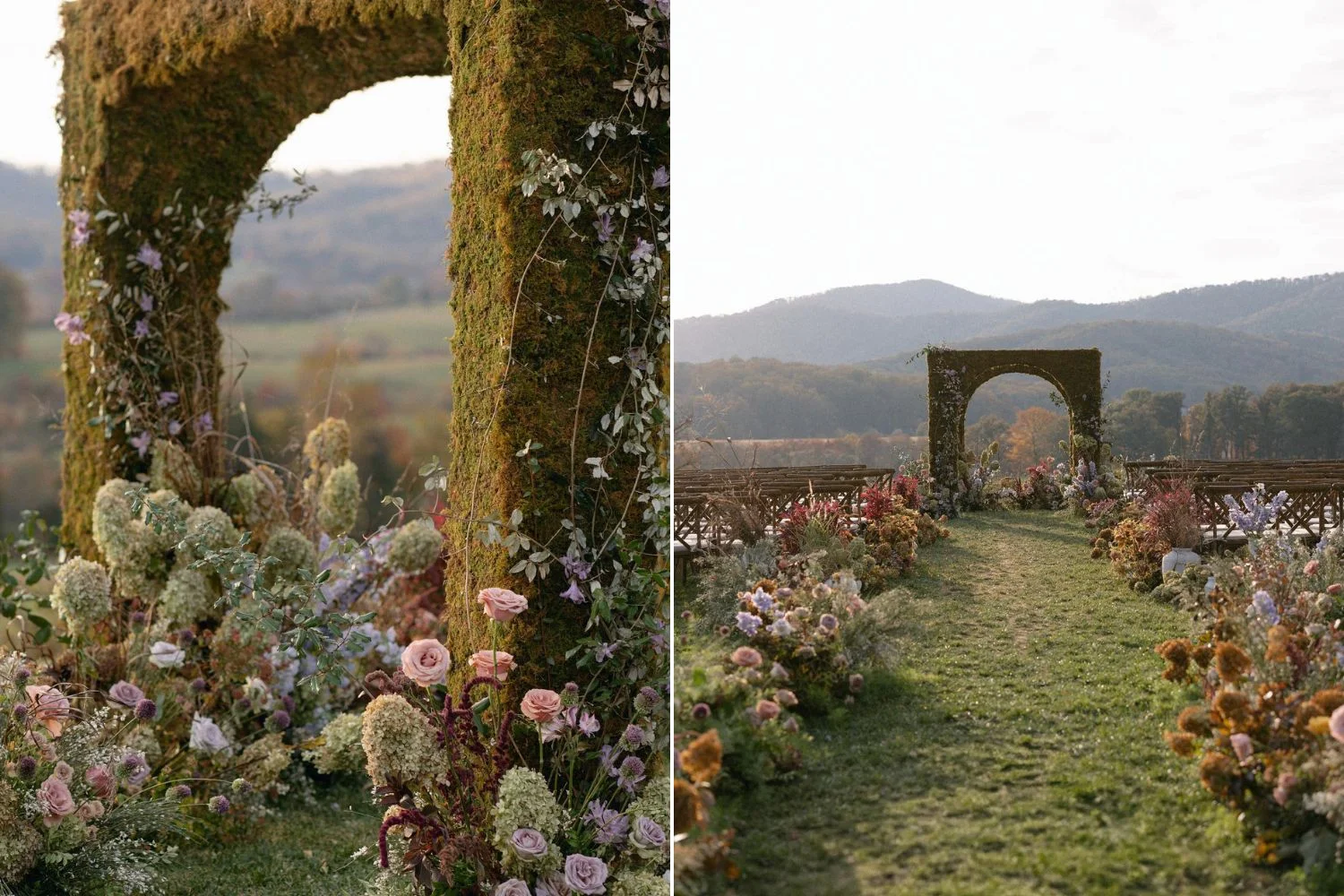
Some wedding trends feel like trends. Others feel more like a quiet correction—like the industry exhaling after years of over-styling everything within an inch of its life. The meadowcore wedding movement sits firmly in that second category. It’s soft, slightly untamed, and intentionally imperfect.
At the center of it all is the living flower aisle, a concept that replaces rigid décor with something that looks like it simply… grew there. Brides are increasingly drawn to this fairytale-like atmosphere, where florals feel rooted in the environment rather than layered on top of it. The result is immersive, romantic, and a little bit wild—in the best way. It’s not about perfection anymore. It’s about presence, texture, and letting nature lead, with a bit of behind-the-scenes control, of course.
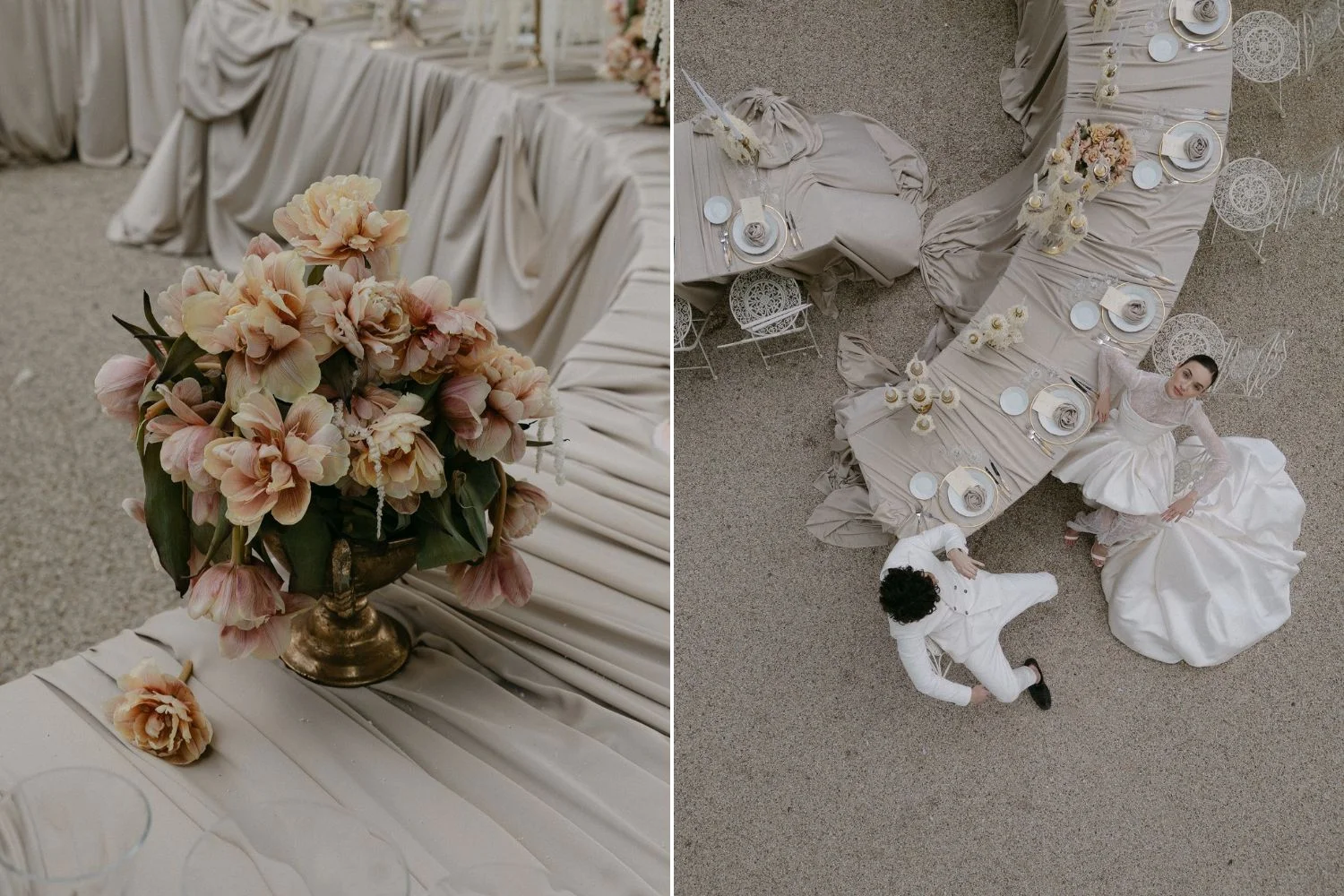
Photos: NATHAN GEORGE PHOTO
What Is a Meadowcore Wedding Aesthetic?
Defining the Meadowcore Trend
A meadowcore wedding borrows its visual language directly from nature, specifically, from meadows that haven’t been overly touched or curated. Scattered wildflowers, uneven growth, soft color shifts, and a general sense that things are unfolding organically rather than being tightly designed.
What makes this aesthetic stand out is its resistance to symmetry. Traditional floral design often relies on balance and repetition. Meadowcore does the opposite. It leans into irregularity: one cluster dense and lush, another sparse and airy. Nothing matches exactly, and that’s the point.
This doesn’t mean it’s random, though. Good organic floral design is incredibly intentional. Florists study how flowers grow in the wild—how certain stems lean, how heights vary, how colors naturally group—and then recreate that effect. Ironically, making something look effortless takes a lot of effort.
Why Couples Are Embracing Nature-Driven Weddings
There’s a growing desire for weddings to feel less staged and more personal. A nature driven wedding taps into that shift. It creates an atmosphere that feels grounded, almost nostalgic, like something you’ve experienced before even if you haven’t.
Part of the appeal is emotional. Walking down an aisle that looks like a blooming meadow is different from walking between rows of identical arrangements. It feels immersive. You’re in it, not just surrounded by it.
There’s also a practical and ethical layer. Many couples are more aware of sustainability now, and the idea of using sustainable wedding flowers—local, seasonal, sometimes even replanted after the event—adds meaning to the aesthetic. It’s beauty with a bit more intention behind it, which, honestly, resonates more than perfection ever did.
The Living Flower Aisle Trend
What Is a Living Flower Aisle?
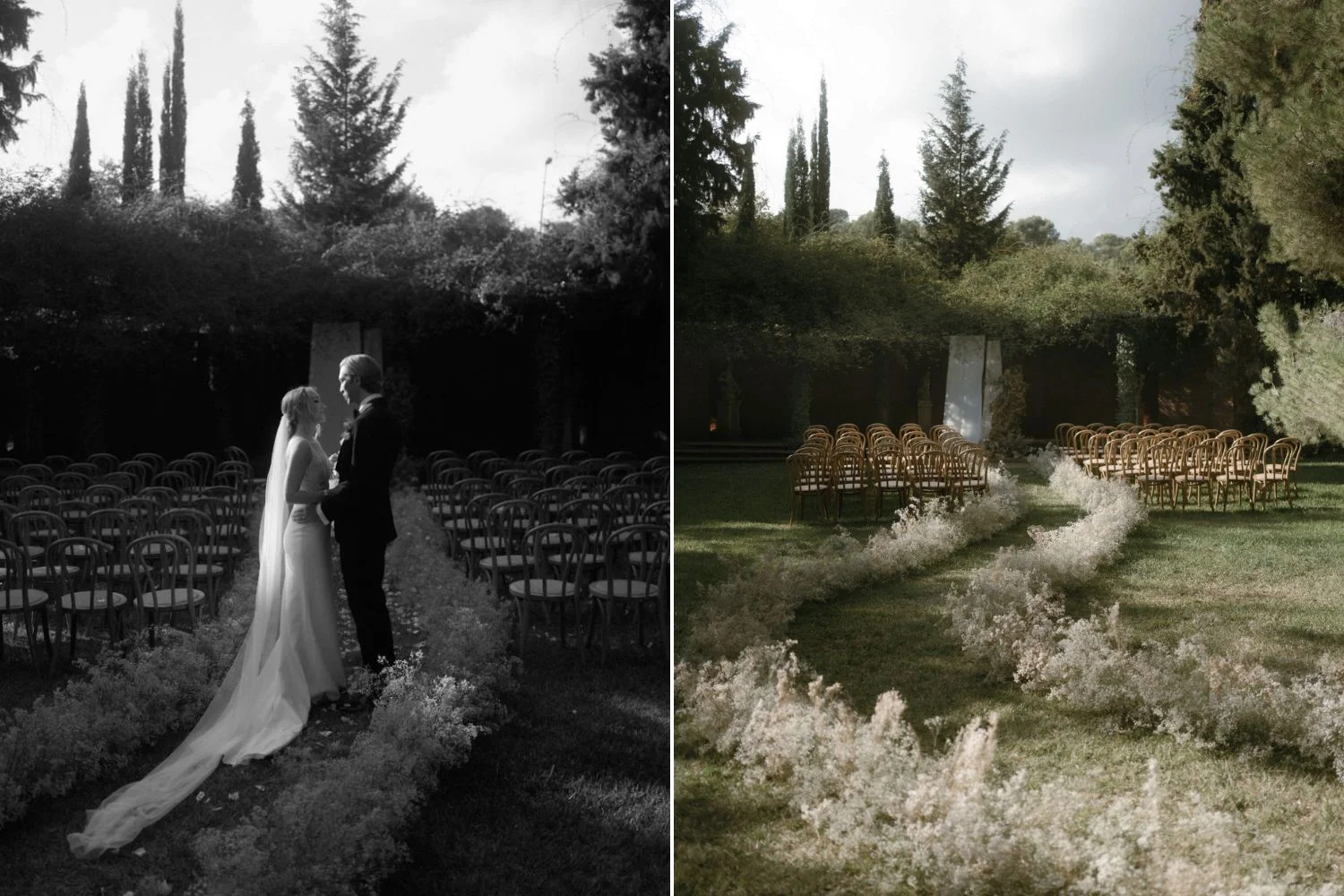
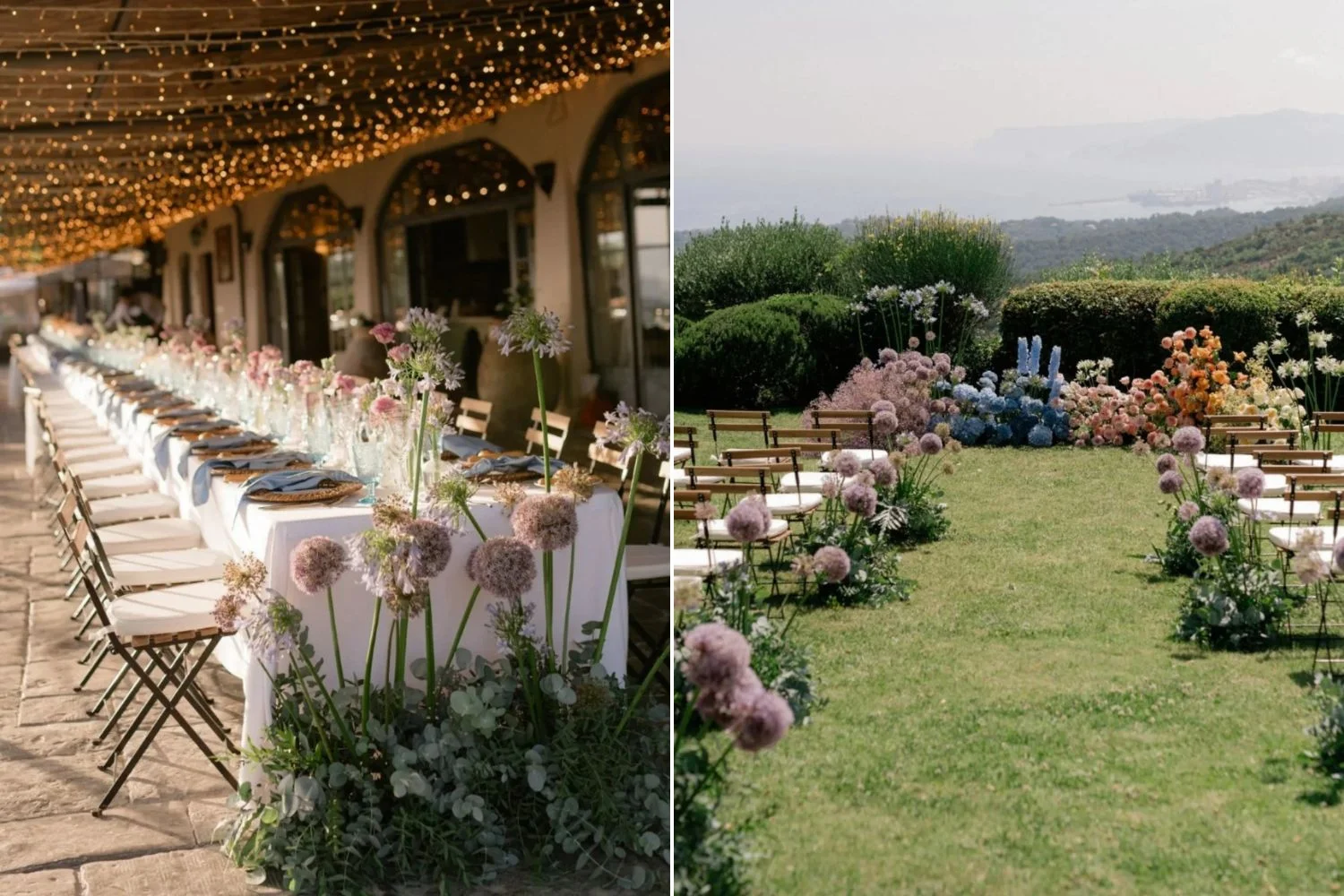
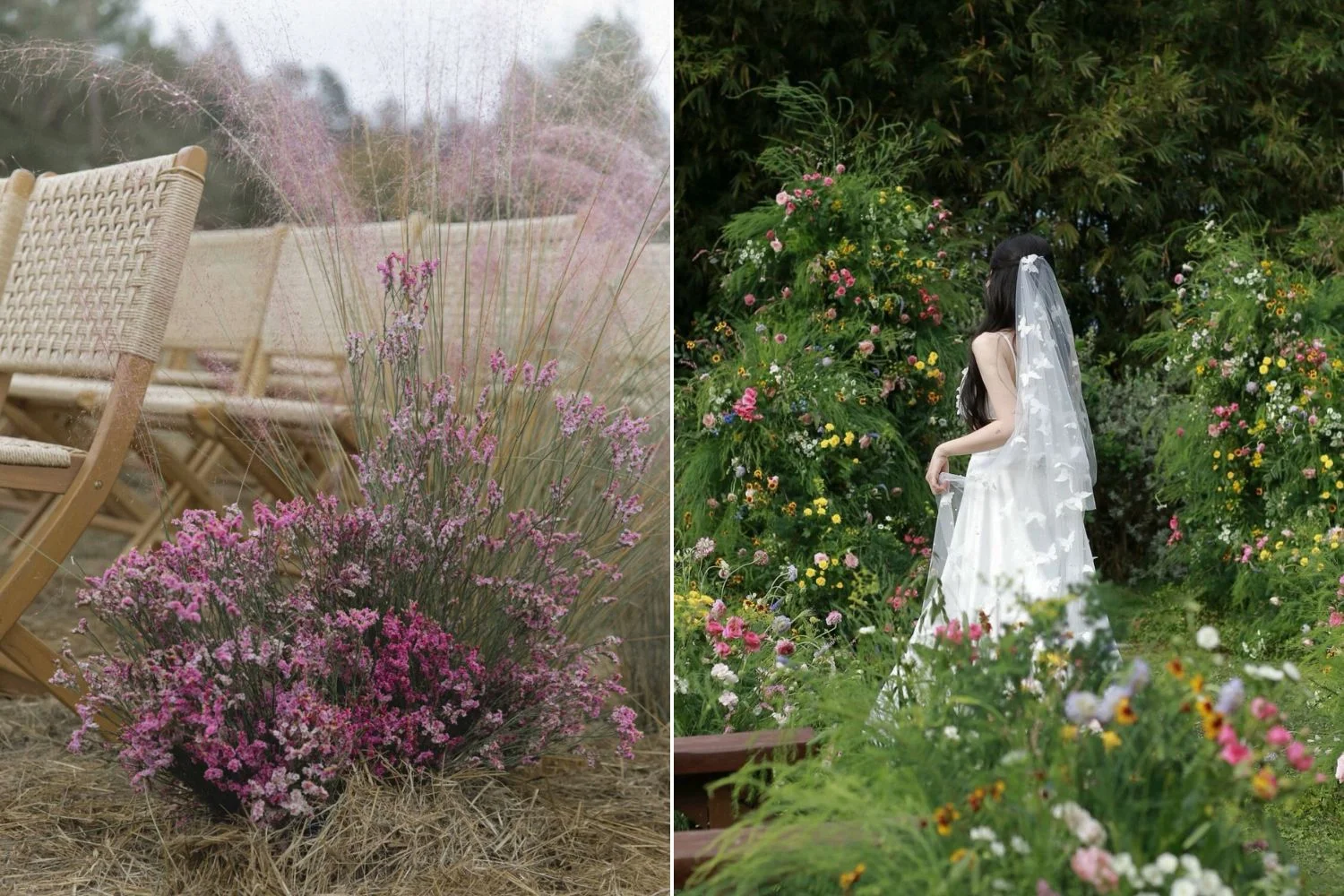
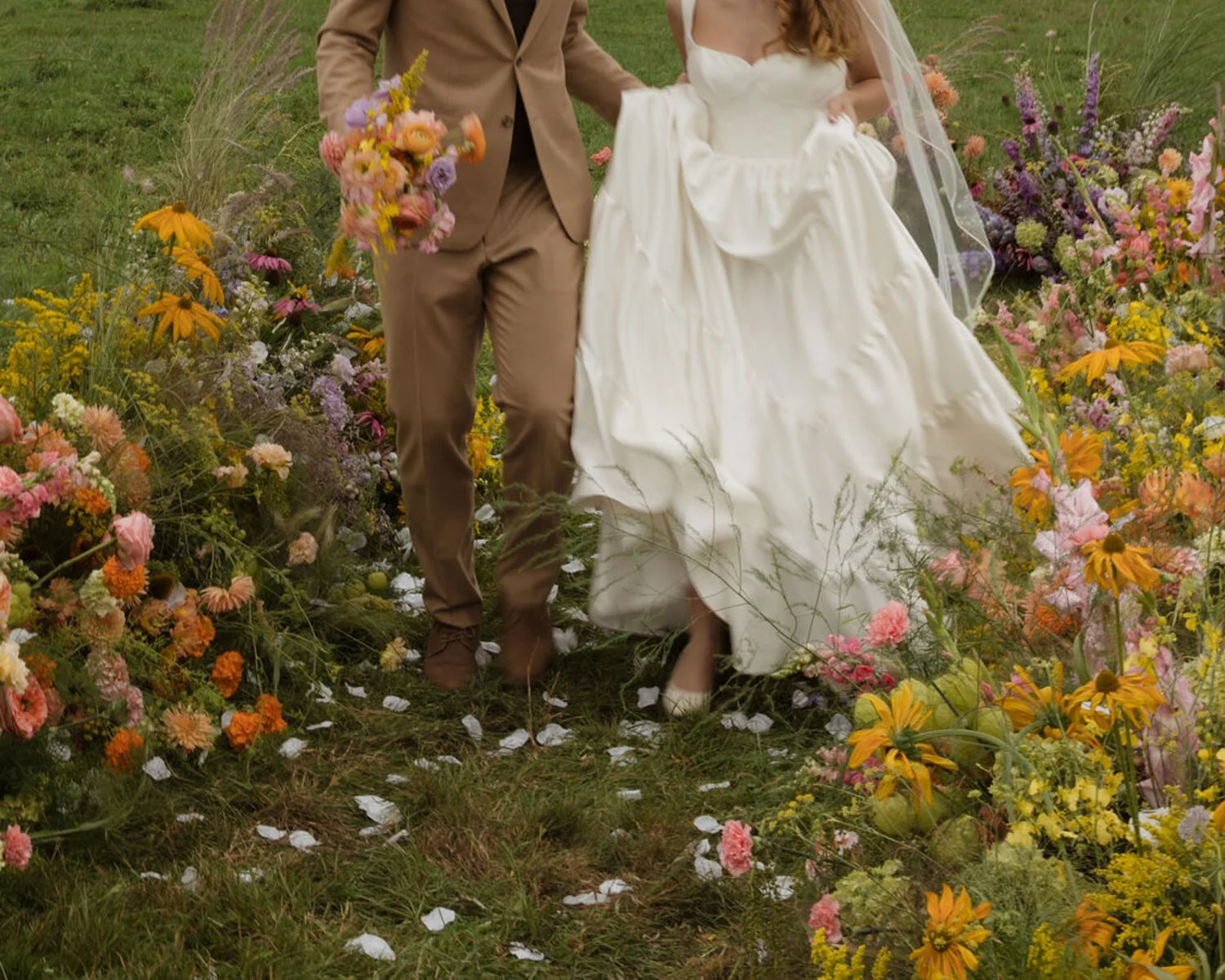
A living flower aisle is exactly what it sounds like: an aisle designed to look alive. Instead of placing flowers in fixed arrangements along a path, florists build low, ground-based clusters that appear to grow upward and outward, like a natural meadow reclaiming space.
These growing aisle arrangements often include a mix of fresh-cut stems and potted plants, sometimes even rooted flowers that can be replanted later. The goal is to blur the line between the venue and the décor. Where does the aisle begin? Where does it end? Ideally, you can’t really tell.
Visually, it creates layers. Guests don’t just see flowers, they see depth, movement, and variation. Some blooms sit low to the ground, others stretch upward, catching light and shifting slightly in the breeze. It’s subtle, but it makes the entire ceremony feel more dynamic.
Photos: MYLA LI PHOTOS
Why It Feels So Different from Traditional Aisles
Traditional aisles are, by design, predictable. Chairs in rows. Arrangements at intervals. Maybe a runner down the middle. It’s clean and structured, but also… a bit expected.
A living flower aisle breaks that structure. There’s no strict spacing, no identical arrangements repeated ten times. Instead, the design flows. Some areas feel fuller, others more open. It mimics how flowers actually grow—clustered in some spots, sparse in others.
That variation creates a more relaxed atmosphere. Guests don’t feel like they’re sitting in a staged environment; it feels closer to being outdoors, even if you’re technically inside. And for photos, it’s kind of unbeatable. Every angle looks slightly different, which keeps things visually interesting without trying too hard.
Photos: MARCOS SANCHEZ
Designing a Meadowcore Aisle That Feels Natural
Choosing Wildflower Wedding Decor
The foundation of any meadowcore aisle is the florals themselves. Wildflower wedding decor plays a huge role here, but it’s less about specific species and more about the overall feel.
You’re looking for flowers that don’t appear overly polished. Slightly irregular shapes, soft petals, and natural movement are key. Popular choices often include cosmos, scabiosa, chamomile, delphinium, and Queen Anne’s lace, but the exact mix depends heavily on what’s in season.
Native flowers are especially valuable. They naturally align with the environment, which makes the design feel more cohesive. Plus, they tend to hold up better in local weather conditions—a small detail that matters more than people expect.
CHOOSE YOUR WEDDING DESIGNER AND FLORIST:
Conaura Wedding Designer designs aesthetic experiences for contemporary and artistic weddings. Each project is unique and begins with a sensitive approach to the space, the couple’s personality, and the small details that make everything come together with meaning.
Design Studio Yano is a boutique event styling and planning company dedicated to crafting bespoke, sophisticated experiences tailored to the unique vision of each client. With a dynamic team of six professional stylists, they specialize in every stage of event creation.
Over the years floral designer Marta Bixio has developed strong experience working with international clients who choose Italy as the destination for their weddings, drawn by the warmth, beauty, and authentic Mediterranean atmosphere that makes celebrations here truly unique.
Organic Floral Design Principles
An organic floral design approach means letting go of rigid rules. Instead of thinking in straight lines, florists think in clusters and flow. Group flowers in uneven numbers to avoid symmetry, vary the distance between clusters, or leave intentional gaps so the design can “breathe”.
Negative space is important here. Without it, the aisle can start to feel crowded, which works against the light, airy feeling meadowcore aims for.
There’s also a layering technique involved. Low greenery forms a base, mid-height blooms add density, and taller stems create movement. When these layers overlap naturally, the arrangement starts to feel less like décor and more like an environment.
This is where things get interesting. Meadowcore design isn’t static—it’s meant to feel alive. That means embracing a bit of unpredictability.
Flowers that bend slightly, grasses that sway, petals that aren’t perfectly aligned… all of that contributes to the effect. In fact, if everything looks too polished, the illusion breaks.
Color also plays a role. Instead of sharp contrasts, you’ll often see soft transitions—pinks fading into creams, yellows blending into pale greens. It’s less “color palette” and more “color story,” if that makes sense.
The end result should feel like something you stumbled upon rather than something that was constructed. Even though, behind the scenes, it absolutely was.
Sustainable Wedding Flowers and the Meadowcore Movement
Local, Seasonal, and Ethical Floral Choices
Sustainability is woven into the meadowcore aesthetic in a way that feels natural rather than forced. Using sustainable wedding flowers often starts with sourcing: local farms, seasonal blooms, and growers who prioritize environmentally friendly practices.
Seasonal flowers not only reduce environmental impact but also look better in the setting. They belong there. There’s no disconnect between the flowers and the environment, which helps maintain that “grown, not placed” illusion.
It also changes the design process a bit. Instead of choosing flowers first and forcing them into the design, couples and florists work with what’s available. It’s a more flexible approach—and sometimes a more creative one, too.
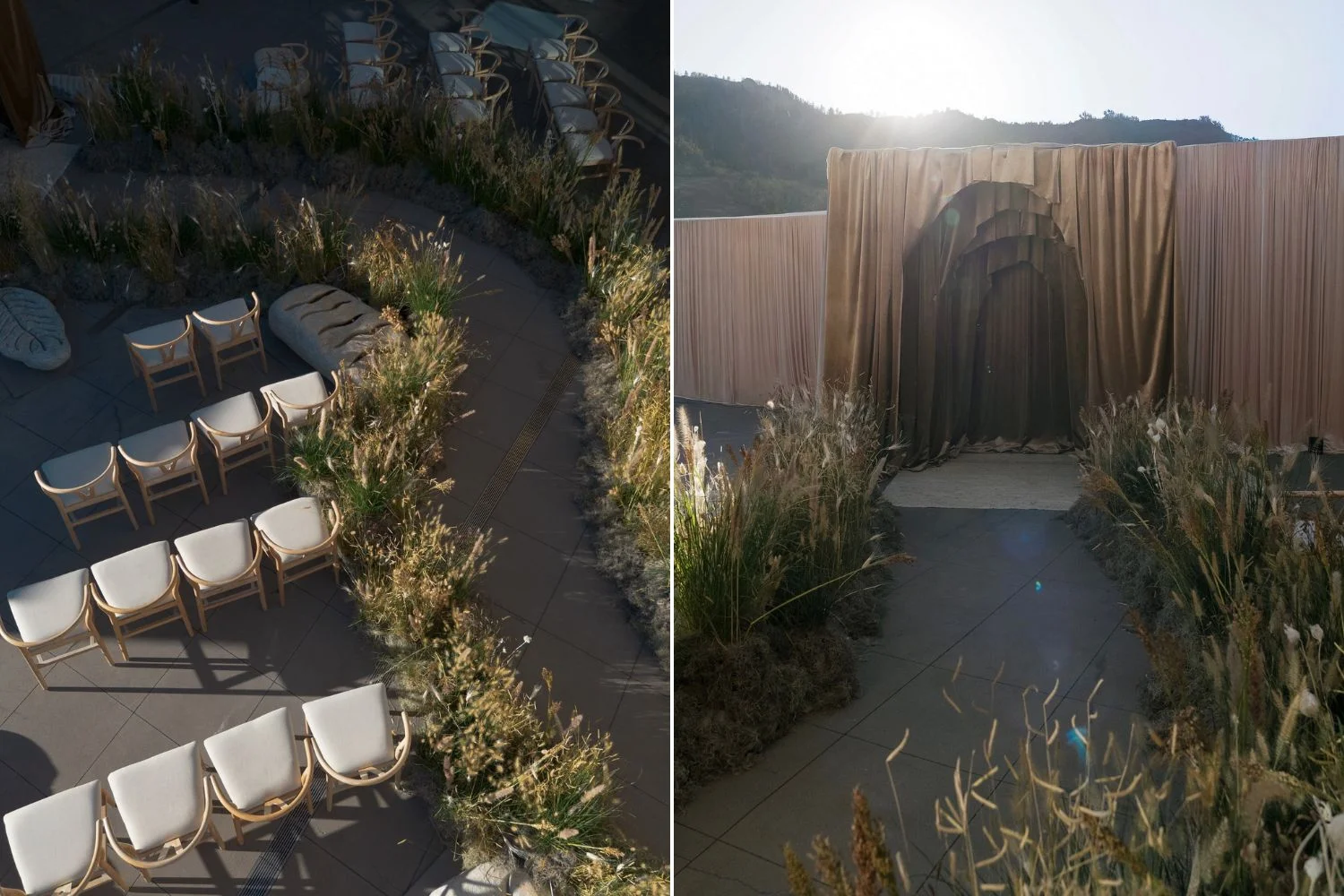
Photos: NATHAN GEORGE PHOTO
Replanting, Reusing, and Reducing Waste
One of the more practical benefits of a living flower aisle is that it doesn’t have to be single-use. Many of the elements—especially potted plants or root-based arrangements—can be replanted after the ceremony.
Some couples choose to move aisle arrangements to the reception space, gift plants to guests or family members, or replant flowers in a garden as a long-term keepsake.
It’s a small shift, but it changes how people think about wedding florals. Instead of something temporary, it becomes something that continues—grows, even—after the day is over.
Styling the Full Meadow Wedding Theme
Creating a Whimsical Garden Wedding Atmosphere
A whimsical garden wedding pairs naturally with meadowcore design, but the key is restraint. It’s easy to tip into something overly styled if every element is competing for attention.
The aisle should feel like an extension of the environment, and the rest of the décor should follow that same logic. Light fabrics, natural wood tones, and minimal structural elements help maintain that balance.
Instead of building elaborate installations, focus on enhancing what’s already there. If the venue has greenery, echo it. If there’s open space, let it stay open. Meadowcore works best when it doesn’t feel crowded.
Photo (left): M.K. SADLER
Pairing the Aisle with Unstructured Bridal Florals
The bouquet matters more than people think here. A tightly arranged bouquet can clash with the softness of a meadowcore aisle. That’s where unstructured bridal florals come in.
These bouquets tend to be looser, with stems that extend slightly beyond the main shape. They often include a mix of textures—soft petals, airy fillers, and a bit of greenery to tie everything together.
It should feel like it belongs in the same world as the aisle. Not identical, but related. When that connection is there, the overall look feels cohesive without being overly coordinated.
Practical Planning Tips
Budget Reality vs Pinterest Dreams
Here’s the slightly less dreamy part: meadowcore can look effortless, but it isn’t always inexpensive. The labor involved in creating natural-looking growing aisle arrangements can be significant.
That said, there are ways to manage costs. Focusing on key areas—like the ceremony aisle—rather than trying to carry the same density of florals throughout the entire event can make a big difference.
Using more greenery and fewer focal blooms also helps. And repurposing arrangements from ceremony to reception is almost essential if you’re working within a tighter budget.
Photos: MYCKENZIE RUSSELL
Seasonal Constraints and Logistics
Seasonality plays a huge role in a meadow wedding theme. Not every flower is available year-round, and trying to force it can get expensive quickly.
Weather is another factor. Outdoor ceremonies bring wind, heat, and the occasional unpredictability. Choosing hardy flowers and working with a florist who understands these conditions is key.
There’s also setup to consider. Living aisles often require more time to install than traditional décor, simply because of their complexity. Planning for that—especially with venue restrictions—can save a lot of stress on the day.
The meadowcore wedding trend isn’t just about aesthetics—it reflects a broader shift toward weddings that feel more personal, more grounded, and a little less performative. The living flower aisle captures that perfectly, turning a simple walkway into something immersive, emotional, and quietly dramatic.
At its best, this approach doesn’t feel designed at all. It feels discovered. And that’s what makes it so compelling. If you’re drawn to the idea of a ceremony space that feels alive—where flowers seem to grow, not just sit, then meadowcore might be exactly what you’re looking for.
This website uses cookies to improve the user experience and optimize its performance. By continuing to use this website, you agree to the use of cookies on this website.
Read more

 share
share



.webp)