Outdoor weddings aren’t new. Garden vows, vineyard backdrops, ocean cliffs — couples have been choosing nature over ballrooms for decades. What is new, though, is how those outdoor spaces are being used. Instead of the classic straight aisle with perfectly aligned rows, couples are rethinking the layout entirely. They’re asking a simple question: what if the ceremony felt less like a presentation and more like a shared experience?
That shift has given rise to the garden theater wedding — a layout inspired by amphitheaters, performance spaces, and organic landscapes. Think circular ceremony seating, a spiral wedding aisle, or gently curved wedding seating that wraps guests around the couple. It’s immersive without being over-the-top. It’s structured, but still soft. And as we look toward outdoor ceremony trends 2026, one thing is clear: the way we gather for weddings is evolving.
What Is a Garden Theater Wedding?
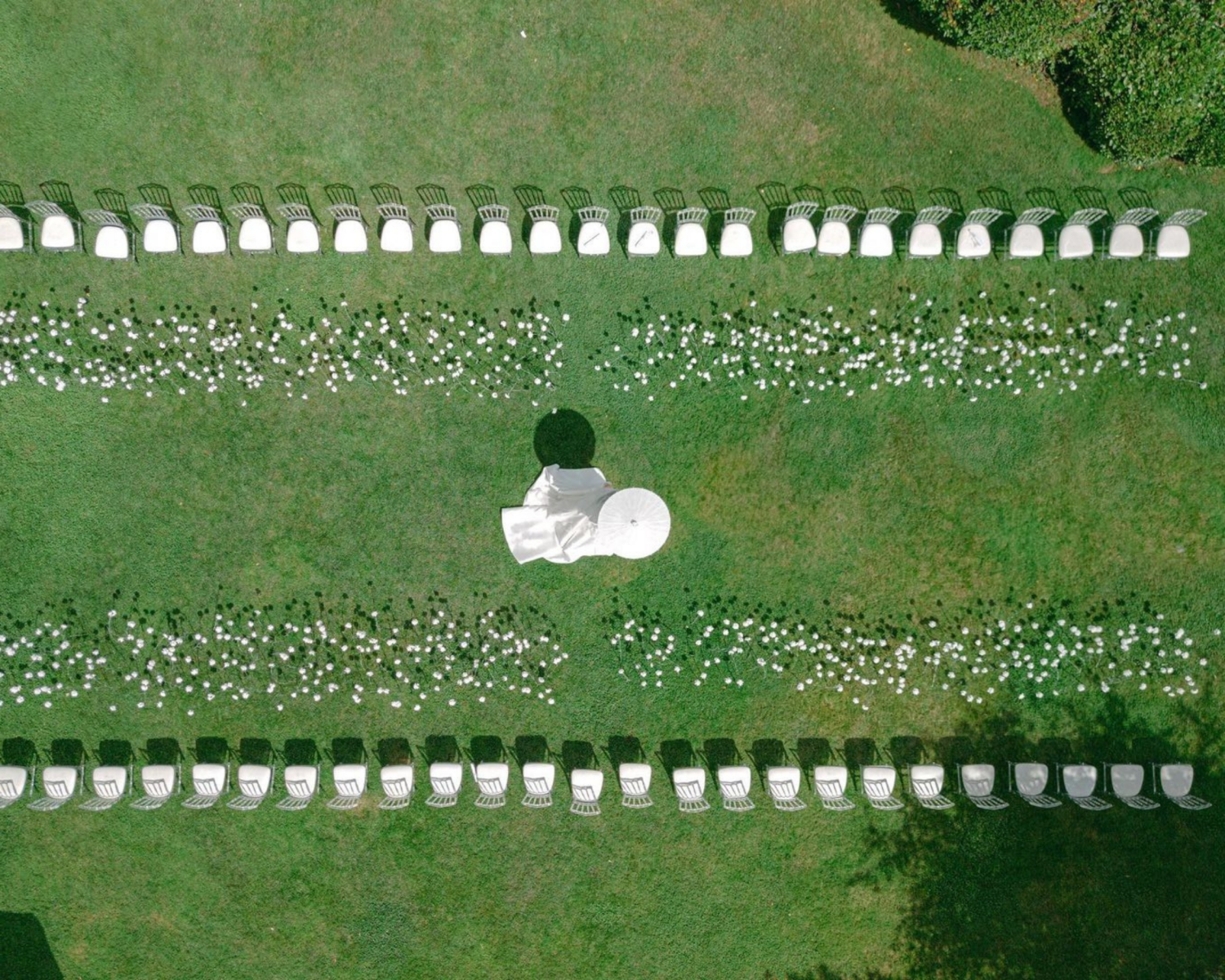
A garden theater wedding blends natural surroundings with intentional spatial design. Instead of placing guests in two straight lines facing forward, the layout curves, wraps, or spirals around the ceremony space. The couple becomes the center point — not at the “front,” but at the heart of the gathering.
The idea draws inspiration from classical amphitheaters, where every seat had a purpose and visibility mattered. In a wedding context, that means rethinking how guests see, hear, and feel the ceremony. It’s not about adding theatrics for drama’s sake. It’s about creating connection.
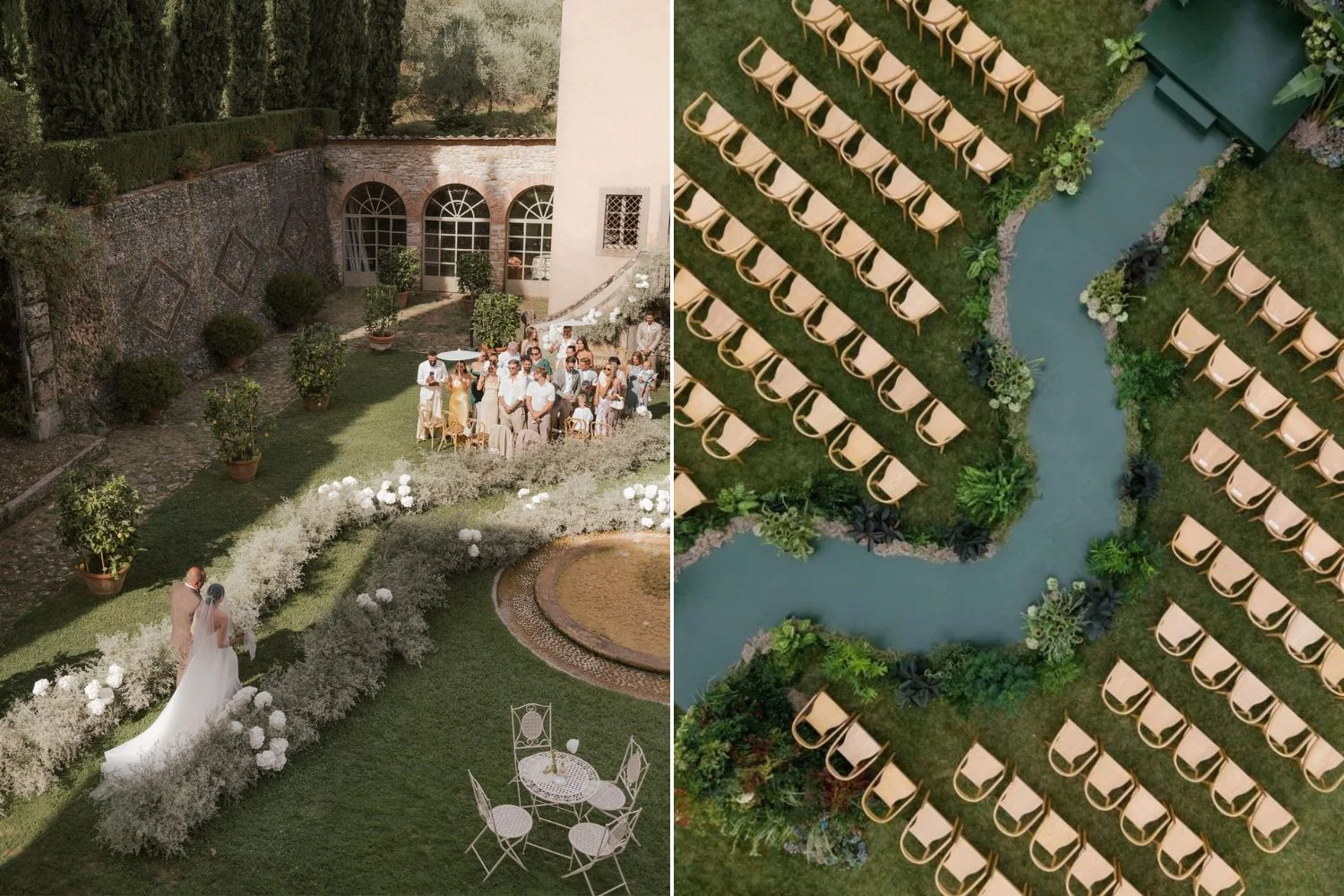
In practical terms, a garden theater wedding might feature circular seating on a lawn, a spiral aisle carved through a meadow, or tiered arrangements on a sloped estate. The environment becomes part of the architecture. Trees frame the space. Flowers define movement. The result feels intentional but not stiff — curated, yet natural.
Photos: MARIE PARKER
Defining the Garden Theater Wedding Concept
At its core, this concept is about immersion. In a traditional setup, guests look forward. In a theater style ceremony, they look inward.
This inward focus changes the energy. Guests can see each other’s reactions. They feel included rather than positioned as observers. The design removes the invisible line between “audience” and “altar.”
Importantly, the garden itself isn’t just decoration. It’s structure. Hedges might act as walls. Terraces create natural tiers. Even a simple meadow can define the ceremony space with subtle boundaries.
How It Differs from Traditional Outdoor Ceremonies
Traditional outdoor weddings follow a predictable formula: aisle down the middle, chairs in two blocks, couple at the front. It works. It’s classic. But it’s also directional — everything points one way.
A garden theater wedding eliminates that hierarchy. There’s no obvious “back row.” With curved wedding seating, every guest feels closer. The ceremony becomes more intimate, even with larger guest counts.
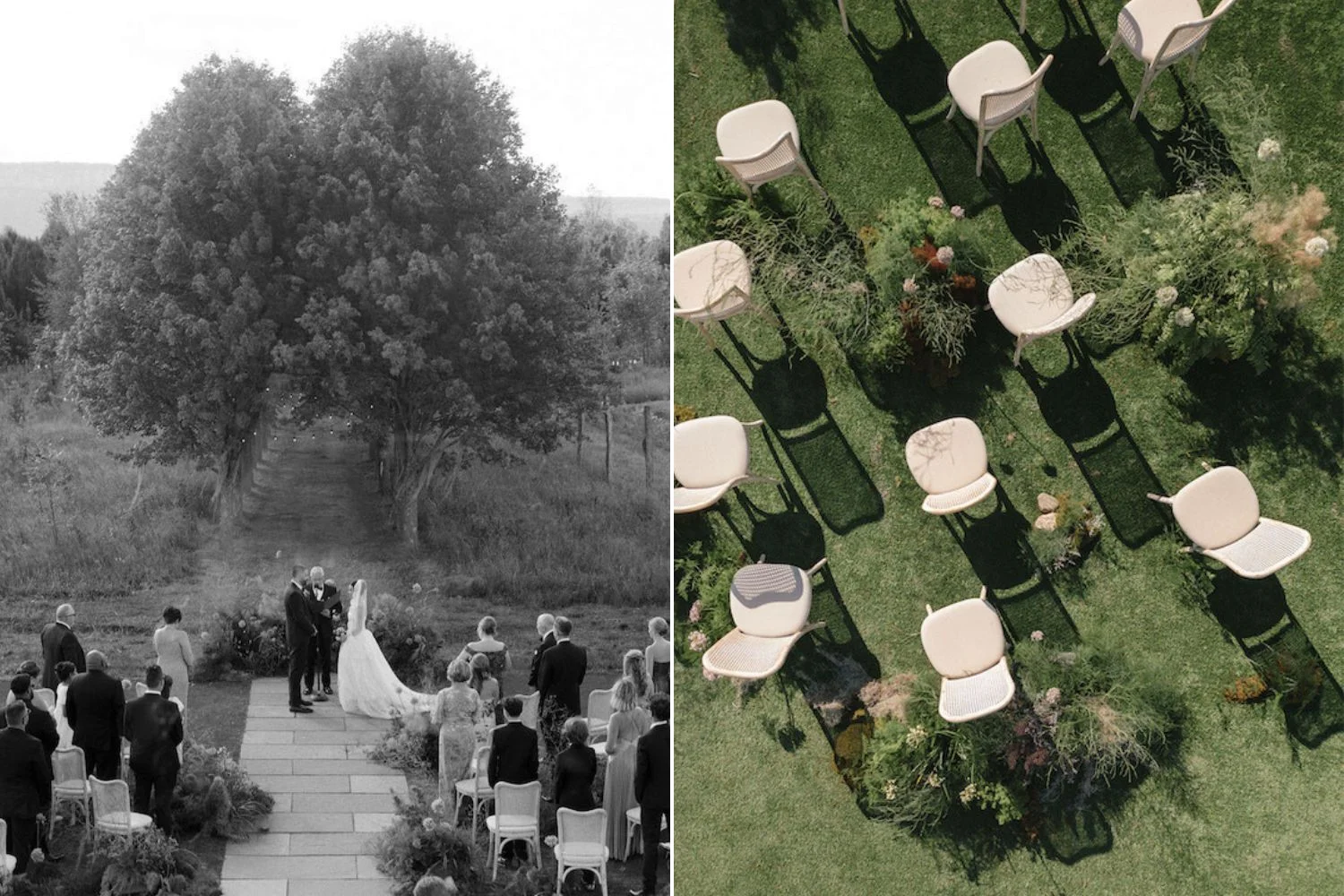
The difference also shows up in photography. Instead of flat rows, you get layers. Instead of a static aisle, you get movement. And emotionally, the shift is subtle but powerful. Guests aren’t just watching a moment. They’re inside it.
Photos: PACO & AGA
The Appeal of Circular and Curved Seating Designs
Straight lines feel formal. Curves feel natural. It’s that simple.
When you look at landscapes — hills, rivers, flower petals — nothing grows in rigid symmetry. Circular ceremony seating mirrors those organic shapes. It softens the atmosphere and draws people inward.
Beyond aesthetics, curved layouts solve practical problems. They improve sightlines. They create better acoustics. And they encourage connection.
Circular Ceremony Seating: Creating Intimacy and Inclusion
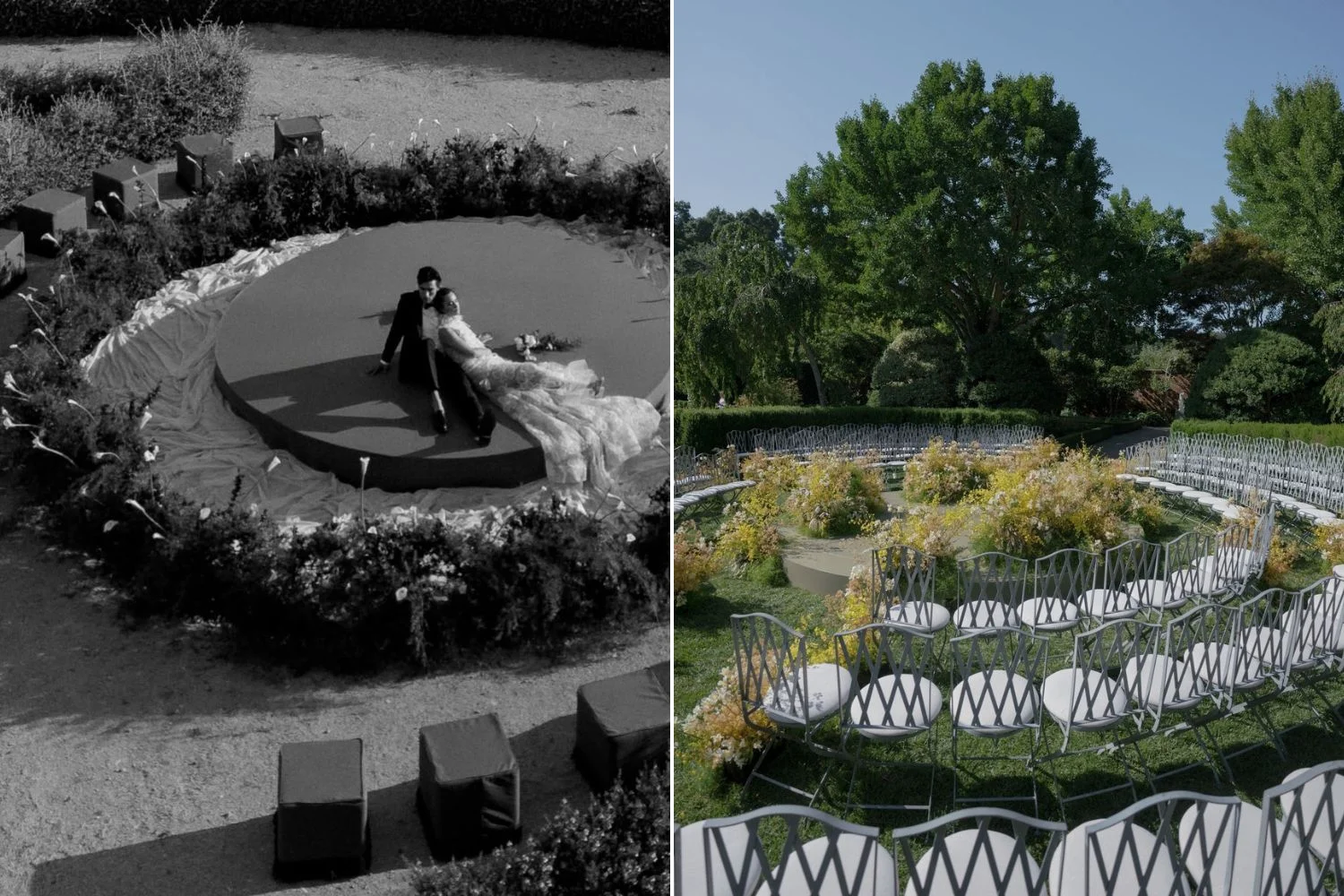
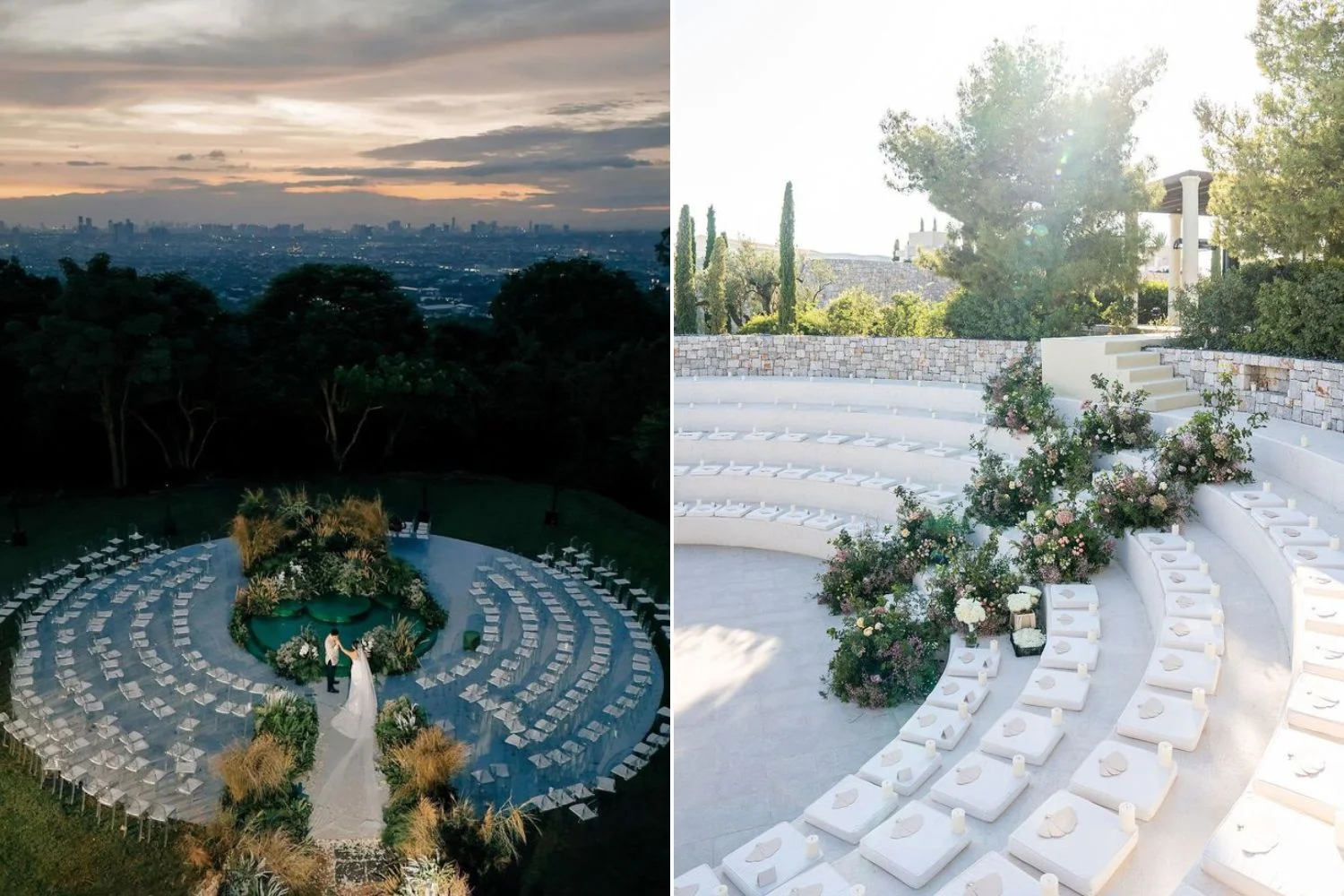
With circular ceremony seating, the couple stands at the center while guests form a complete ring around them. The symbolism is obvious but meaningful: unity, continuity, equality.
There’s also a practical benefit. Everyone gets a clear view. No one feels tucked away in the back corner.
A slightly raised platform ensures visibility. Sound systems should be evenly distributed, rather than concentrated at one end. When done well, the space feels balanced — not front-heavy.
It feels warm. Like you’re surrounded by support in every direction.
Curved Wedding Seating for Soft, Romantic Flow
Not every couple wants a full circle. Semi-circles or crescent shapes offer a middle ground. Curved wedding seating frames the ceremony space while maintaining a focal direction.
It allows for layered photography and dynamic guest reactions in the background. The key is consistency in the curve — uneven spacing can look accidental rather than intentional.
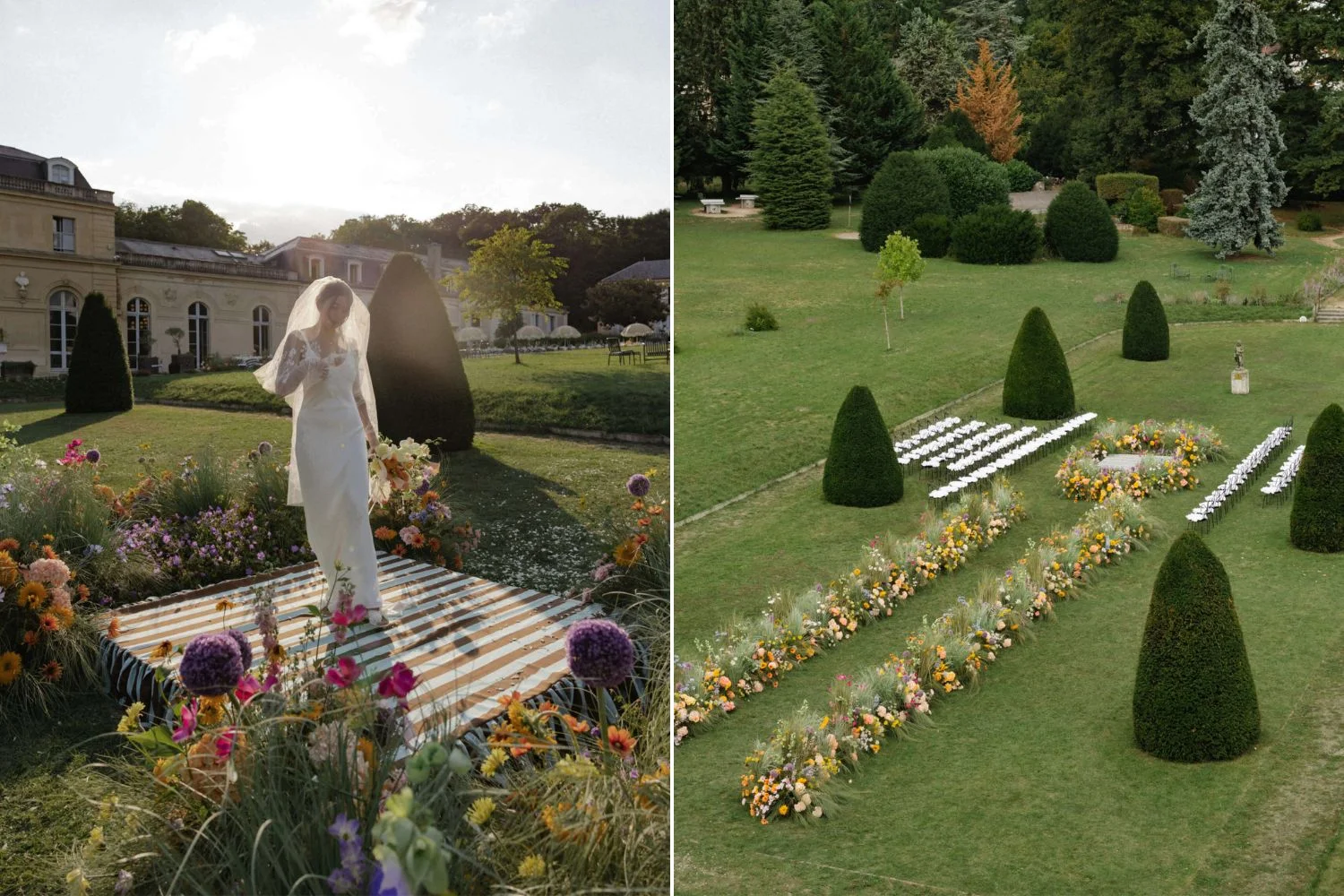
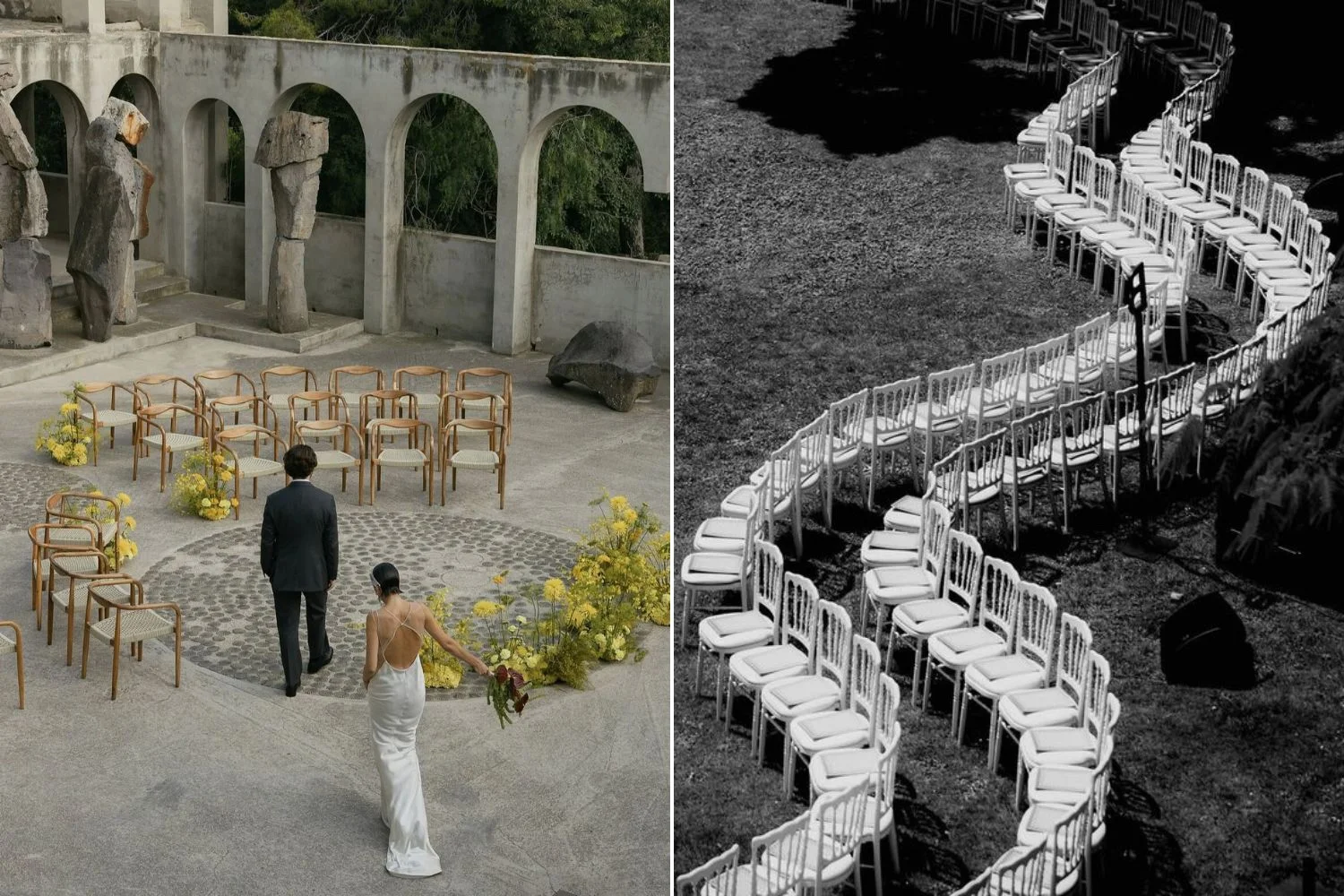
Curved seating also pairs naturally with floral installations that follow the arc of the chairs. It’s cohesive without feeling overly designed. Sometimes small changes — a subtle bend instead of a straight line — make the biggest visual impact.
Photo (left): DERANDO STUDIO
The Spiral Wedding Aisle: A Dramatic Entrance Redefined
The aisle is one of the most photographed parts of any ceremony. So why limit it to a straight line?
The spiral wedding aisle introduces movement and anticipation. Instead of walking directly toward the altar, the processional winds inward. Guests catch glimpses before the full reveal.
It’s dramatic, yes — but also symbolic. Life rarely moves in straight lines. A spiral suggests growth, journey, and unfolding.
Designing a Spiral Wedding Aisle for Visual Impact
To execute a spiral aisle well, space is essential. Open lawns or meadows work best. The pathway should be at least five feet wide to allow comfortable walking and accessibility.
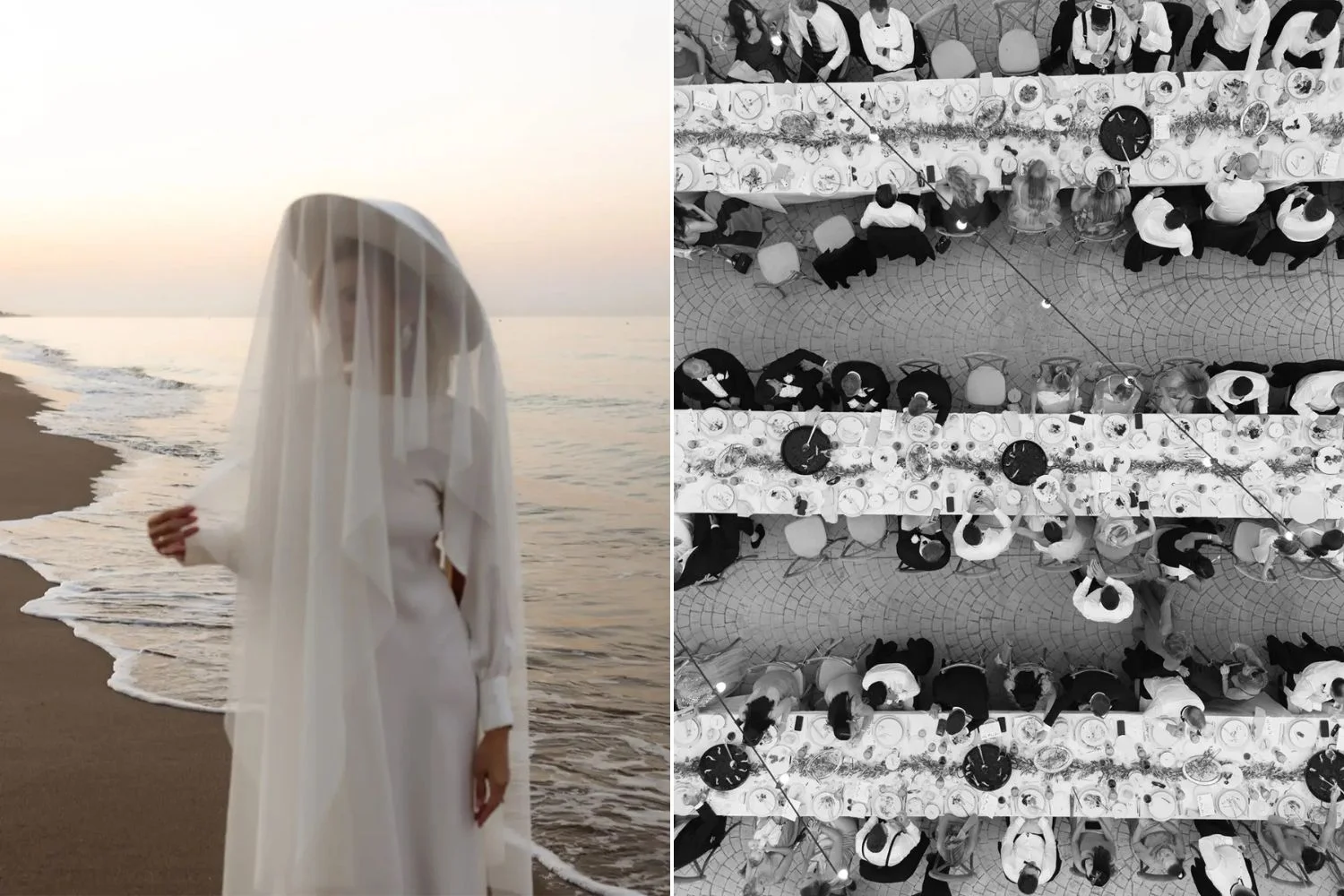
From above, especially in drone photography, the effect is striking. The spiral draws the eye directly to the center where the couple stands.
But practicality matters. Ensure the path is stable and smooth. Beauty shouldn’t compromise comfort.
Meadow Wedding Aisle Concepts for Organic Elegance
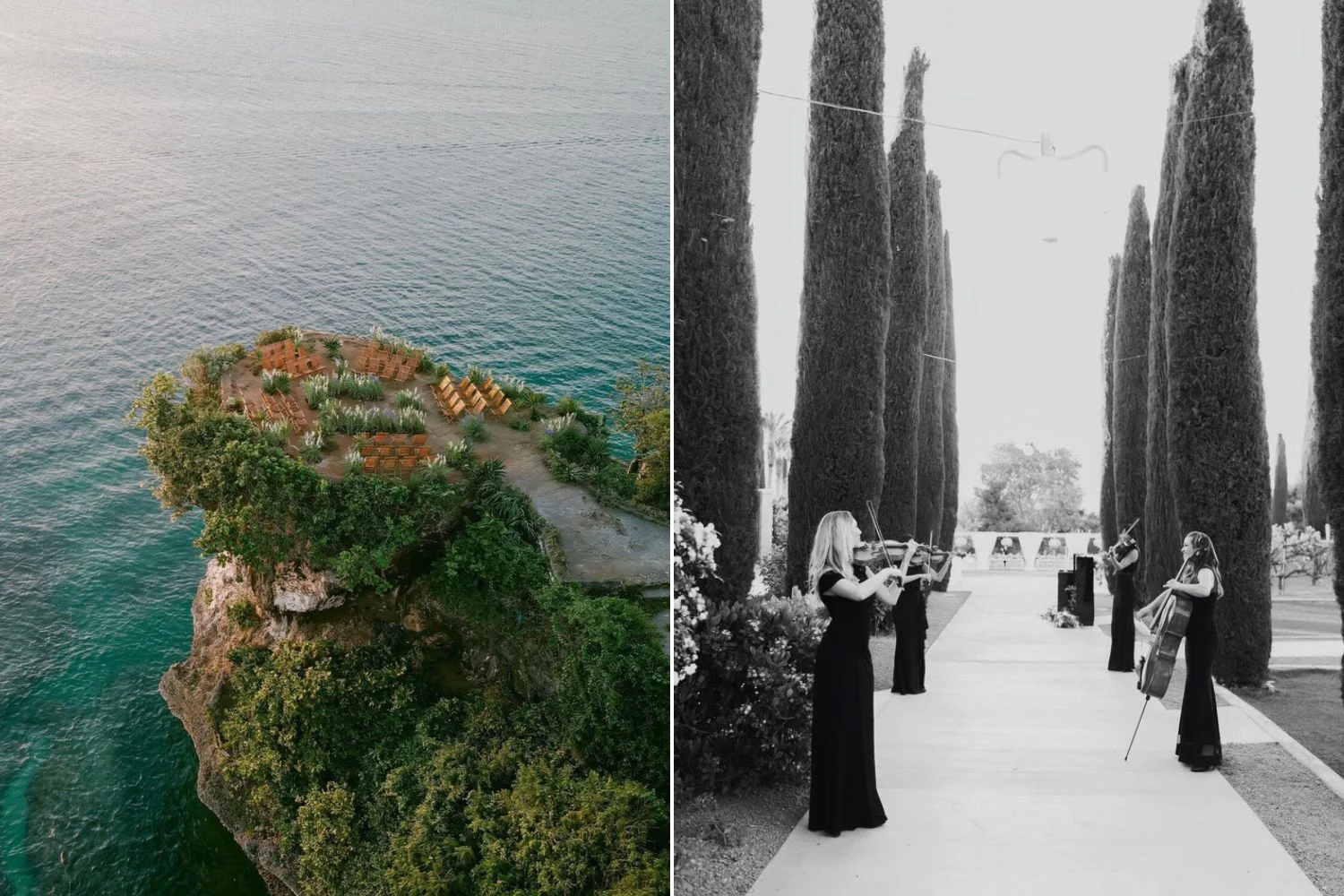
For couples who prefer subtlety, a meadow wedding aisle offers a softer approach. Instead of clearly defined borders, the path weaves naturally through wildflowers and tall grasses.
This style aligns strongly with sustainability-focused outdoor ceremony trends 2026: native wildflowers, reusable potted plants, and minimal ground disruption.
The charm lies in restraint. You don’t need heavy installations when nature already provides texture and color. The aisle feels discovered rather than constructed — like you stumbled into a secret clearing.
Photo (left): KATARINA FEDORA | Photo (right): RENE ZADORI
Amphitheater Wedding Venues and Natural Terraces
An amphitheater wedding is perhaps the most literal interpretation of the garden theater concept. With built-in elevation and curved seating areas, these venues are designed for visibility and acoustics.
They also feel inherently communal. There’s something powerful about gathering in a space shaped for shared experience.
In the context of outdoor ceremony trends 2026, amphitheaters check several boxes: immersive, guest-centered, and visually dynamic.
Transforming Gardens into Theater Style Ceremony Spaces
Not every venue comes with stone terraces. But many can be adapted.
Planners can create a theater style ceremony by:
Using subtle risers to create tiers
Arranging seating in graduated arcs
Leveraging natural slopes
Lighting becomes especially important in these settings. Soft uplighting along curves enhances depth without overpowering the landscape.
The goal isn’t to mimic a concert venue. It’s to create layers that draw people inward and upward, making the ceremony feel significant without feeling staged.
Photos: EL DUNFIELD PHOTOGRAPHY
Designing an Immersive Wedding Layout
An immersive wedding layout goes beyond seating shape. It considers how guests move, what they hear, and how they participate.
Immersion isn’t about spectacle. It’s about presence.
What Makes a Ceremony Truly Immersive?
Several factors contribute:
Evenly distributed sound so vows are clear from all angles
Fragrance from seasonal florals
Textural pathways underfoot
Interactive traditions can also deepen immersion. A ring-warming ceremony, where guests briefly hold the rings to offer silent wishes, brings everyone into the moment.
The key is balance. Too much interaction can feel chaotic. Subtle inclusion works best.
Interactive Ceremony Ideas for Modern Couples
An interactive ceremony might include:
Processionals weaving through guest seating
Live musicians positioned among attendees
Short readings delivered from within the circle
These elements dissolve the boundary between “performer” and “audience.” The ceremony feels collaborative.
Importantly, interactive doesn’t mean informal. Even black-tie weddings can incorporate immersive touches while maintaining elegance.
Photo (left): MARITHA MAE
Outdoor Ceremony Trends 2026: What’s Shaping the Future
Looking ahead, the defining theme is experience. Couples care less about rigid tradition and more about emotional impact.
Layouts are becoming fluid. Designs are becoming intentional.
Experiential Weddings Over Traditional Formats
Movement-based designs — spirals, circles, arcs — are replacing straight aisles and boxy chair blocks. Couples are asking: How will this feel? How will guests remember it?
Expect to see:
Multi-directional seating
Shorter, more meaningful ceremonies
Guests positioned closer to the couple
The shift is subtle but consistent. It prioritizes connection over spectacle.
Sustainability and Nature-Forward Design
Another major component of outdoor ceremony trends 2026 is sustainability.
Couples are choosing:
Seasonal, locally sourced florals
Reusable décor installations
Minimal structural disruption to landscapes
Nature is no longer just a backdrop. It’s treated as a collaborator. Designs work with the environment rather than competing against it.
Planning Considerations for Garden Theater Ceremonies
While visually stunning, these layouts require thoughtful coordination.
Logistics and Guest Comfort
Key considerations include:
360-degree sound systems
Clear, accessible pathways
Shade options for sunny climates
Weather backup plans
In circular layouts, microphones and speakers must be evenly spaced to prevent echo or imbalance. Comfort should never be sacrificed for aesthetics.
Photography and Videography in Circular Layouts
Photographers thrive in curved spaces. They can capture layered reactions and dynamic angles.
Communicate the layout in advance so vendors can plan movement paths. Drone photography is particularly effective for spiral and circular designs, showcasing the full geometry of the space.
The result? Images that feel alive rather than static.
CHOOSE YOUR WEDDING PHOTOGRAPHER:
Diana Fischer is the creative force behind DFischerWeddings. For couples seeking a luxury wedding photographer who brings elegance, intention, and timeless beauty to every frame, her work offers a refined and thoughtful choice.
Often described as “the 5-Star Grand Hotel of wedding photographers,” Diana embraces this comparison as the highest compliment.
She approaches every wedding with the same level of care, sophistication, and attentiveness associated with a luxury hotel experience — where every detail is considered, every moment is valued, and every guest feels truly seen.
Photos: DIANA FISCHER | DFISCHERWEDDINGS
Wiebke Buchholz is a wedding photographer who pours her heart and soul into her work, and she is truly grateful for every couple who finds their way to her.
She lives for the real moments — the unfiltered ones, the ones that touch the heart before they can even be understood. Her photography is guided by authenticity, emotion, and an artistic sensitivity to what unfolds naturally.
For Wiebke, photography is more than capturing an image — it is an expression of her personality. Every frame becomes a way to reveal emotions, stories, and dreams. She loves exploring creativity and shifting perspectives, creating photographs that become a journey back to meaningful memories and genuine feelings. For her, it is always the subtle nuances that make the true difference.
Photos: WIEBKE BUCHHOLZ PHOTOGRAPHY
NAGI + TEAM is a distinguished visual storytelling studio celebrated for its artful, emotive approach to photography and videography. Led by Nagi and her dedicated team, the studio blends years of experience with a refined aesthetic, capturing stories with authenticity, elegance, and an exceptional eye for detail.
Guided by a deep passion for light, atmosphere, and meaningful moments, NAGI + TEAM creates imagery designed to resonate both emotionally and timelessly. From editorial-inspired portraits to cinematic wedding films, every project is approached with intention, creativity, and a strong collaborative spirit, ensuring each story is told with beauty, depth, and purpose.
Photos: NAGI.PHOTOGRAPHY
JAYPEG PHOTO & FILM is a wedding photography and videography duo based in Switzerland, capturing love stories across Europe and worldwide. Founded by Jasmin and Matthias, the team brings more than a decade of shared experience, combining heartfelt dedication, creativity, and a deep passion for meaningful storytelling.
Their approach is rooted in authenticity and timeless beauty. JAYPEG PHOTO & FILM focuses on genuine emotions, natural connections, and artful imagery that feels both elegant and real — preserving not only the grand highlights of a wedding day, but also the quiet, honest moments in between that often hold the greatest meaning.
Photos: JAYPEG PHOTO & FILM
Lima de Miguel is a creative photography duo who have been together for seventeen years, sharing life, work, and nearly every hour of their days in a small village surrounded by vineyards just outside Barcelona.
Their approach to photography is not about posing, but about creating a space where couples can feel at ease, move naturally, and forget the camera altogether. They read each situation with sensitivity and care, understanding when gentle guidance offers reassurance and when it is best to step back and simply observe. Above all, Lima de Miguel believes in preserving authenticity — never interrupting a genuine moment or imposing ideas on what is naturally unfolding.
Photos: LIMA DE MIGUEL
Rebecca Wrieden is a mentor, podcaster, and a couple’s wedding photographer and videographer.
She sees herself as far more than a service provider. Many of her couples describe her as a true “feel-good manager,” because their comfort, trust, and emotional experience always come first. “Your wedding — my passion” is not simply a phrase for her; it has become a guiding philosophy that shapes the way she works, connects, and tells each story.
Away from weddings, she shares her life with three cats in a small countryside home surrounded by plantations and the Elbe River — and a garden far larger than she would ever recommend, which means she spends much more time mowing the lawn than relaxing on a sun lounger.
Photos: REBECCA WREIDEN PHOTOGRAPHY
Sara Sibio approaches every photograph with a strong technical foundation and meticulous attention to equipment. She works exclusively with top-level professional gear — state-of-the-art cameras and bright, precise lenses, powerful computers, secure storage systems, and reliable lighting — because she believes that every detail, even the unseen ones, contributes to the excellence of the final result.
For Sara, capturing a wedding also means giving voice to the people who live it. Guests, relationships, and sincere, often fleeting gestures all help shape the unique atmosphere she seeks to preserve — photographed with a presence that is both discreet and attentive, authentic yet visually refined.
Whenever possible, she enriches each story with aerial drone imagery, adding depth, perspective, and a sense of space that enhances the setting and strengthens the overall visual narrative.
Photos: SARA SIBIO PHOTOGRAPHY
Gap di Gitto Antonino is a photographer devoted to capturing authentic, overwhelming love and the moments that truly matter. His goal is to preserve the fleeting instants that tell stories of happiness, connection, and genuine joy.
He is deeply inspired by a love that goes beyond conventions — the kind that transforms lives and reveals the truest emotions. Sicily, his birthplace, remains an endless source of creative energy, with its breathtaking landscapes and remarkable people continually shaping his artistic vision. After studying photography in Milan and London, he developed the ability to recognize and capture beauty in every corner of the world.
Through his work, Gap invites couples into his photographic world, where love and beauty come vividly to life. With passion and sensitivity, he strives to immortalize every love story and create memories that will remain timeless and unforgettable.
Photos: GAP DI GITTO ANTONINO
Budgeting for a Garden Theater Wedding
Immersive doesn’t automatically mean expensive — but thoughtful design requires allocation.
Where to Allocate Your Budget
Focus on:
Quality seating arrangements
Professional sound systems
Key floral elements defining curves or spirals
These elements shape the experience most directly.
Cost-Saving Alternatives Without Sacrificing Impact
To manage costs:
Use natural landscapes as primary décor
Choose in-season flowers
Opt for simple chairs arranged beautifully
Often, layout matters more than luxury materials.
Garden theater ceremonies represent a meaningful shift in how couples approach their wedding day. By embracing circular ceremony seating, spiral wedding aisle designs, and curved wedding seating, they’re prioritizing connection over convention. The ceremony becomes something guests feel — not just witness.
As outdoor ceremony trends 2026 continue to evolve, immersive layouts and sustainability will shape the future of weddings. If you’re planning your own celebration, consider how space influences emotion. Rethink the aisle. Rethink the rows. When design and nature work together, the result isn’t just beautiful — it’s unforgettable.
Author: BRIDELIFESTYLE
Photographers: Marie Parker, Paco & Aga, Derando Studio, Katarina Fedora, Rene Zadori, El Dunfield Photography, Maritha Mae, Diana Fischer (DFischerWeddings), Wiebke Buchholz Photography, NAGI.Photography, Jaypeg Photo & Film, Lima de Miguel, Rebecca Wrieden Photography, Sara Sibio Photography, Gap di Gitto Antonino
This website uses cookies to improve the user experience and optimize its performance. By continuing to use this website, you agree to the use of cookies on this website.
Read more

 share
share



.webp)
.webp)


