Almost every bride's wedding journey includes a point when the dress is finally chosen, the excitement has faded for a bit, and then a new question arises: What about the veil? Many brides assume a veil is simply an accessory – a beautiful final detail that either feels right or doesn’t. But anyone who has ever tried on several different styles knows that a veil can completely transform a bridal look. The same dress can suddenly feel softer, more architectural, more romantic or unexpectedly modern depending on what sits behind it. And yet, choosing a veil has very little to do with trends. A veil is less about following fashion and more about creating balance. It frames your face in every photograph, it influences how your hairstyle looks, and it affects the entire silhouette of your wedding day look from the moment you walk into the room.
This is why learning how to pick a wedding veil starts with something far more personal than Pinterest inspiration boards or social media trends. It starts with understanding your own features. Because the most beautiful veil is rarely the most dramatic one. It is the one that allows you to feel like yourself.
Why face shape matters more than bridal trends
Bridal fashion changes constantly. One season everyone is wearing cathedral-length veils, another season short veils and bows suddenly dominate editorial shoots. But trends come and go much faster than photographs do. Your wedding images will stay with you for decades.
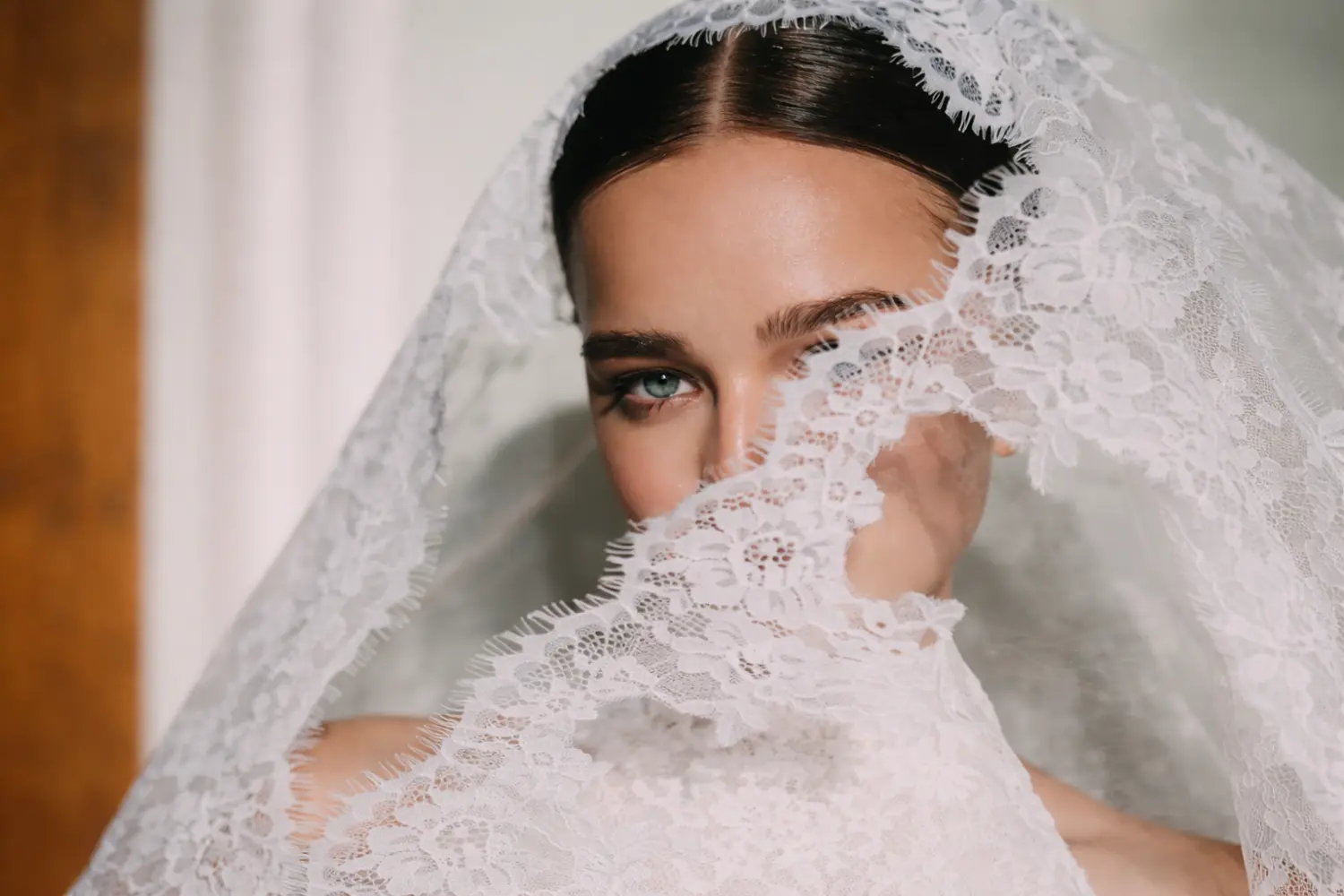
A veil frames your face almost like a portrait artist would. It creates vertical lines, softens angles, adds volume or removes it. Sometimes it can even subtly change proportions without you immediately realizing why one option looks more harmonious than another. This has nothing to do with making corrections or hiding features. And it has everything to do with establishing visual harmony.
The same way a hairstylist chooses a haircut that complements your bone structure, a veil should work alongside your natural features instead of competing with them. The easiest way to approach it is to think of a veil as part of the architecture of your bridal look.
Photo: PINTEREST
If you have a round face, think about length and softness
A bridal veil for a round face is one of the most popular searches these days, and with good reason. Brides with softer facial contours often look beautiful in styles that create a sense of elongation. Longer veils naturally draw the eye downward, creating elegant proportions without feeling intentional or overly styled. Fingertip and cathedral lengths work particularly well here.
Long wedding veils allow for movement and create a vertical line that works beautifully with softer features. It also photographs exceptionally well, especially during an outdoor ceremony where the fabric captures natural light and movement.
What many stylists recommend avoiding are extremely short veils that end directly at the widest part of the face, as they can visually emphasize width rather than balance. Soft layers and gentle draping tend to work better than heavy embellishments around the face itself.
Photo: PINTEREST
Oval faces have the greatest freedom
If you have an oval face shape, you are fortunate in the sense that most bridal veil styles will naturally complement your features. The challenge here is often the opposite: having way too many options.
An oval face allows you to focus less on proportions and more on the overall mood you want to create. Do you envision a dramatic entrance? Then a cathedral veil may become the perfect statement. Do you prefer effortless elegance? A fingertip veil will feel timeless without overpowering the whole look.
Some brides today are even moving toward softer interpretations of tradition, choosing delicate embroidered veils, subtle pearl details or airy tulles that almost disappear into the hairstyle. The key is to ensure the veil complements the dress rather than competes with it. If your gown already contains intricate lace, embroidery or a dramatic silhouette, a simpler veil often creates more balance.
Photo: PINTEREST
Square faces benefit from movement and ease
Strong jawlines photograph beautifully. The goal is not to soften them entirely, but to create a sense of movement around them. This is where layered tulles and rounded edges become particularly elegant.
Many bridal stylists recommend avoiding very structured, heavily cut veils with sharp geometric lines, especially around the face. Instead, choose fabrics that flow naturally and move with your body. A lace edge veil can work beautifully here because the detailing gently breaks up the silhouette without adding visual heaviness. The result feels softer, more romantic and effortlessly luxurious.
Photo: PINTEREST
Heart-shaped faces look beautiful with balanced volume
Brides with heart-shaped faces often have a wider forehead and a narrower chin. The trick is to create balance by introducing softness lower down in the silhouette. Longer veils that widen toward the bottom work particularly well because they create visual harmony without appearing deliberate.
Very full veils placed high on top of the head can sometimes add unnecessary volume around the forehead area. Instead, stylists often recommend placing the veil slightly lower or integrating it naturally into the hairstyle. This creates a more seamless overall look.
Photo: PINTEREST
Cathedral vs fingertip veil: Which one should you choose?
The question of cathedral vs fingertip veil is one of the most searched bridal styling topics today. But the answer is rarely about height or body type. It is usually about the atmosphere.
A cathedral veil immediately creates a sense of ceremony. There is movement, presence and a certain grandeur that works beautifully in churches, historical venues or destination weddings. It photographs exceptionally well because it interacts with the environment around you.
A fingertip veil, meanwhile, feels quieter. It offers elegance without becoming the focal point. It moves naturally, allows freedom and often suits modern city weddings particularly well. Neither is more luxurious than the other. Luxury today is about intention, not scale. Choose the one that matches how you want your wedding day to feel.
Photo: PINTEREST
Is the birdcage veil making a comeback?
Yes – but differently than before. The birdcage veil wedding trend is no longer associated with vintage costumes or themed aesthetics. Today's version is understated, sophisticated and highly editorial.
Modern brides pair birdcage veils with tailored suits, minimalist gowns and anti-bride aesthetics that focus on personal style over tradition. It works especially beautifully for civil ceremonies, intimate city weddings and contemporary bridal fashion. Because it frames the eyes rather than covering the entire face, it also creates striking portraits.
Photo: PINTEREST
Your hairstyle should always come before the veil
One of the biggest mistakes brides make is treating these as two separate decisions. Bridal hair and veil should always work together. An elaborate updo may disappear under a heavy veil, while very loose hair can become visually overwhelming when paired with multiple layers of tulle.
This is why your hairstylist and veil choice should ideally be discussed at the same time. The most elegant bridal looks often feel effortless because every element is in conversation with the others. Nothing competes. And everything is supported.
Photo: PINTEREST
The new definition of bridal elegance
Over the past few years, bridal fashion has become quieter. Not simpler, but more intentional. Brides are moving away from choosing accessories because they feel obligatory. Instead, every piece is becoming part of a larger story.
A veil is no longer there because tradition says it should be. It is there because it adds emotion, movement and atmosphere. And perhaps that is why veils feel timeless. When chosen well, they do not disguise you – they reveal you.
Photo: PINTEREST
How do I know which wedding veil suits me best?
Start by looking at your face shape, hairstyle and dress silhouette together instead of separately. The most successful bridal looks are cohesive rather than trend-driven. For inspiration, browse BrideLifestyle.com'sStyle & Fashioneditorial section and discover how different brides have styled their veils with various gowns and aesthetics.
Should I choose my veil before or after my hairstyle?
Ideally, choose them together. Your hairstyle influences where the veil sits and how it frames your face. Explore trusted professionals in BrideLifestyleHair and Makeup to find artists who can help create a harmonious bridal look from head to toe.
Where can I find wedding dresses that work beautifully with cathedral or fingertip veils?
Certain silhouettes naturally complement different veil lengths. Browse BrideLifestyleWedding Dresses to discover designers and bridal boutiques whose collections pair elegantly with both dramatic cathedral veils and minimalist fingertip styles.
Do I need a veil for a civil wedding?
Not at all, but many brides still choose one because it adds softness and occasion to the overall look. Short veils and birdcage styles have become particularly popular for city ceremonies. Visit BrideLifestyleLuxury Weddings and Wedding Stories for inspiration from modern civil weddings.
Can photographers help me choose the right veil?
Surprisingly, yes. Wedding photographers understand how different veil lengths interact with movement, architecture and light. Browse BrideLifestyleWedding Photographers to explore portfolios and see how various veil styles translate into timeless imagery.
Where can I find more bridal styling inspiration beyond veils?
Visit BrideLifestyleStyle & Fashion, where you'll discover curated editorials covering bridal accessories, modern bridalwear, anti-bride trends, jewelry, beauty ideas and expert guidance from leading wedding professionals worldwide.
This website uses cookies to improve the user experience and optimize its performance. By continuing to use this website, you agree to the use of cookies on this website.
Read more

 share
share



.webp)
.webp)
.webp)
.webp)
.webp)
.webp)
.webp)
.webp)
.webp)


