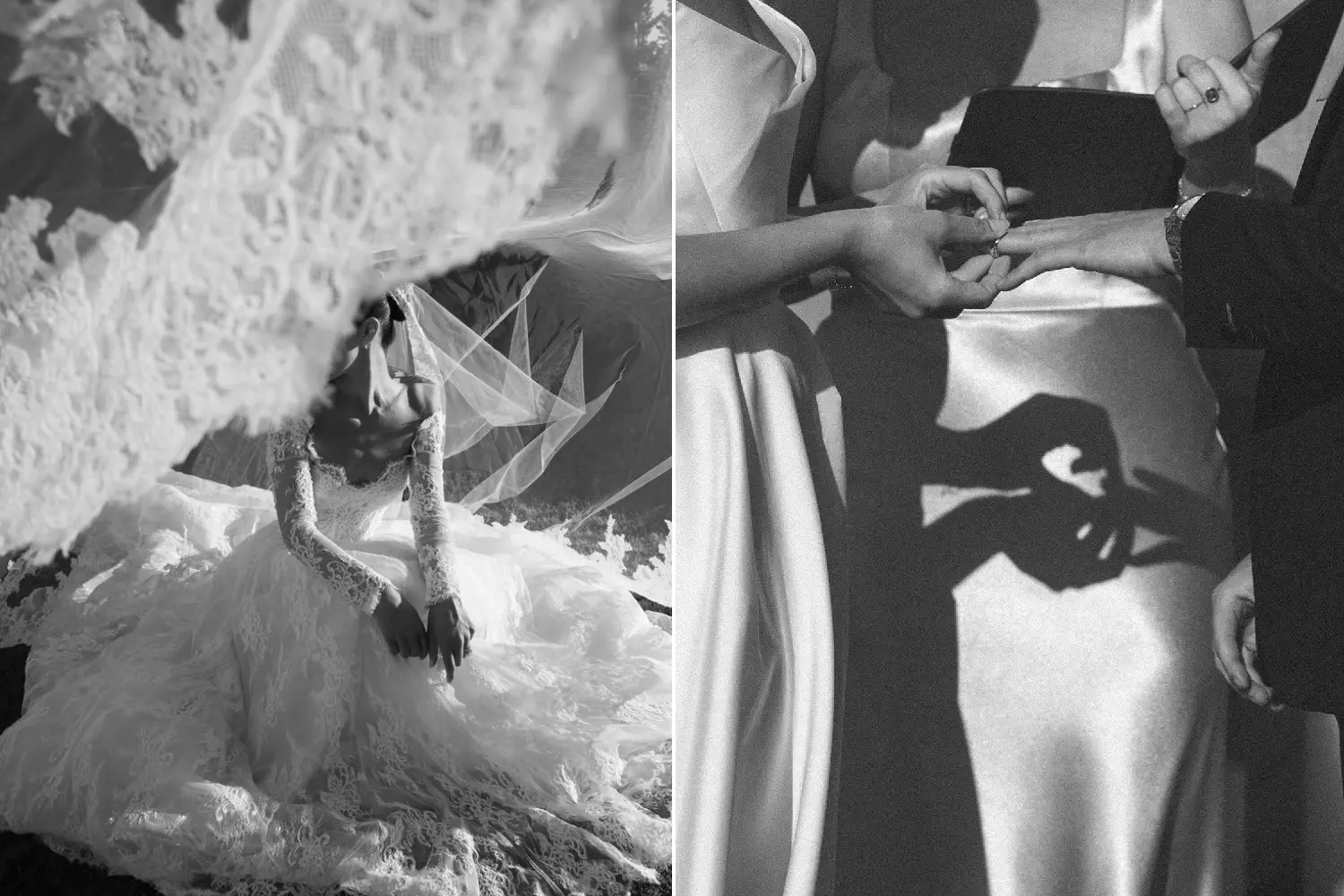
The Wedding Day Blur: Why Couples Forget 70% Of Their Own Wedding Day
Photo: PINTEREST
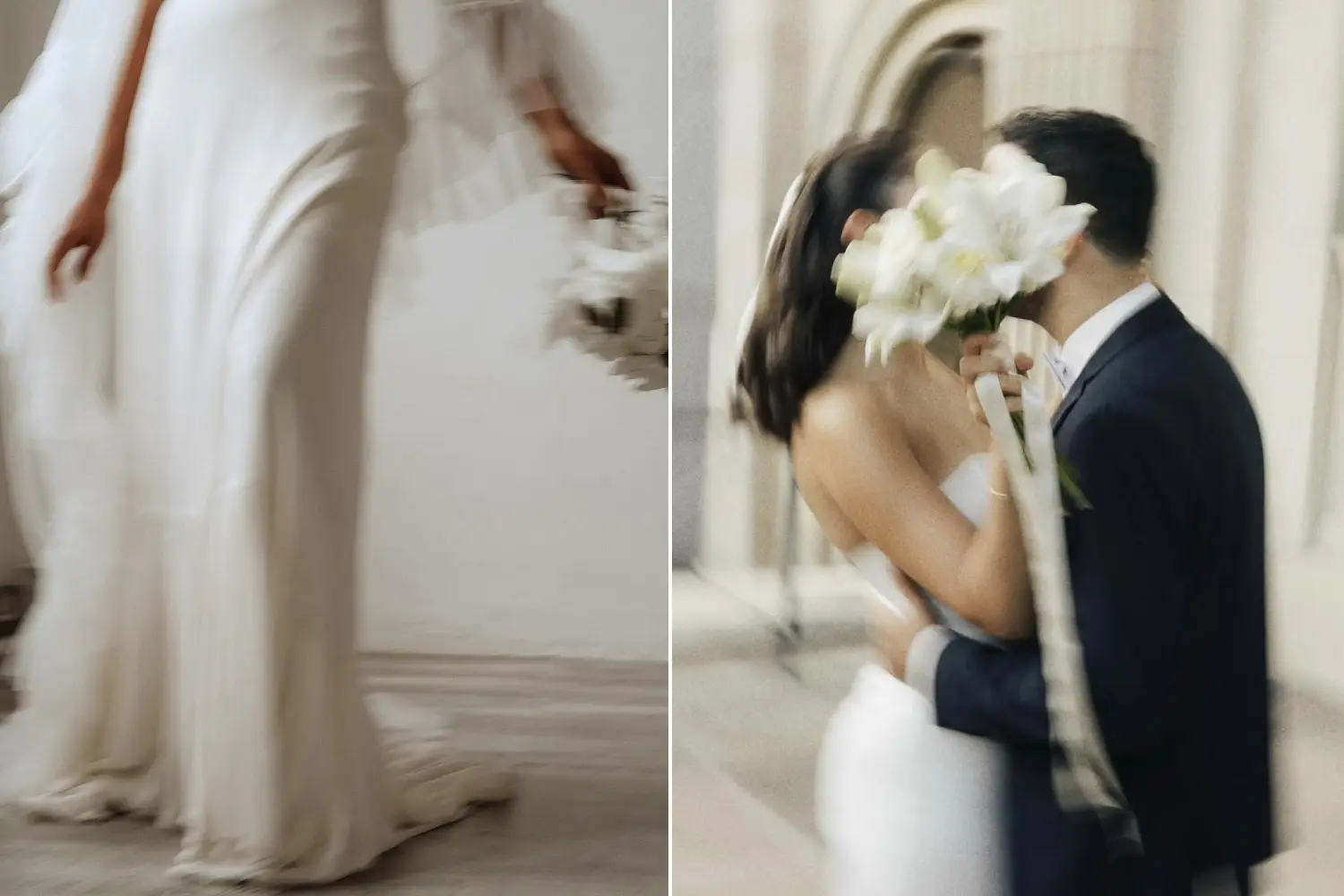
The final note of the string quartet fades into the arched ceiling of the Château, the final guest slips away into a waiting car, and the heavy oak doors click shut. It is 2:00 AM. For the first time in fifteen hours, you are alone with your partner. You sit on the edge of the velvet chair in the bridal suite, look into each other’s eyes, and ask the question that almost every modern couple asks in the quiet aftermath of their celebration: “What actually just happened?”
If you have already walked down the aisle, you know this feeling intimately. "The day flew by in a complete flash," you tell your friends. "I barely remember eating the main course," or "Everyone keeps telling me about these incredible conversations we had at the reception, and I have absolutely no memory of them." You look at the beautifully wrapped guest book, the drying bouquet, and the empty champagne flutes, wishing you could just pause time and relive it – even if only to prove to yourself that you were actually there.
Science suggests many couples forget up to 70% of their own wedding day. Their brains were working overtime to protect and process one of the most emotionally significant experiences of their lives.
This experience is so universal that it has a name in the premium wedding industry: the wedding day blur. For years, couples have had private-messaged planners or confessed to their close friends that they feel a lingering sense of guilt or post-wedding sadness because massive blocks of their celebration are shrouded in a soft, non-negotiable mist. They wonder if they were too anxious, too distracted, or simply ungrateful.
But the reality is far more beautiful, reassuring, and deeply human. You are experiencing the wedding memory gap. Your brain filtered the details because it was entirely consumed by the sheer magnitude of the experience. It was busy protecting, processing, and preserving a once-in-a-lifetime shift in your universe.
Modern Weddings Ask More Of Us Than Ever Before
When we think about weddings, we often talk about beauty. We talk about flowers, architecture, fashion, music and aesthetics. Rarely do we stop and consider the extraordinary amount of information our brains are processing from the moment we wake up until the final dance. Modern weddings ask an enormous amount from us. Within a single day, we are expected to be deeply emotional, socially available, visually present, elegant, grateful and entirely immersed in every interaction happening around us. Even the most grounded person suddenly finds themselves navigating hundreds of moments simultaneously. We are greeting family members we have not seen in years, introducing different generations to one another, trying to absorb the ceremony while also thinking about logistics, listening to speeches while processing our own emotions and constantly shifting our attention between people, sounds and environments.
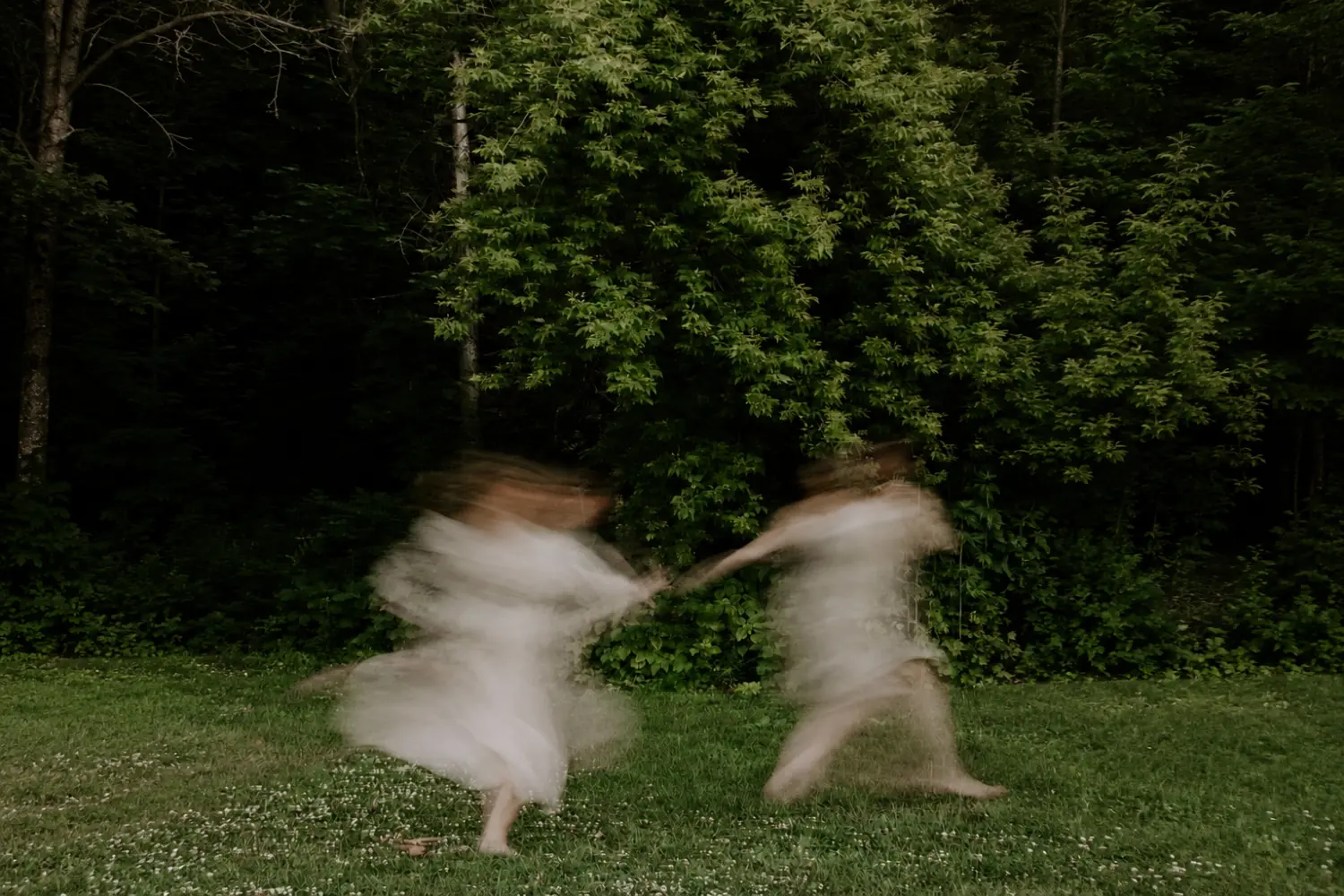
Our brains were simply never designed to process that many emotional, social and sensory experiences all at once. Under normal circumstances, memory formation is a relatively gentle process. Information enters gradually, allowing our minds to organize and archive it into long-term storage. Weddings, however, are anything but ordinary circumstances. They are emotional marathons compressed into a single day. At a certain point, the brain reaches capacity and quietly begins making decisions on our behalf. It starts prioritizing what feels essential and letting go of everything else. Without us realizing it, it moves into preservation mode, protecting us from overwhelm by keeping only the emotional highlights and allowing the smaller details to fade into the background.
Photo: PINTEREST
Why Adrenaline Changes The Way We Experience Time
One of the first physiological changes that happens on a wedding day is an increase in adrenaline. This is not necessarily anxiety – it is anticipation. Even if you feel calm, your body understands that something significant is happening. Your heart rate increases slightly. Your breathing changes. Your senses become sharper. Adrenaline is a remarkable hormone because it changes our relationship with time itself.
Many couples describe their ceremony as simultaneously lasting ten minutes and ten seconds. The walk down the aisle may feel incredibly slow in the moment, yet afterwards it feels like it disappeared in an instant. This is because adrenaline narrows our focus. Instead of processing everything around us, our brains begin selecting one central point of attention. For many people, this becomes their partner.
Later, couples can often describe with astonishing precision the expression on their partner's face during the vows. They remember trembling hands, watery eyes or a particular smile. Yet they may have no memory whatsoever of the flowers lining the aisle, the music that was playing or even where certain guests were sitting. Nothing went wrong. Their brains simply chose what mattered most.
Photo: PINTEREST
Emotional Overload Changes Memory Formation
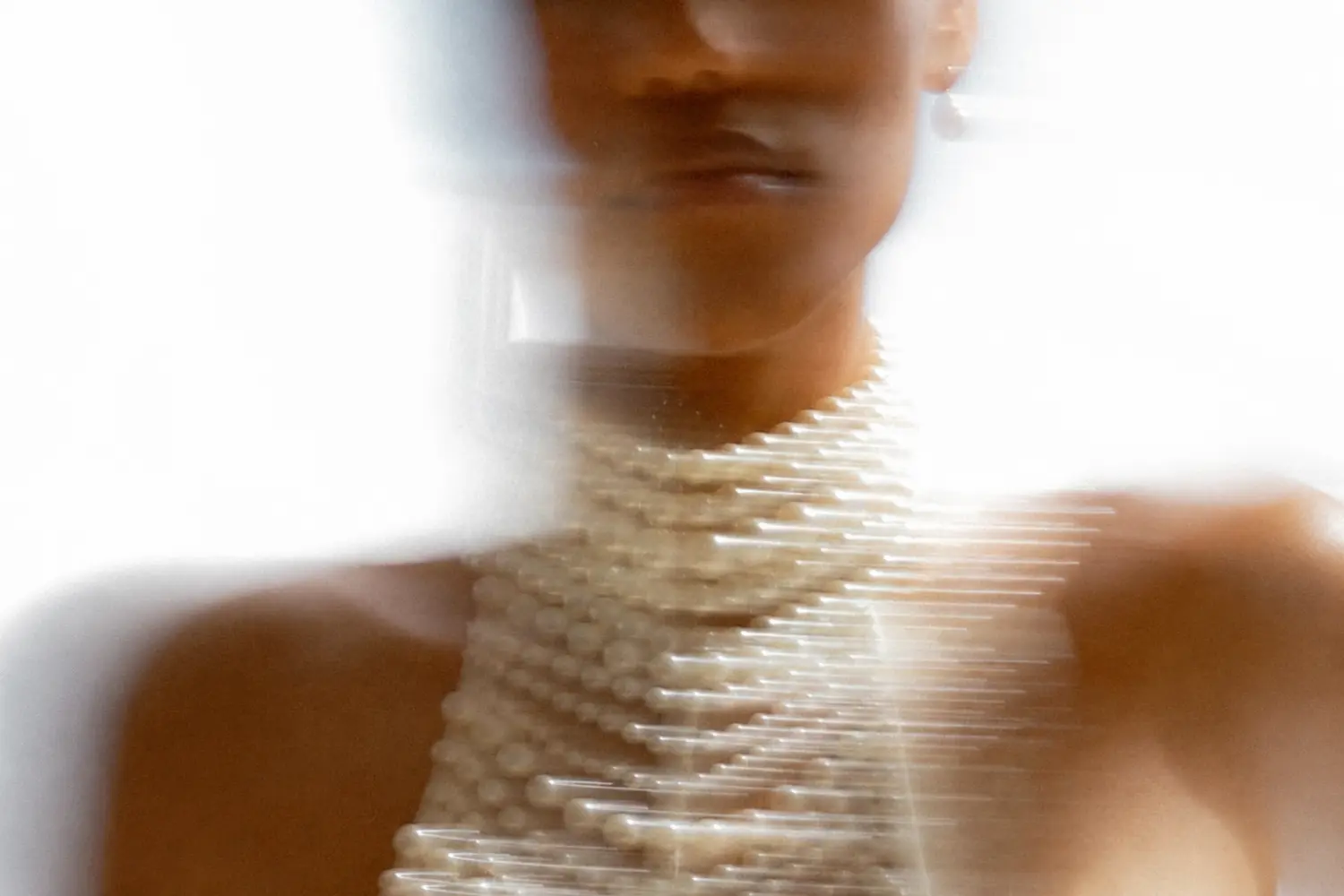
For decades, researchers have studied the relationship between emotion and memory. Landmark work by James McGaugh and Larry Cahill demonstrated that emotionally significant experiences do not necessarily create more complete memories. Instead, intense emotions tend to produce vivid fragments. In other words, our brains become excellent at preserving emotional highlights rather than entire timelines.
Researchers Payne and colleagues later explored how stress hormones, particularly cortisol, influence memory encoding. Their findings suggested that during periods of heightened emotional arousal, the brain begins deprioritizing neutral information. Suddenly, this explains so much about weddings. It explains why couples vividly remember their vows but forget their appetizers. It explains why they remember hugging their parents but cannot remember what song played during dinner. And why entire conversations seem to disappear.
Those memories are not gone because they lacked value. They simply occupied a different place in the hierarchy of memory. Our brains are not cameras. They are meaning-making machines. And on a wedding day, meaning takes precedence over detail.
Photo: PINTEREST
The Social Exhaustion Nobody Warns You About
When we think about weddings, we often talk about beauty. We talk about flowers, architecture, fashion, music and aesthetics. Rarely do we stop and consider the extraordinary amount of information our brains are processing from the moment we wake up until the final dance. Modern weddings ask an enormous amount from us. Within a single day, we are expected to be deeply emotional, socially available, visually present, elegant, grateful and entirely immersed in every interaction happening around us. Even the most grounded person suddenly finds themselves navigating hundreds of moments simultaneously. We are greeting family members we have not seen in years, introducing different generations to one another, trying to absorb the ceremony while also thinking about logistics, listening to speeches while processing our own emotions and constantly shifting our attention between people, sounds and environments.
Our brains were simply never designed to process that many emotional, social and sensory experiences all at once. Under normal circumstances, memory formation is a relatively gentle process. Information enters gradually, allowing our minds to organize and archive it into long-term storage. Weddings, however, are anything but ordinary circumstances. They are emotional marathons compressed into a single day. At a certain point, the brain reaches capacity and quietly begins making decisions on our behalf. It starts prioritizing what feels essential and letting go of everything else. Without us realizing it, it moves into preservation mode, protecting us from overwhelm by keeping only the emotional highlights and allowing the smaller details to fade into the background.
Photo: PINTEREST
The Mental Load Nobody Talks About
There is another invisible layer to the wedding day blur that often goes unnoticed – the mental load. Long before the wedding morning arrives, many brides have spent months making hundreds, if not thousands, of decisions. Every invitation, every flower, every seating chart, every timeline adjustment and every design choice requires cognitive energy. By the time the celebration begins, much of that energy has already been spent.
Psychologist Roy Baumeister famously explored the concept of decision fatigue, demonstrating that decision-making draws from a limited cognitive resource.
Eventually, the brain becomes exhausted. Wedding mornings can therefore feel surprisingly demanding. Even while sitting in the makeup chair, brides are often answering questions, solving problems and managing details. The cumulative effect is significant. By the time the ceremony begins, the brain may already be operating at reduced capacity. This is not a sign of weakness. It is a sign of being human.
Photo: PINTEREST
Grooms Experience The Blur Too
Wedding memory gaps are not exclusive to brides. Grooms often experience them differently, but just as intensely. Many carry an invisible sense of responsibility throughout the day. They are welcoming guests, managing family dynamics, checking logistics and supporting their partner emotionally. At the same time, they are also processing a profound personal transition. Marriage is a public declaration of commitment. It is an emotional threshold. That weight, even when joyful, is substantial.
Many grooms describe feeling as though they were constantly moving from one task to another. By the evening, their brains are equally overwhelmed. The result is often identical. The day becomes fragmented.
Photo: PINTEREST
Why Photographers Remember Weddings Better Than Couples Do
Perhaps the most fascinating aspect of the wedding memory gap is this: your photographer will probably remember your wedding better than you do. They are experiencing an entirely different reality. Photographers are observers. They are not simultaneously managing emotions, hosting guests and navigating a life transition. Their nervous systems remain comparatively calm. They are studying light, movement, expressions and relationships. Their brains are free to absorb the details.
Luxury destination photographer Antonino Gittoexperiences this constantly:
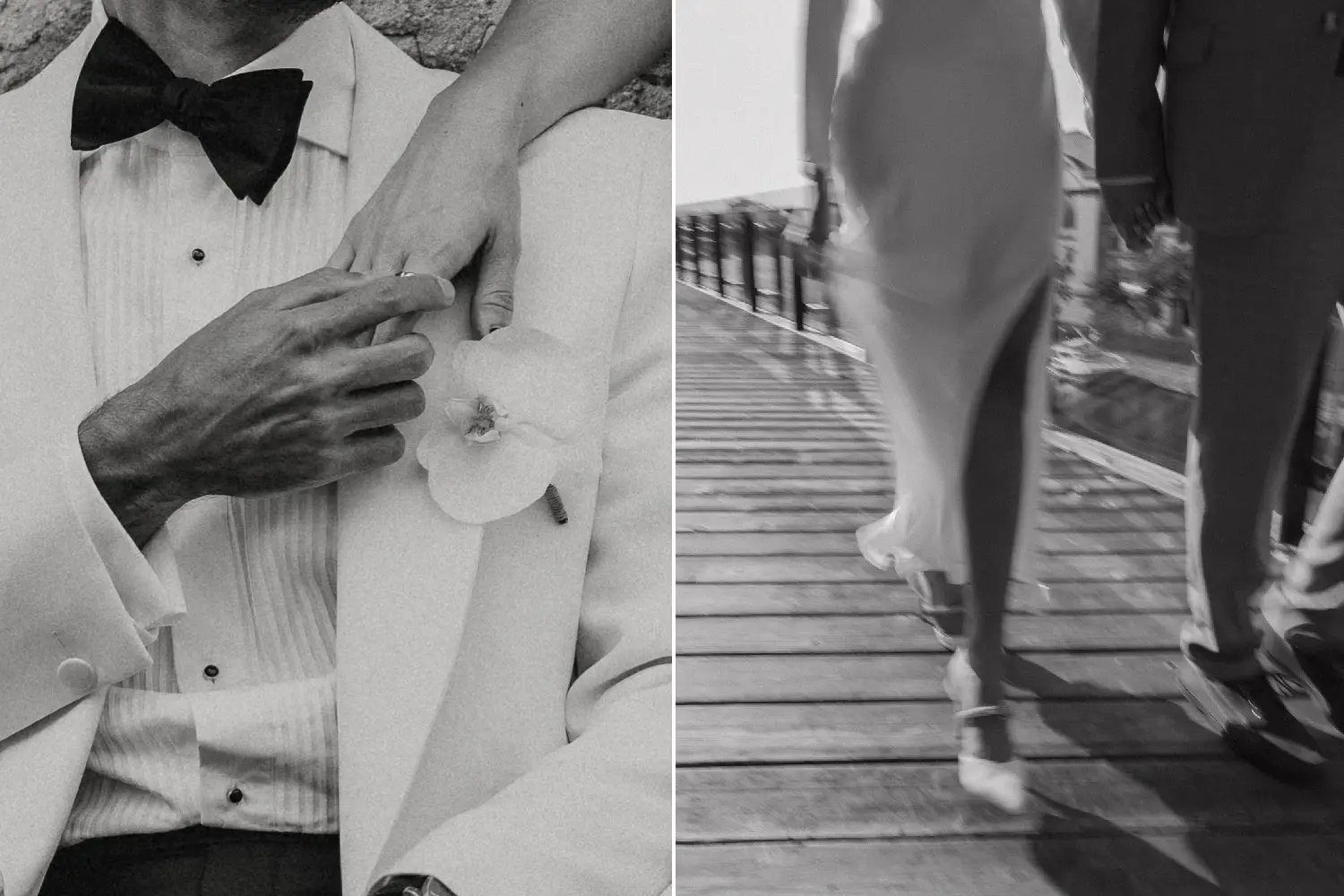
“The phrase I hear most often after delivering a gallery is: “We had no idea all of this was happening.” That sentence describes the meaning of my work better than anything else I could say. A photographer doesn't only document what unfolds in front of the couple – they capture everything taking shape around them: small gestures, shifts in light, details of the location, people meeting, peripheral moments that often become central to how a wedding is remembered.
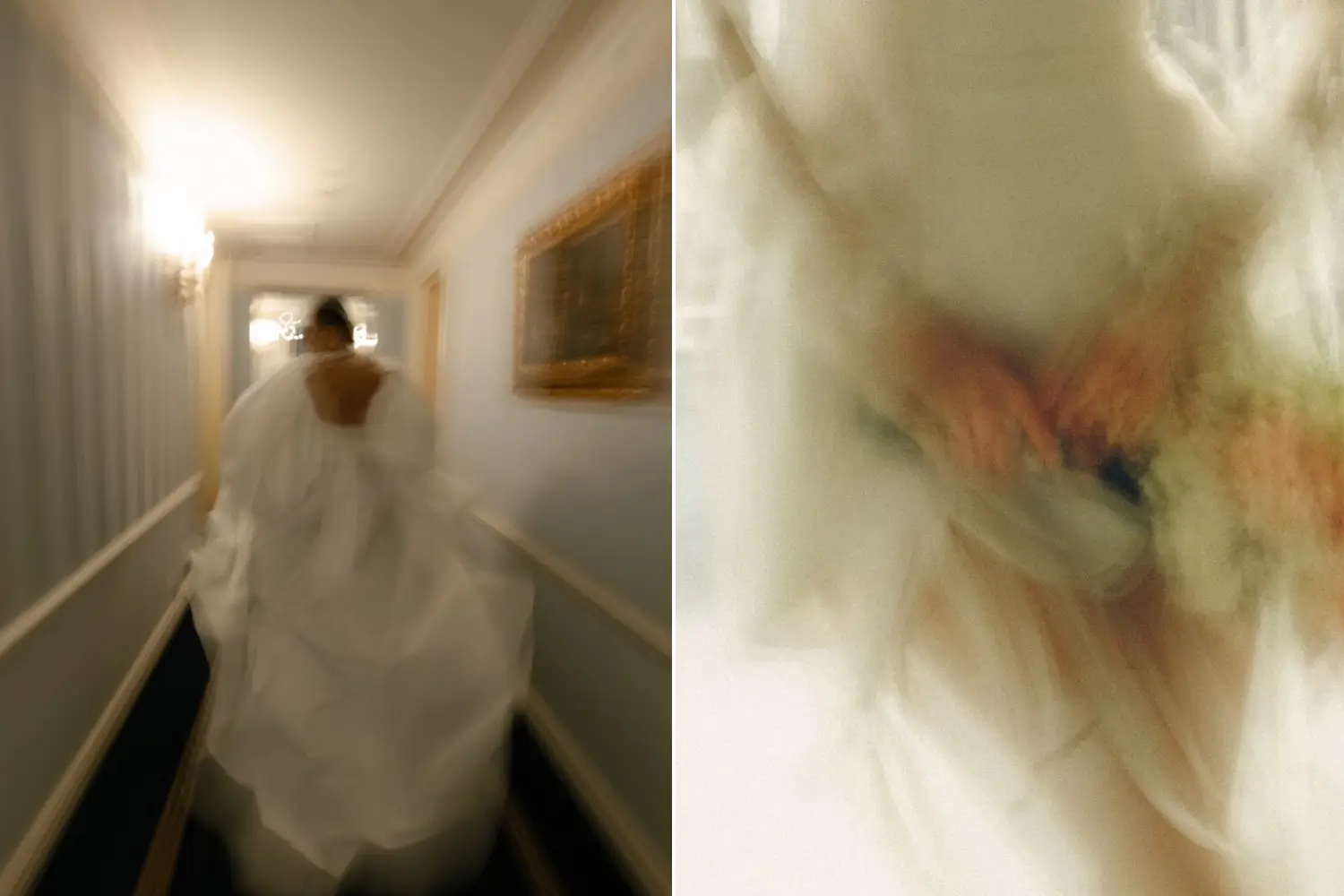
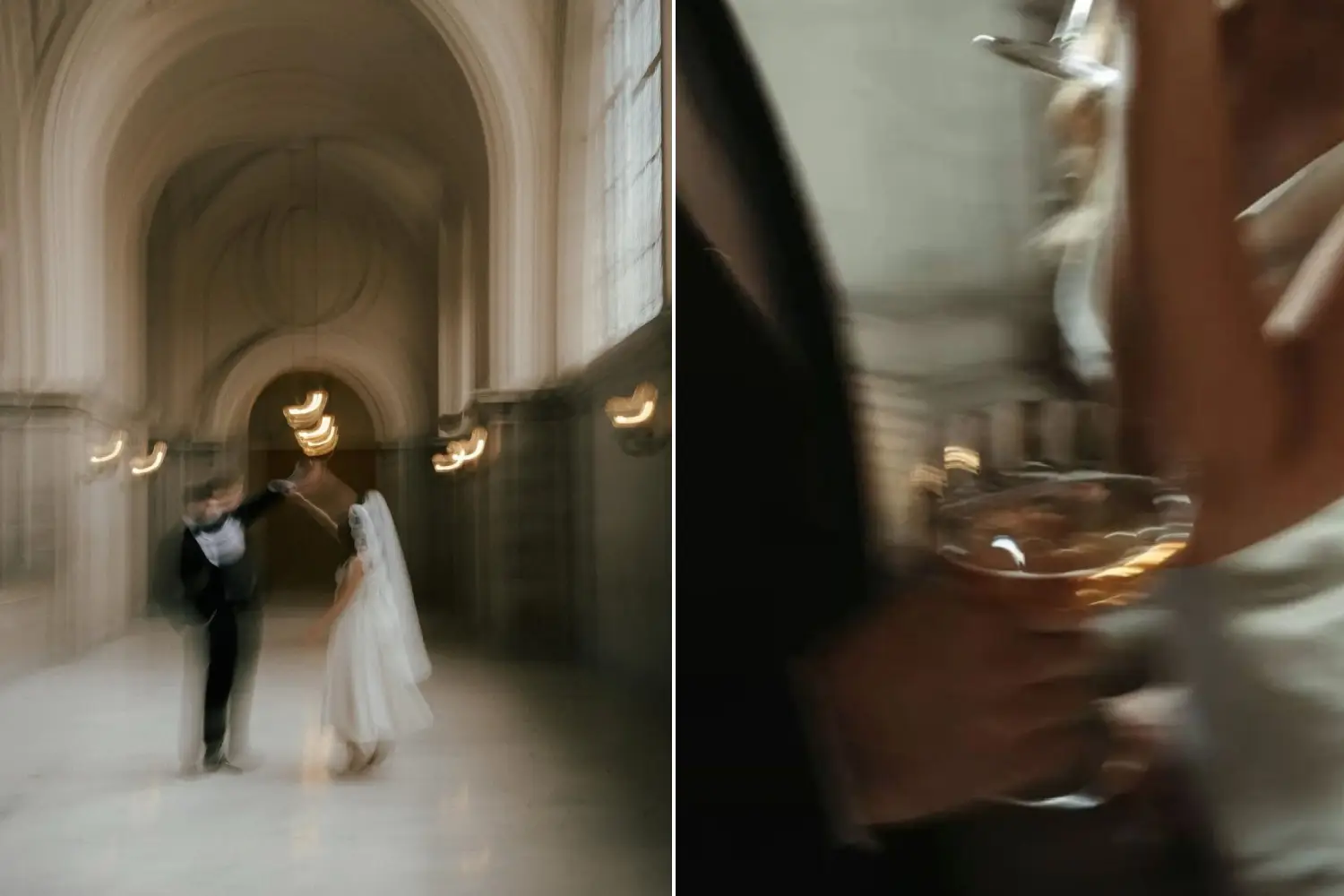
There is a point when the couple enters a kind of blur. It almost always starts after the ceremony, when the pace shifts and everything accelerates – the embraces, the movement through the venue, the greetings, the music, the dinner, the dancing. The couple is present, but they're absorbing so much at once that perception becomes selective by necessity.
Photographers remember the day differently because they live it differently. We are inside the event, but simultaneously observing it with an analytical parallel mind – reading the light, tracking movement, watching the relationships between people, following the rhythm of the day, noticing how the location itself changes hour by hour. In this sense, the photographer becomes an external memory for the couple.”
Why Bigger Weddings Do Not Necessarily Create Bigger Memories
There is an interesting paradox within luxury weddings. More details do not automatically create more memories. Sometimes the opposite happens. When timelines become packed with entertainment, outfit changes, performances and tightly scheduled transitions, couples spend most of the day anticipating what comes next.
Instead of fully inhabiting a moment, they are already moving toward the next one. The irony is that true luxury often creates more space, not more activity. The less rushed a timeline feels, the easier it becomes to actually remember being there.
The weddings people describe most vividly are rarely the busiest ones. They are often the ones that allow room for pauses. Room for breath. Room for stillness.
Photo: PINTEREST
How To Slow Down Time On Your Wedding Day
While we cannot alter neuroscience, we can create conditions that help our brains remain present. One of the most valuable things you can do is protect the first hour of your morning. Before checking your phone, before reading messages and before guests arrive, create a quiet space for yourself. Eat breakfast slowly. Listen to music. Sit in silence. Give your nervous system a calm beginning.
Another powerful practice is pausing before walking down the aisle. Take one breath. Look around. Observe the architecture, the light and your partner waiting for you. Allow your brain a moment to register that this is happening. After the ceremony, create a private ten-minute reset. No guests. No cameras. No obligations. Simply sit together. These small pauses can dramatically change how your brain stores memories.
Another surprisingly effective tool is scent. Our sense of smell is directly connected to emotional memory center in the brain. Choosing a signature fragrance exclusively for your wedding day can become a powerful memory anchor for years to come. And finally, step away during sunset. Walk outside together. Observe your celebration from afar. Watch your guests laughing. Listen to the music in the distance. For a brief moment, become observers instead of hosts.
Photo: PINTEREST
Memory Is Also Why Your Wedding Team Matters So Much
Perhaps one of the most overlooked aspects of wedding planning is understanding that your professional team becomes part of your memory system. Photographers preserve images. Videographers preserve voices. Planners preserve calm. Content creators preserve movement. Their work extends far beyond logistics. They become guardians of experiences you may never consciously remember. This is why choosing people you genuinely trust matters so deeply.
“From our experience, photography and film do not simply document what happened. They help couples access what they were too overwhelmed to fully absorb in the moment. This is why we always tell our couples that choosing the right team is one of the most important decisions they will make. On the wedding day, they need to fully trust the people beside them, because they cannot see, absorb or remember everything that is happening around them.
Very often, when couples receive their gallery or film, the most emotional reaction comes from seeing a moment they had completely forgotten or never even realized had happened. A parent holding back tears, a friend laughing in the background, a quiet gesture between two people. Those are the moments that make the memory feel complete again.
For us, the most meaningful wedding stories are not built only from the big, expected moments. They are built from everything happening around them – the atmosphere, the movement, the imperfect seconds and the people. That is often where the real memory lives.”
Photo: PINTEREST
Perhaps Forgetting Is Part Of The Beauty
Perhaps we were never meant to remember every detail. Perhaps the purpose of a wedding was never to create a perfect archive of an entire day, but rather to surrender ourselves to an experience significant enough to alter the course of our lives. In many ways, weddings resemble other profound transitions in life. We do not remember every detail of falling in love, nor do we remember every conversation that shaped our relationships over the years. What we remember instead are fragments. A look, a feeling, a sense of safety, a moment that quietly changed everything.
Maybe this is precisely what weddings are supposed to become. Not a collection of perfectly catalogued details, but an emotional imprint that stays with us long after the flowers have wilted and the music has faded. The human brain is not a machine designed to preserve every second equally. It is a deeply intuitive organ that protects what carries meaning. It stores sensations rather than timelines and emotions rather than schedules. The fact that certain details disappear is not evidence that we were absent. It is evidence that we were fully immersed in one of the most significant experiences of our lives.
Years later, you may not remember the exact shade of the linens or the sequence of songs played during dinner. You may not remember every conversation you had or every person you hugged. But you will remember the feeling of seeing your partner waiting for you at the end of the aisle. You will remember your parents' expressions, the overwhelming sense of gratitude and the quiet realization that life had shifted in an irreversible and beautiful way. Your brain did not fail you that day. It did exactly what it was designed to do. It held on to what mattered most and gently released the rest.
Perhaps that is the greatest lesson hidden inside the wedding day blur. A wedding is not a performance to remember perfectly. It is a threshold to be lived fully. The memories that remain are not incomplete; they are distilled. They are proof that for one extraordinary day, your entire being was occupied with something far greater than documentation. It was occupied with love itself.
Photo: PINTEREST
Is it normal to feel like my wedding day went by too fast?
Completely. This is one of the most common experiences couples describe after their wedding. Emotional intensity, adrenaline and social stimulation can create a sense of time distortion, making the day feel significantly shorter than it actually was. Building intentional pauses into your timeline with the help of experienced Wedding Planners on BrideLifestyle can make a remarkable difference. Explore: Wedding Plannerson BrideLifestyle.com.
Why do photographers seem to remember my wedding better than I do?
Because they experience the day differently. They are observers rather than participants, allowing them to notice details that your brain simply cannot process while navigating emotions, guests and hosting responsibilities. Documentary-style photographers are particularly skilled at preserving these overlooked moments. Explore: Wedding Photographers on BrideLifestyle.com.
Can luxury weddings actually become overwhelming?
Yes. True luxury is not about adding more elements; it is about creating ease. Overly packed timelines can increase overstimulation and make memories harder to retain. Experienced Wedding Agencies and Luxury Wedding Plannerscan help design celebrations that feel spacious and intentional. Explore: Wedding Agencies & Luxury Wedding on BrideLifestyle.com.
Should we invest in wedding videography if we already have a photographer?
Absolutely. Photography captures visual memories, while film preserves voices, movement and atmosphere. Many couples say hearing their vows again years later becomes one of their most treasured experiences. Explore: Wedding Video on BrideLifestyle.com.
What is the best way to create a calm wedding morning?
Keep your morning intentionally simple. Limit phone use, create extra time in your schedule and surround yourself with a trusted team. Working with professional Hair & Makeup Artists, Wedding Planners and choosing a comfortable getting-ready environment can transform the entire experience. Explore: Hair & Makeup and Wedding Planners on BrideLifestyle.com.
This website uses cookies to improve the user experience and optimize its performance. By continuing to use this website, you agree to the use of cookies on this website.
Read more

 share
share



.webp)
.webp)
.webp)
.webp)
.webp)