Every spring brings its own floral personality, but 2026 feels different. We’re not leaving pastels behind—far from it. Instead, couples are reworking them. The soft blushes, lavenders, and buttery yellows we love are still here, but they’re being styled with sharper intention, stronger shapes, and a noticeable shift toward sustainability. Spring wedding flowers are no longer just pretty. They’re expressive and personal.
If you’re planning an April celebration or refining your May bridal style, you’ve probably noticed the change. Garden party wedding aesthetics are evolving, sustainable florals are becoming the standard, and seasonal wedding blooms are finally getting the spotlight they deserve. In short, pastel wedding 2026 trends are softer at first glance—but much bolder underneath.
The Evolution of Spring Wedding Flowers in 2026
Spring weddings have always leaned romantic. Pale roses, fluffy peonies, delicate tulips—you know the look. But in 2026, designers are gently disrupting that tradition. Instead of symmetrical centerpieces and predictable pink-and-white pairings, couples are asking for florals that feel alive. Movement matters. Texture matters. Even negative space matters.
This shift isn’t about abandoning softness. It’s about elevating it. Florals are designed to look as if they’re growing naturally across tables or climbing ceremony arches. Installations feel immersive rather than decorative. And most importantly, couples are choosing blooms that align with the season instead of fighting against it.
From Traditional Pastels to Statement Soft Tones
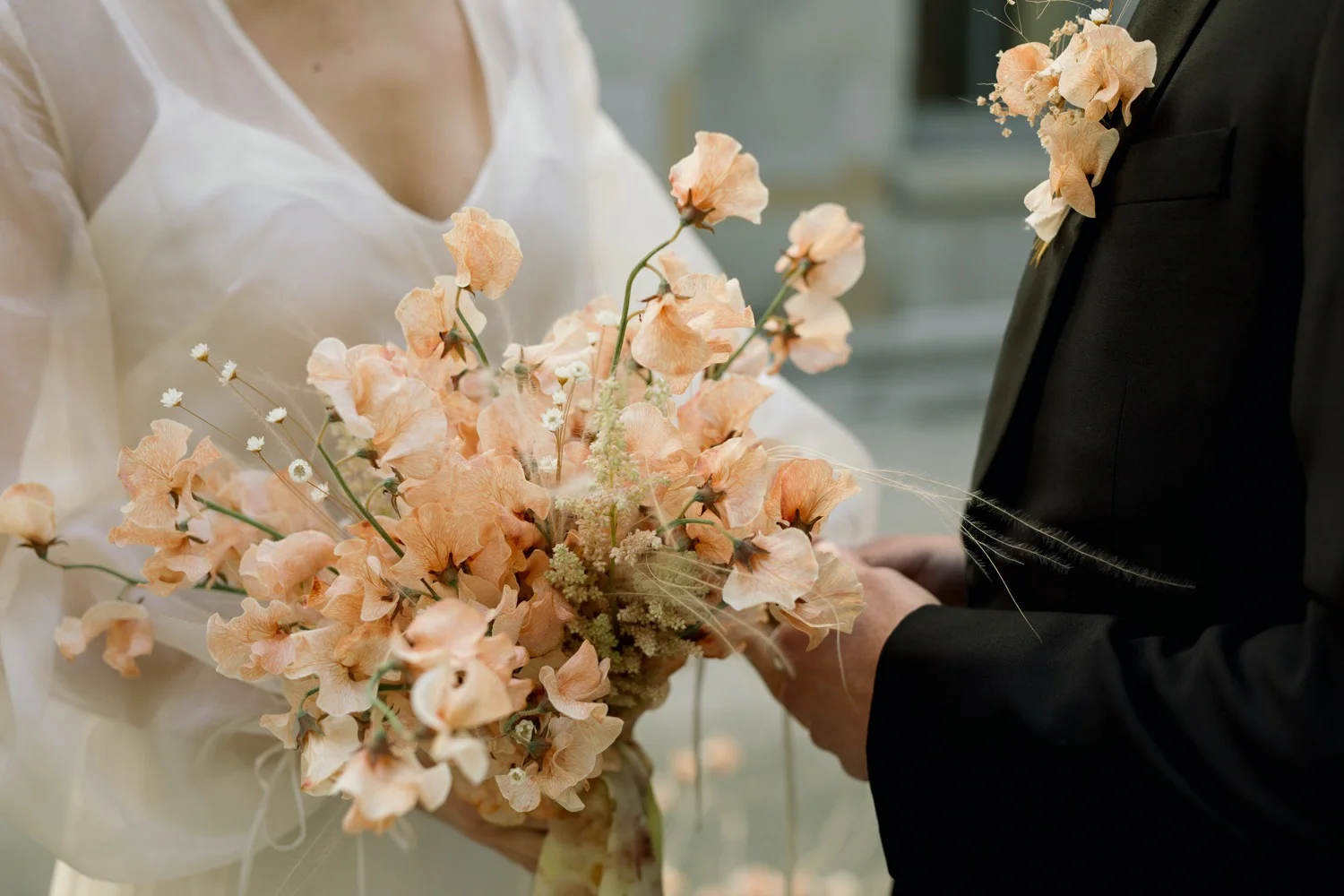
Pastels aren’t disappearing—they’re maturing. Instead of powder pink and baby blue, we’re seeing tones like buttercream yellow, dusty lilac, muted apricot, soft pistachio, and peach fuzz. These colors feel grounded, less sugary and more nuanced.
What makes pastel wedding 2026 palettes stand out is contrast. A butter-yellow arrangement might include a few deep coral ranunculus. A blush bouquet might hide subtle raspberry accents. These small injections of depth prevent pastels from feeling flat. It’s a quiet kind of boldness. Nothing screams for attention—but everything feels considered.
Texture Over Color: The New Floral Priority
Here’s where things get interesting. Florists are talking less about color and more about texture.
Couples are requesting combinations like:
Ruffled sweet peas with structured anemones
Airy cosmos paired with heavy garden roses
Budding branches woven into low centerpieces
Ornamental grasses softening formal tablescapes
Texture creates movement. And movement creates emotion.
In 2026, arrangements aren’t tightly packed domes. They breathe. Some blooms sit higher. Others spill slightly over the edge of the vase. It’s controlled imperfection—and it photographs beautifully.
Pastel Wedding 2026 Color Palettes Couples Are Loving
The most talked-about palettes this season blend softness with subtle contrast. Rather than overwhelming guests with color, designers are building layered schemes that feel cohesive from bouquet to backdrop.
These combinations work especially well for garden party weddings, estate venues, and light-filled indoor spaces.
Buttercream & Blush with Unexpected Pops
Butter yellow has quietly become the breakout shade of 2026. It’s warm without being overpowering and pairs effortlessly with blush.
To modernize the look, florists are adding small clusters of corals, deep pink ranunculus, raspberry taper candles, and soft gold accents.
The trick is restraint. Bold tones appear in small doses—enough to energize the palette without stealing the softness.
For April wedding ideas, this combination feels optimistic and fresh, especially in natural light venues.
Lavender Haze & Sage Green for Garden Party Weddings
Lavender isn’t new. But in 2026, it’s softer and slightly muted—more haze than purple.
Paired with sage green and cream, it creates an ethereal garden party wedding aesthetic. Think flowing bridesmaid dresses, loose meadow-style arrangements, and ceremony arches that look like they’ve grown organically around the structure.
This palette works particularly well outdoors. The green tones anchor the lavender, preventing it from feeling overly sweet.
It’s romantic—but grounded.
Peach Fuzz & Sky Blue for Modern Spring Celebrations
For couples wanting something a little unexpected, peach fuzz paired with pale sky blue is gaining traction.
This palette feels fresh, youthful, slightly playful, and surprisingly elegant.
It’s ideal for April weddings in urban lofts or art-forward venues. The blue adds crispness, while the peach keeps everything bridal.
Pastels don’t have to mean traditional. This pairing proves it.
Seasonal Wedding Blooms Taking Center Stage
One of the most meaningful shifts in 2026 is the return to seasonal wedding blooms.
Couples are asking florists, “What’s naturally blooming right now?” instead of requesting imported flowers that don’t belong to the season. This decision supports sustainable florals, reduces shipping emissions, and often improves overall quality.
April Wedding Ideas: Early Spring Favorites
April weddings embrace delicacy. Early spring blooms bring lightness and movement. Popular April choices include tulips, sweet peas and anemones.
April arrangements often feature more negative space. Instead of packing every inch with flowers, designers allow stems to show and blooms to lean naturally. Less truly feels like more.
May Bridal Style: Lush Late-Spring Florals
By May, the floral landscape changes dramatically. Peonies burst open. Garden roses bloom abundantly. Lilacs fill the air with fragrance.
May bridal style tends to reflect that abundance. Gowns feature flowing fabrics, floral appliqué, and soft draping that echo the lushness of the arrangements.
May bouquets are typically fuller but still airy. They feel romantic without becoming overly structured. It’s softness at its peak.
Locally Grown & Sustainable Florals
Sustainable florals are no longer a niche request. They’re expected.
Couples planning an eco-friendly wedding are prioritizing:
Locally grown flowers
Reduced transportation
In-season sourcing
Minimal waste design techniques
Beyond environmental impact, local blooms often have more character. Slight variations in color and shape make arrangements feel unique rather than mass-produced. It’s a small shift in thinking—but it changes everything.
Spring Bridal Bouquet Trends for 2026
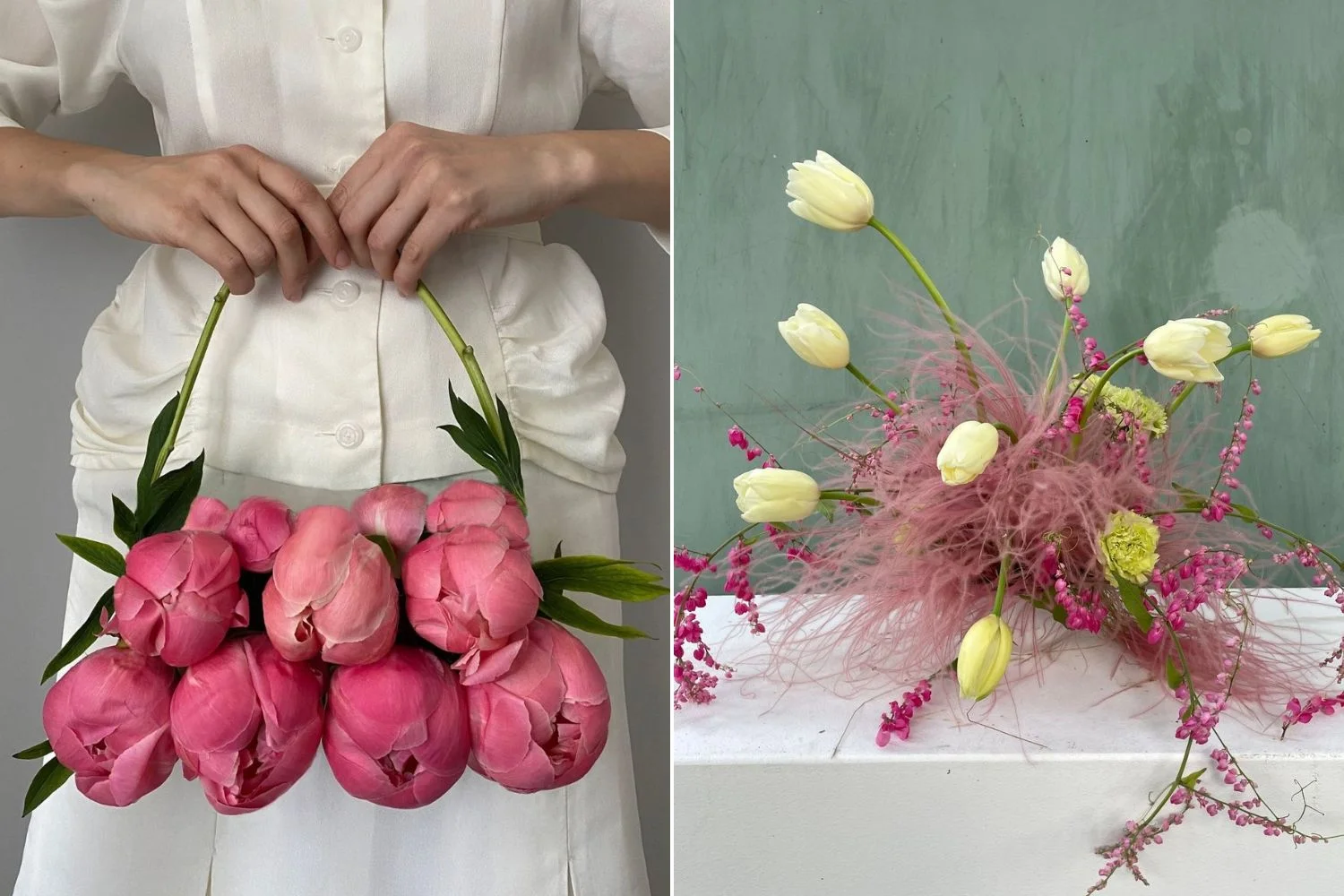
The spring bridal bouquet is evolving from accessory to statement piece.
Rather than tightly rounded bouquets, designers are leaning toward natural shapes and visible structure. Brides want bouquets that feel like an extension of their gown and personality—not an afterthought.
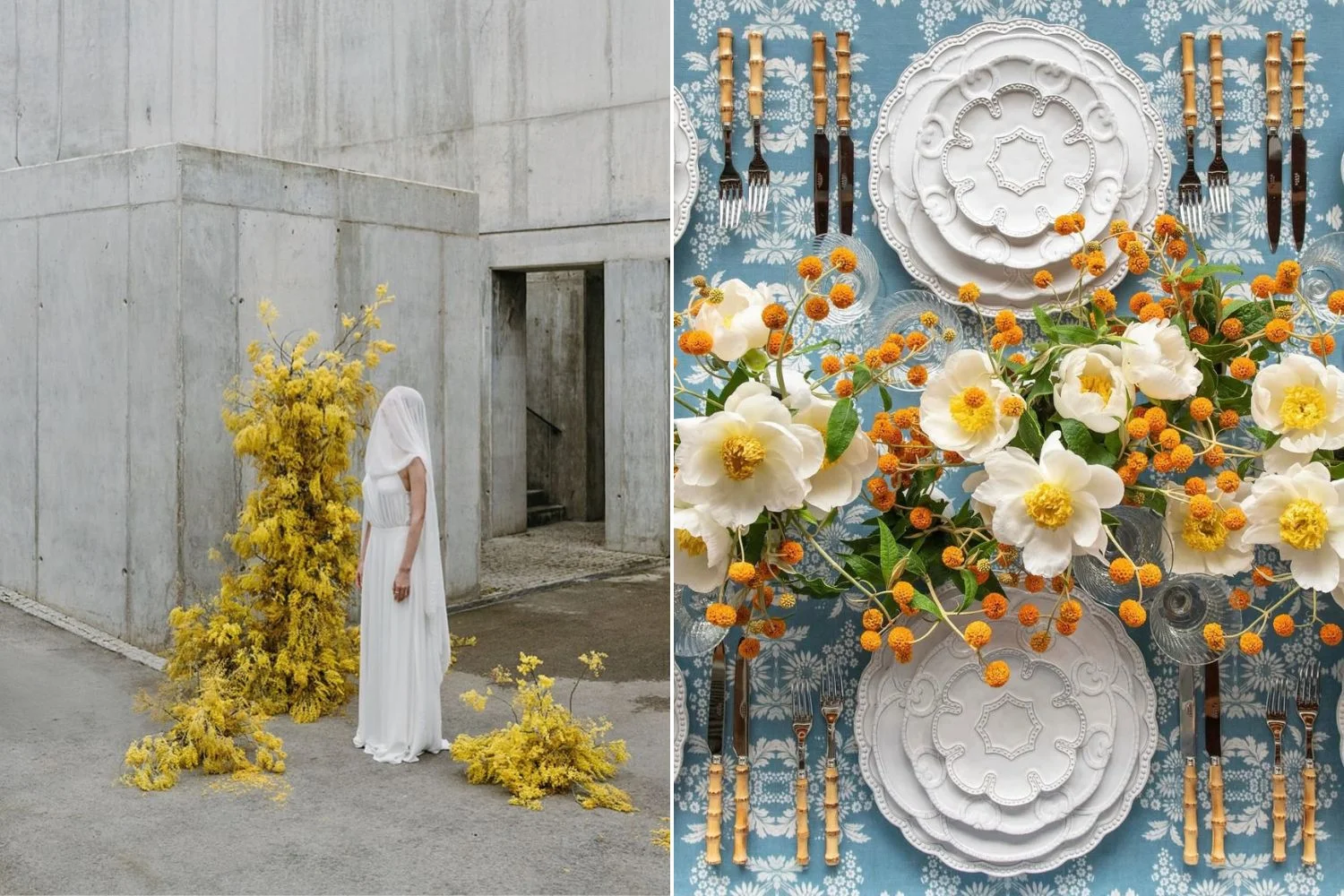
Photo (left): VISUAL CLUB | Photo (right): SOPHIE LIN BERARD
The Airy, Deconstructed Bouquet
This silhouette is leading the trend.
Characteristics include:
Asymmetrical shape
Varying stem heights
Light trailing greenery
Silk or raw-edge ribbons
The design feels spontaneous, though it’s carefully arranged. It pairs beautifully with minimalist dresses or soft May bridal style silhouettes.
There’s something undeniably romantic about a bouquet that looks freshly gathered.
Monochromatic Pastel Moments
Single-color bouquets are surprisingly impactful in 2026.
Imagine an all-buttercream bouquet composed of:
Roses
Ranunculus
Sweet peas
Tulips
Different petal shapes create depth without introducing additional hues.
This style feels modern and refined—ideal for couples who prefer understated elegance.
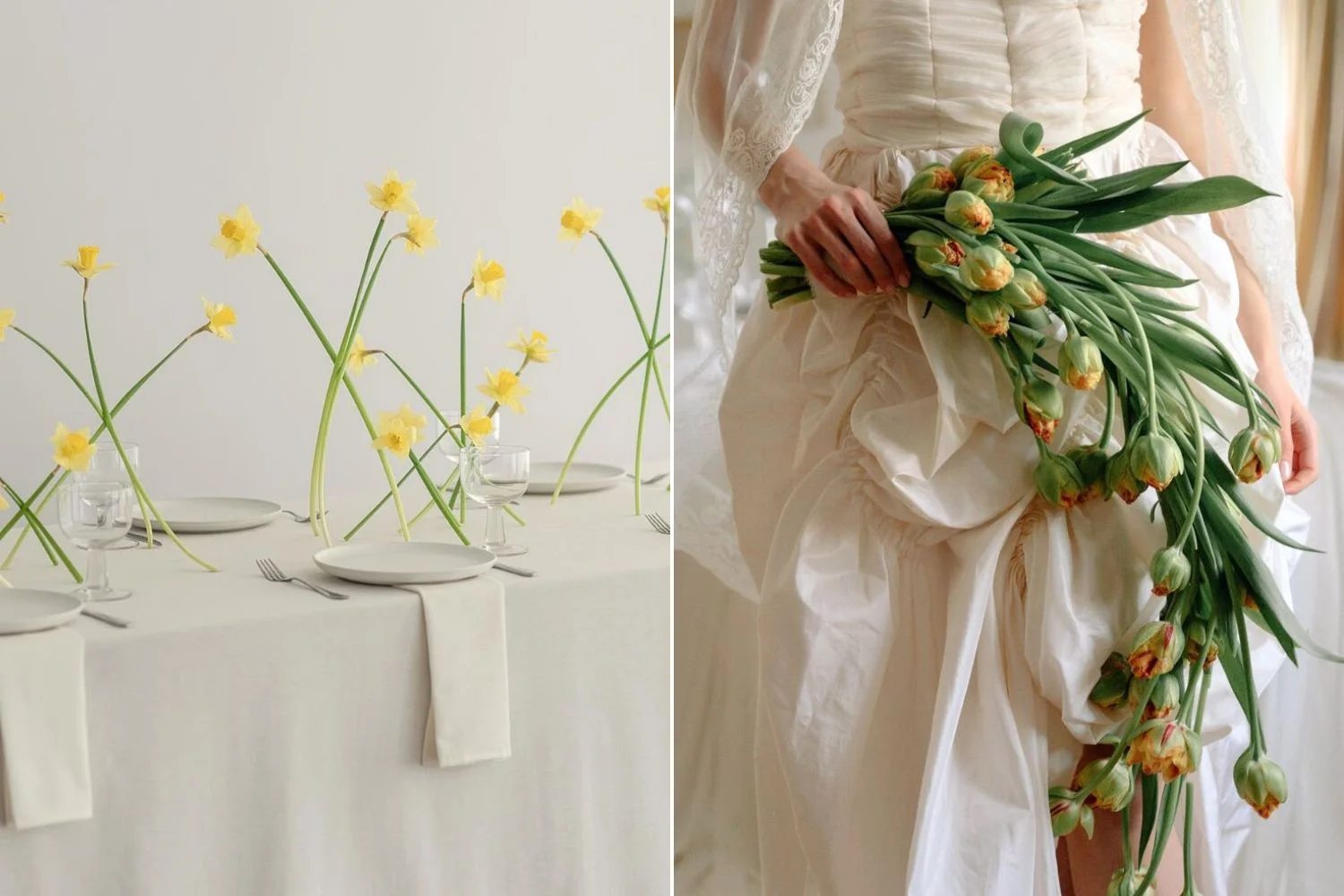
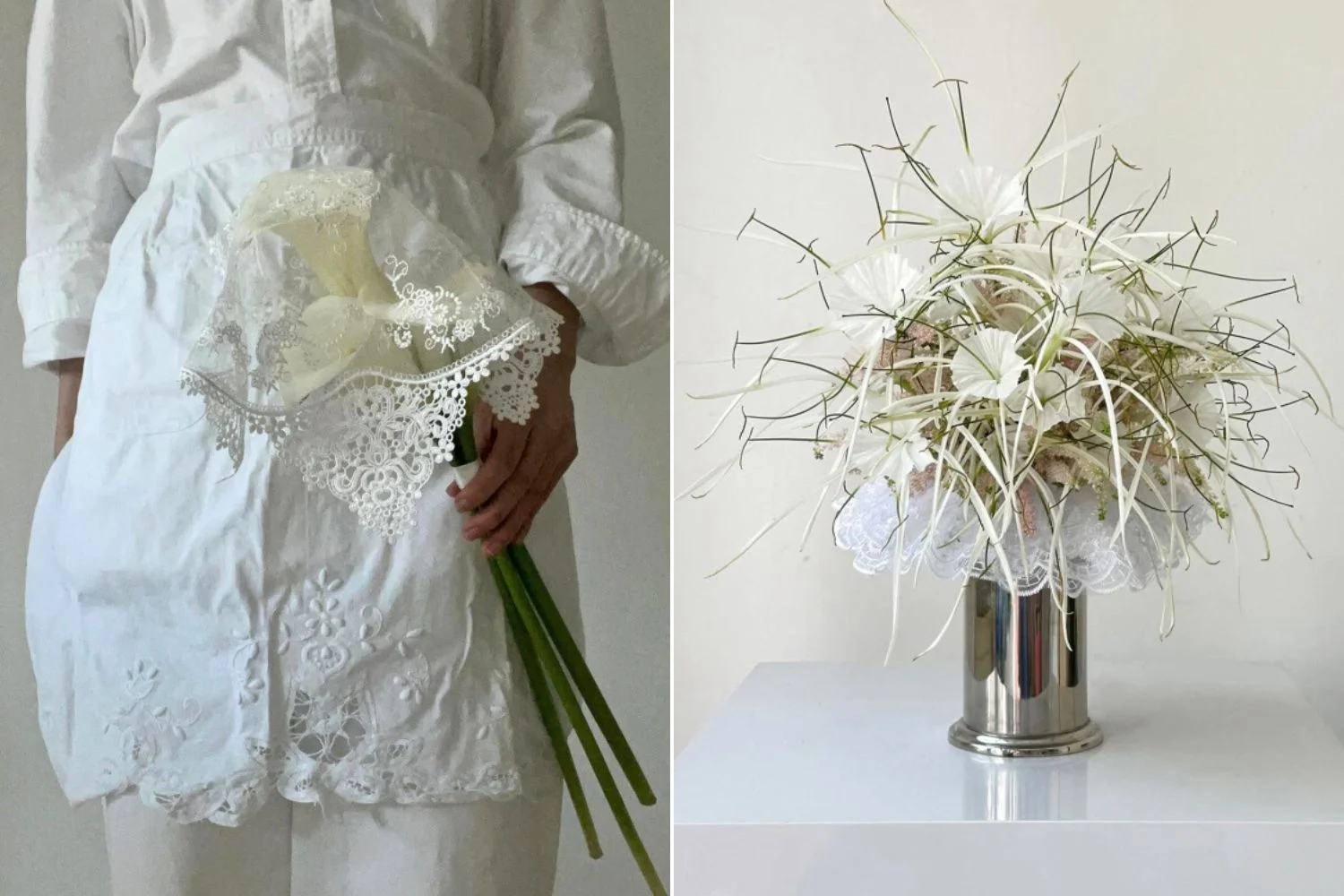
Sculptural & Artistic Hand-Tied Designs
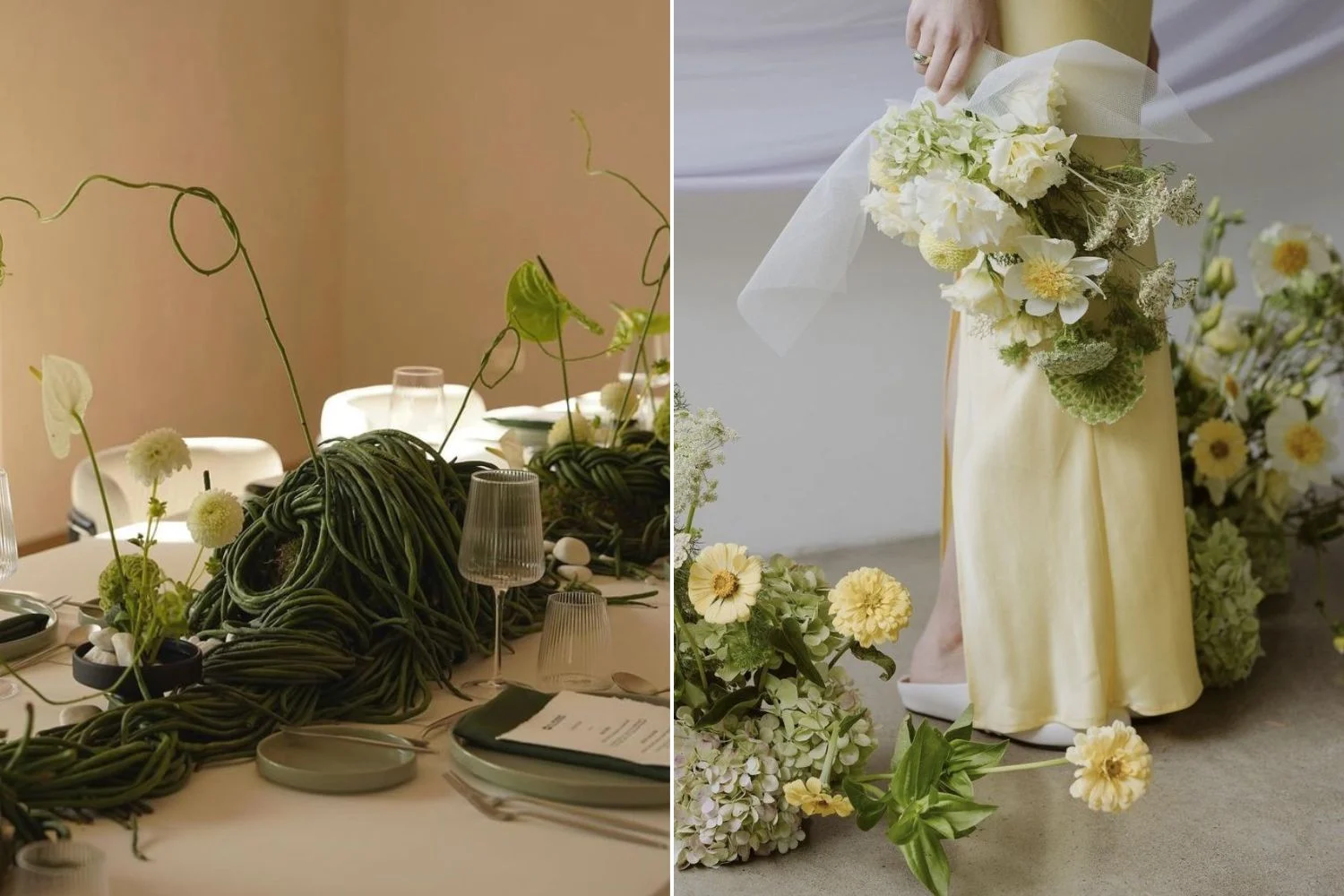
For brides who want drama, sculptural bouquets are emerging.
Designers incorporate curved branches, cascading orchids in pale tones, or uniquely shaped blooms to create an almost artful composition.
It’s less “perfect round bouquet” and more “living sculpture.”
And it works.
Photo (left): KRISTINA VINCHE
Floral Installation Ideas That Transform Spaces
In 2026, florals don’t just decorate—they define the environment.
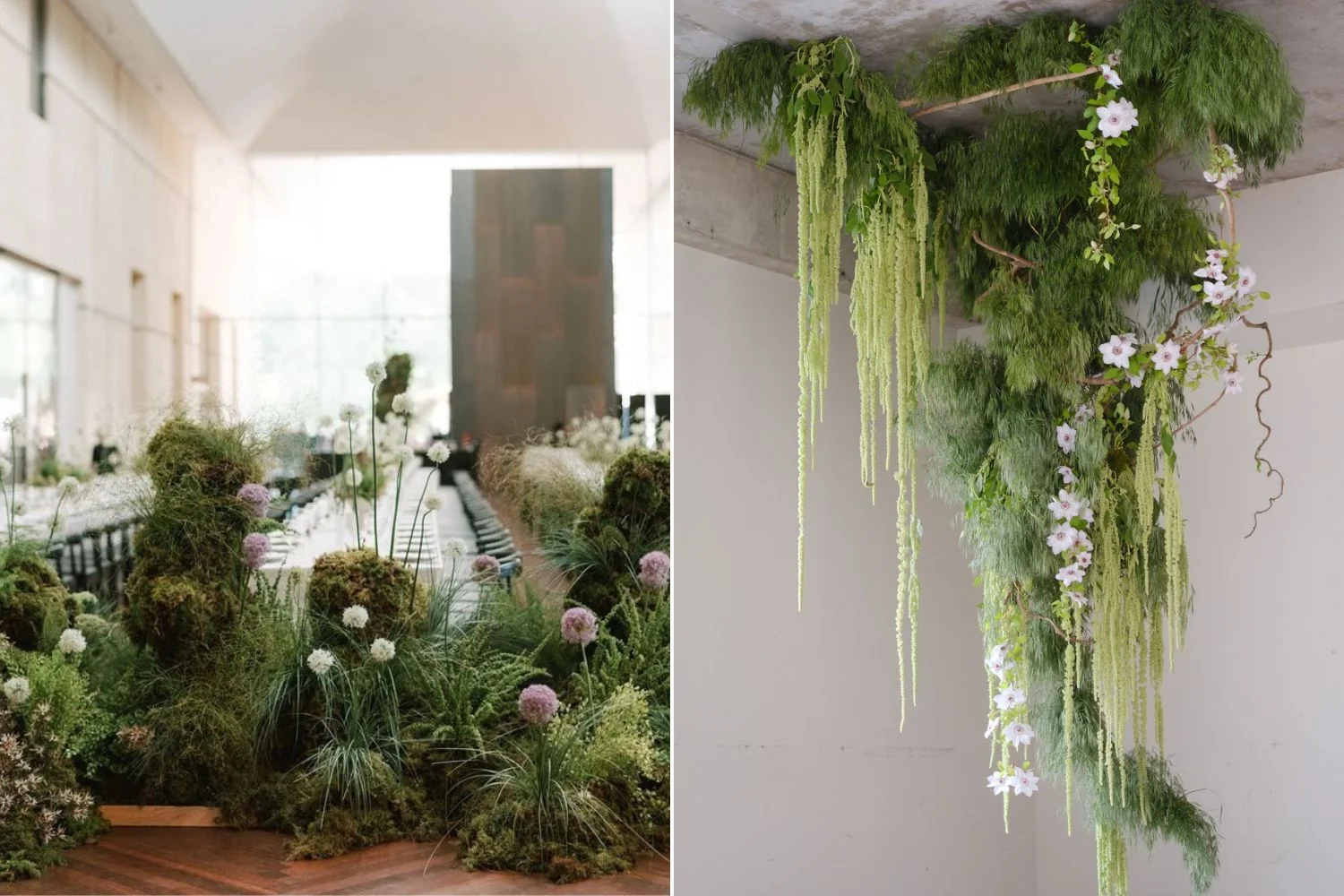
Couples are investing in immersive floral installation ideas that transform venues entirely. These designs often serve multiple purposes throughout the event, supporting both aesthetics and sustainability.
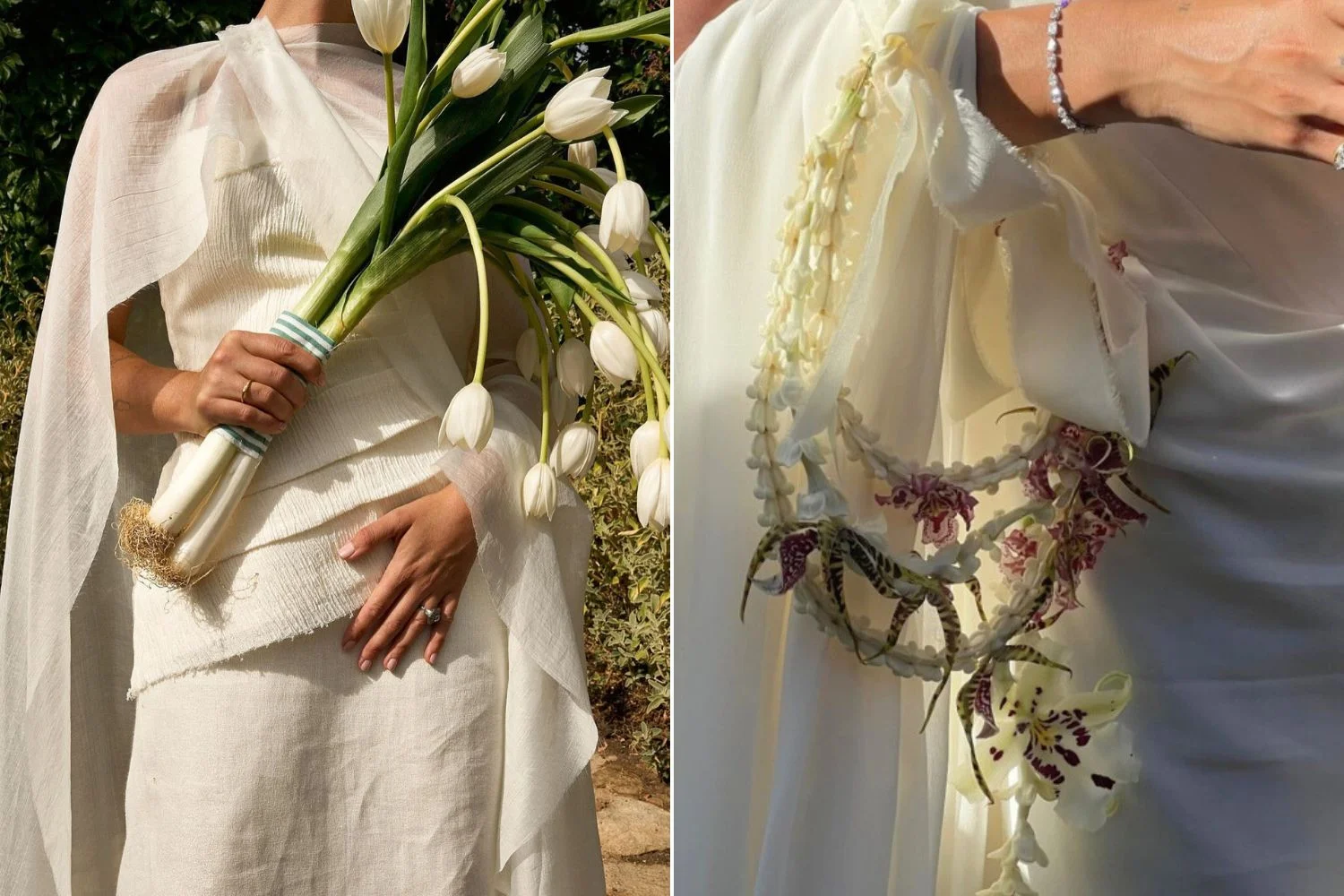
Floating Meadow Installations
Instead of traditional arches, floating meadow installations suspend clusters of blooms overhead.
They create:
A sense of intimacy
Visual drama
Soft movement as air circulates
For a garden party wedding, this feels almost magical. Guests look up and feel surrounded by florals rather than just observing them.
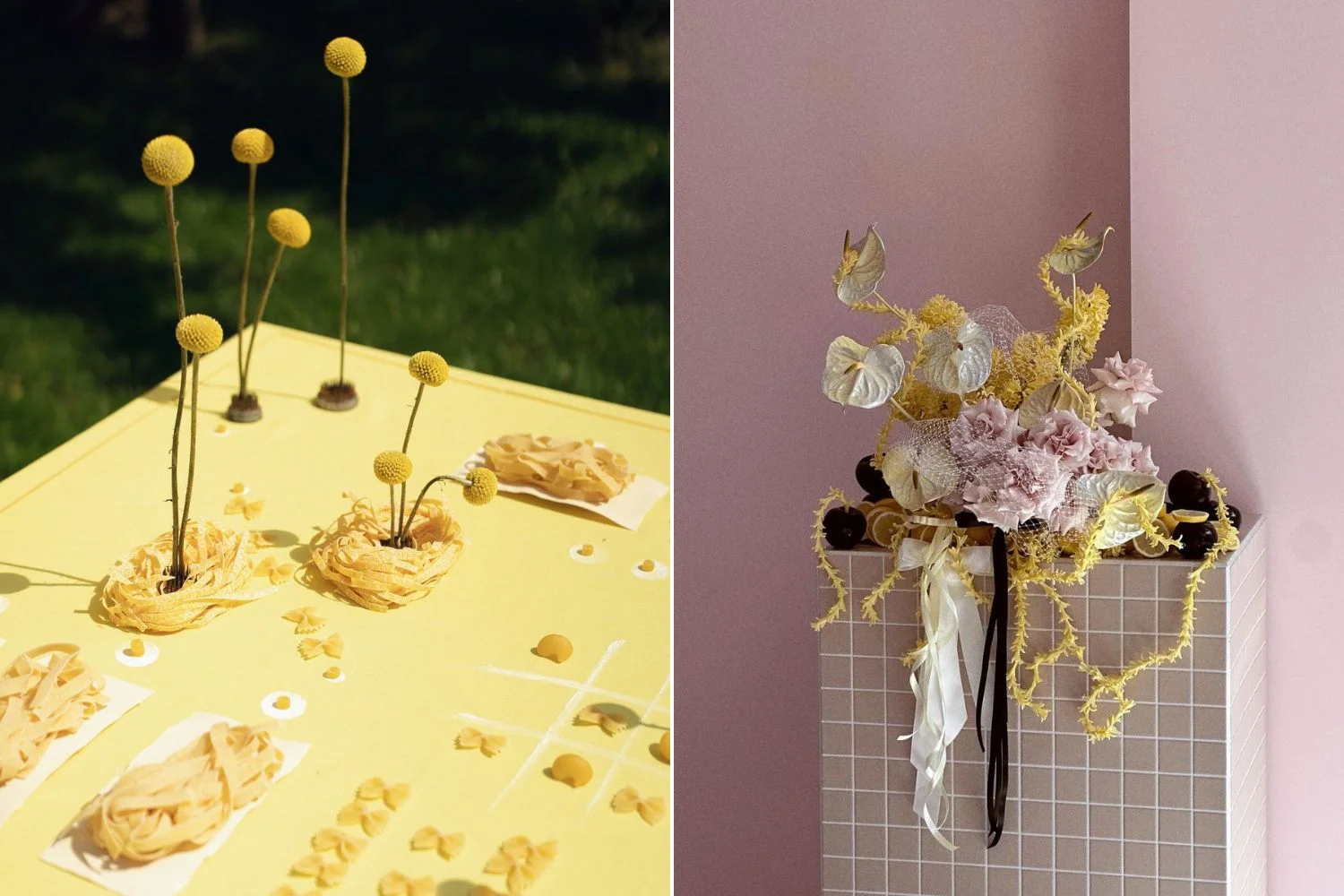
Grounded Aisles & Floral Clouds
Grounded aisle meadows are replacing pew-end arrangements. Flowers line the floor in organic clusters, making the ceremony feel like it’s happening within a garden rather than in front of one.
It’s transformation without overwhelming the space.
Photo (left): AFRIK ARMANDO
Interactive & Multi-Use Floral Decor
Sustainability plays a role here, too.
Installations are designed to be repurposed:
Ceremony arches move behind sweetheart tables
Aisle flowers become reception décor
Large arrangements break into smaller centerpieces
It’s efficient. It reduces waste. And guests rarely notice the transition.
Eco-Friendly Wedding Florals
An eco-friendly wedding in 2026 doesn’t mean sacrificing luxury. In fact, sustainability often inspires more thoughtful design.
Florists are eliminating traditional floral foam, which contains microplastics, and replacing it with reusable or compostable mechanics.
Foam-Free Design Techniques
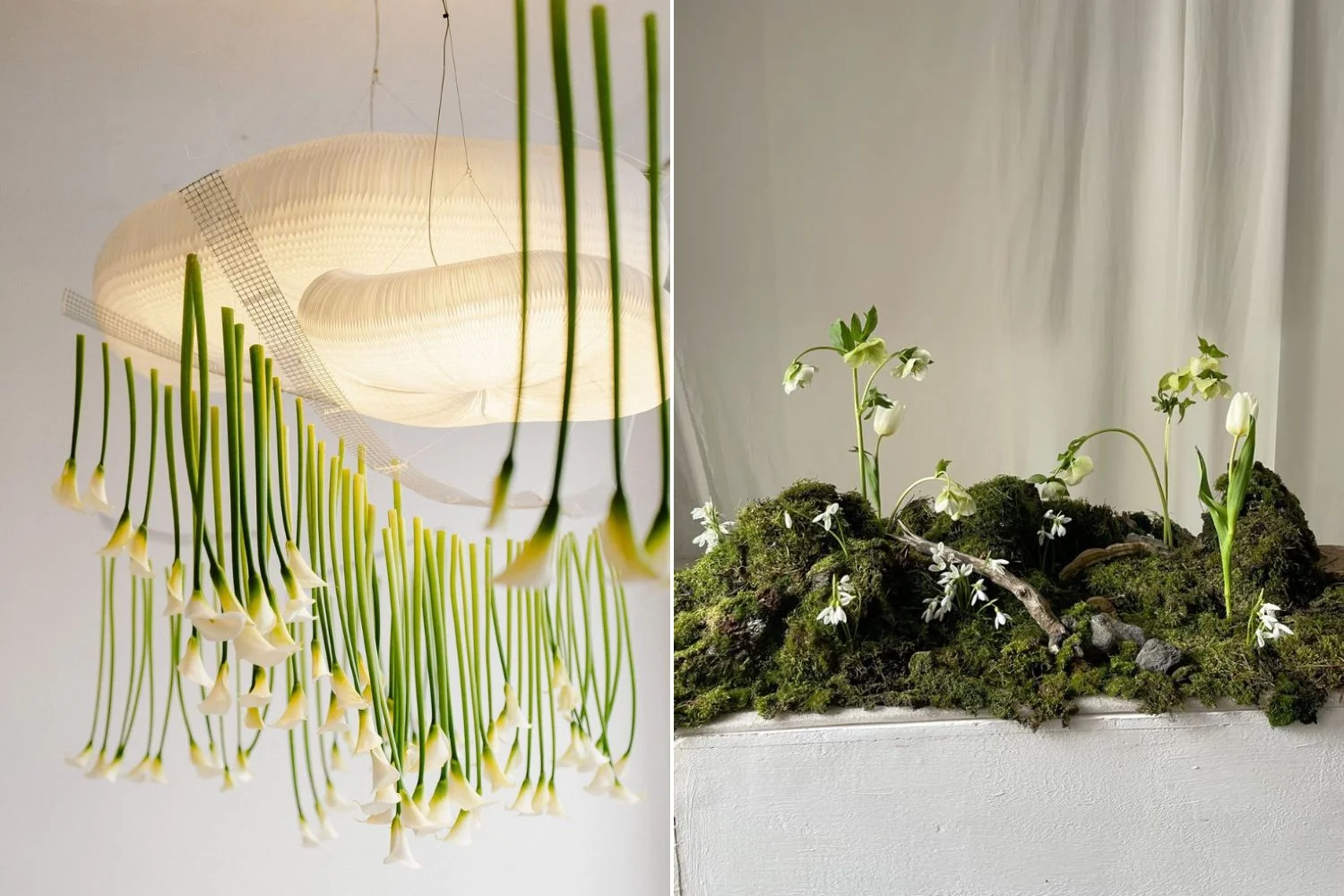
Common alternatives include reusable water trays and moss-based structures.
These methods require skill but significantly reduce environmental impact.
Couples appreciate transparency. Asking your florist about mechanics is no longer unusual—it’s responsible.
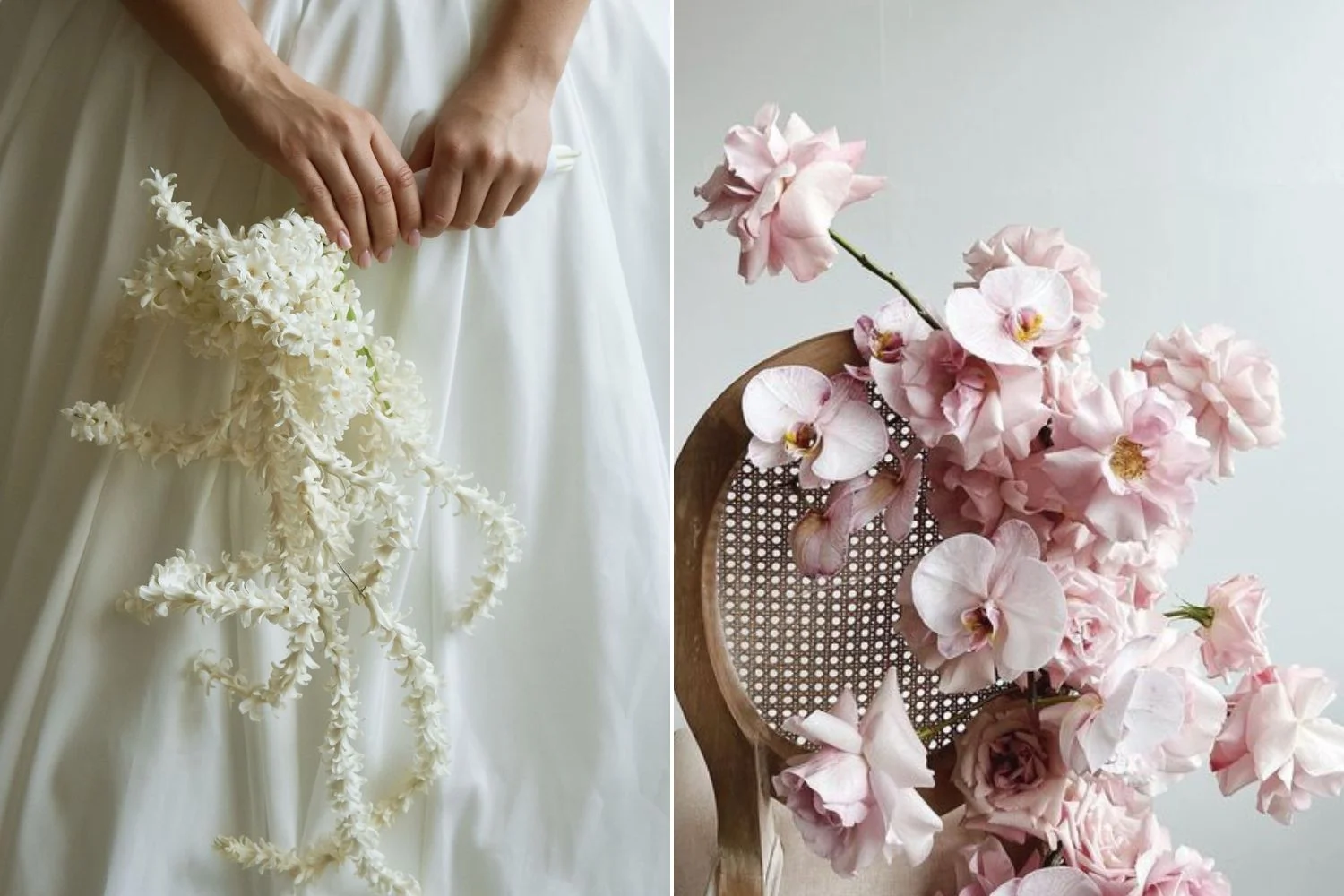
Photo (left): VANESSA CASSAR
Reusable Vessels & Potted Plants
Instead of disposable containers, many weddings now feature ceramic bowls, glass compotes, or potted plants that can be reused or gifted.
Potted herbs and flowering plants double as décor and favors. Guests take them home, extending the life of the celebration.
It’s practical—and charming.
Composting & Flower Donation Programs
After the event, flowers don’t have to go to waste.
Many couples coordinate:
Donation programs to hospitals or care facilities
Composting services
Community redistribution
It’s a beautiful way to let blooms continue bringing joy beyond the wedding day.
Styling Tips for a Modern Garden Party Wedding
The garden party wedding look remains popular—but it’s more refined in 2026.
Instead of rustic overload, couples are choosing tailored details that still feel relaxed.
Blending Fashion & Florals
May bridal style features flowing silhouettes, textured fabrics, and subtle floral embroidery. Coordinating bouquet tones with gown undertones creates visual harmony without looking overly matched.
Bridesmaids wearing varying pastel shades add depth while staying cohesive.
Personalization Through Seasonal Wedding Blooms
Meaningful flowers elevate any design.
Perhaps you got engaged in a field of tulips. Maybe your grandmother adored lilacs. Including those blooms—even subtly—adds emotional depth.
Trends come and go. Personal touches linger.
Spring wedding flowers in 2026 prove that softness doesn’t mean simplicity. Pastels remain central, but they’re layered with texture, sculptural design, and thoughtful color contrast. From airy April wedding ideas to lush May bridal style arrangements, seasonal wedding blooms are shaping celebrations in ways that feel both intentional and deeply romantic.
At the heart of it all is balance. Choose sustainable florals. Embrace eco-friendly wedding practices. Explore floral installation ideas that transform your space without overwhelming it. And most importantly, design a spring bridal bouquet—and an entire floral story—that feels true to you.
This website uses cookies to improve the user experience and optimize its performance. By continuing to use this website, you agree to the use of cookies on this website.
Read more

 share
share