Christmas-Themed Bridal Parties: Color Palettes, Dress Ideas & Accessories
Photo: PINTEREST
The Christmas season already provides a framework: shorter days, softer light, deeper colors, slower pacing. A bridal party styled for Christmas doesn’t compete with that environment. It settles into it.
The strongest Christmas-themed bridal parties don’t look themed. They look intentional. Fabrics feel heavier. Colors feel grounded. Accessories feel chosen rather than added. When everything aligns, the bridal party becomes part of the atmosphere instead of a visual statement standing apart from it.
This approach allows the wedding to age well. Photos don’t lock the day into a trend or a novelty. They show a moment that belonged exactly where it was: winter, evening, celebration, warmth against the cold.
Seasonal Color Language
Color choices during Christmas weddings behave differently than they do in other months. Winter light absorbs brightness and rewards depth. Soft colors turn muted. Strong colors turn elegant.
A bridal party styled for this season works best when the palette respects that shift.
Classic Depth
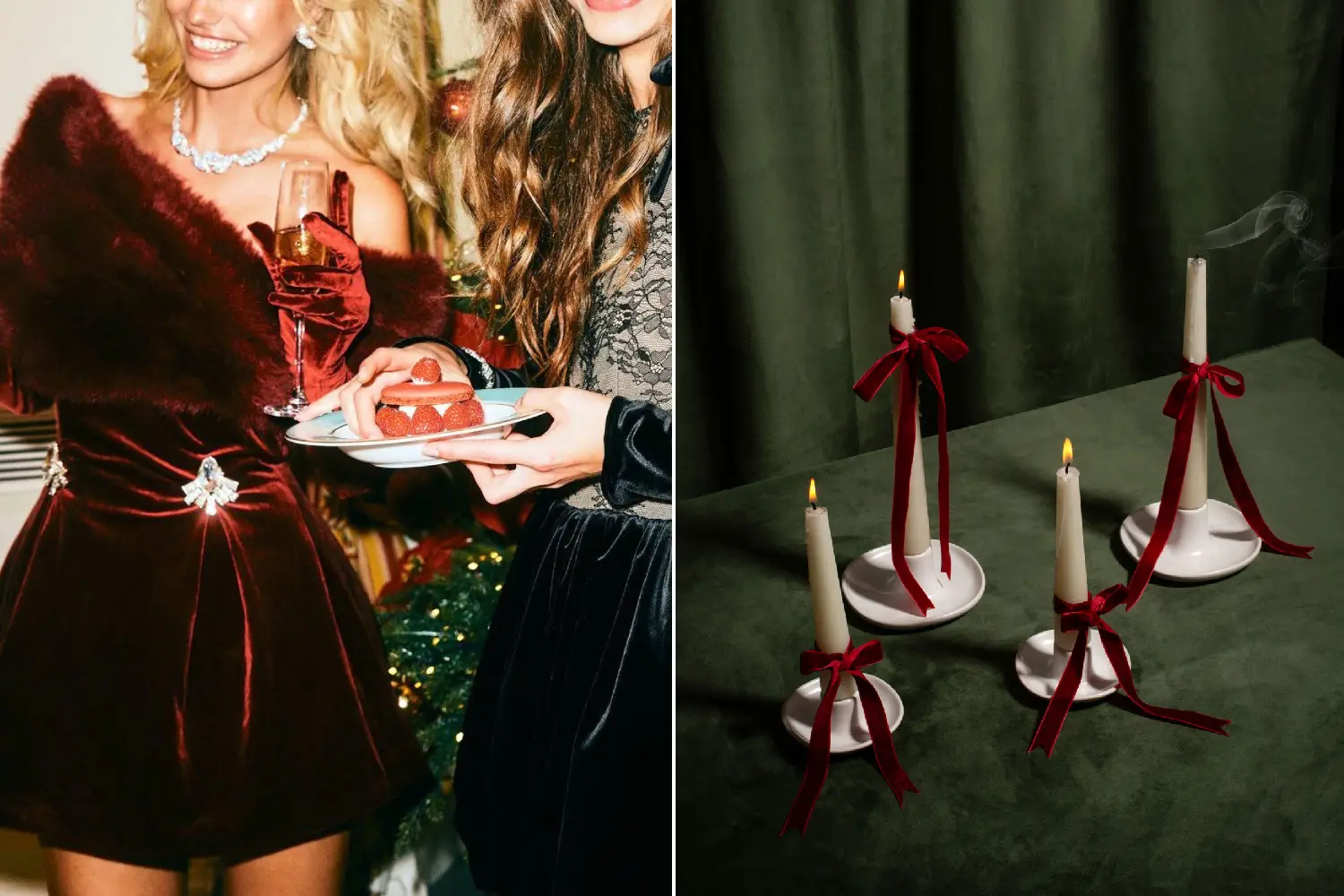
Traditional Christmas colors—red, green, gold—can feel heavy when treated literally. When those same colors are translated into deeper shades, they become refined.
Burgundy dresses paired with neutral florals settle naturally into winter settings. Emerald accents appear richer under candlelight than they do under daylight. Gold reads warm rather than shiny when it’s brushed, matte, or aged.
This palette works quietly. Nothing calls attention to itself. The color story unfolds across the room rather than announcing itself at once.
Photo: PINTEREST
Soft Winter Light
White, ivory, champagne, and silver behave differently in winter than they do in summer. They reflect rather than glow. They soften instead of brighten.
Bridesmaids dressed in ivory satin or matte chiffon create a visual calm, especially in venues filled with wood, stone, or warm lighting. Silver details—hair pins, earrings, cufflinks—add clarity without contrast.
This palette feels particularly suited to evening ceremonies. Under candlelight, it becomes layered rather than flat.
Photo: PINTEREST
Dark Greens and Wine Tones
Forest green and wine tones anchor a Christmas bridal party without pulling attention away from the couple or bride. These shades sit comfortably beside winter florals, dark suits, and evergreen décor.
When paired together, they create balance. When paired separately, they allow for variation within the bridal party while staying cohesive.
This color direction works well across formal and semi-formal settings. It adapts without losing character.
Photo: PINTEREST
Muted Romance
Blush, taupe, champagne, and pale metallics translate Christmas into softness. These colors don’t announce winter; they suggest it.
A bridal party dressed in these tones feels calm and intentional, especially in venues with neutral architecture or minimalist décor. Metallic accents appear as texture rather than sparkle.
This palette suits daytime winter weddings or indoor spaces with natural light.
Photo: PINTEREST
Cool Contrast
Navy paired with silver or soft gray brings structure to winter styling. Navy absorbs light, grounding the bridal party visually. Silver introduces clarity without warmth.
This palette often appears cleaner and more architectural. It works particularly well in modern venues, historic buildings, or urban spaces.
Photo: PINTEREST
Natural Greens
Green paired with beige, stone, or warm gray creates a grounded winter look. This combination feels less formal and more organic, even in structured spaces.
It pairs well with greenery-forward florals, minimal décor, and textured fabrics. The result feels seasonal without referencing the holiday directly.
Photo: PINTEREST
Bridesmaid Dresses
Fabric matters more than silhouette in winter. A simple cut in the right fabric will always outperform an elaborate design in the wrong one.
Velvet Weight
Velvet holds light differently. It deepens color, softens edges, and adds dimension without detail. In winter settings, velvet dresses appear rich even when the design is minimal.
Jewel tones work best. Velvet in muted shades can flatten under low light, while deeper hues come alive.
Velvet also photographs well from every angle, which matters more than trend alignment.
Photo: PINTEREST
Satin and Structure
Satin introduces clarity. It reflects light in a controlled way, creating clean lines and quiet elegance. In winter weddings, satin feels intentional rather than delicate.
Structured satin dresses hold shape throughout the day, even in cooler temperatures. They pair well with wraps and heavier accessories without looking bulky.
Photo: PINTEREST
Chiffon and Movement
Chiffon still has a place in winter, particularly when layered or used in darker tones. Movement softens heavier settings and brings balance to static spaces.
Chiffon works best when paired with long sleeves, higher necklines, or heavier footwear to ground the look.
Photo: PINTEREST
Sleeves and Shape
Long sleeves aren’t a requirement, but they align naturally with the season. They add structure, warmth, and visual continuity.
Short sleeves and sleeveless designs work when paired with intentional layers. Wraps, shawls, and capes turn simple dresses into winter-ready looks without altering the base design.
Photo: PINTEREST
Variation with Purpose
Uniform dresses can feel rigid in winter. Variation within a controlled palette feels more natural.
Different necklines, sleeve lengths, or fabrics in the same color family create depth. The bridal party reads as cohesive rather than identical.
This approach also allows individual comfort without visual disruption.
Photo: PINTEREST
Jewelry with Weight
Winter jewelry works best when it has presence without shine. Pearls, brushed gold, soft crystals, and matte finishes reflect light gently.
Statement pieces feel less appropriate than anchored designs. Earrings, hair pins, or bracelets that sit close to the body maintain balance.
Photo: PINTEREST
Wraps and Layers
Faux fur wraps, wool shawls, and structured capes add depth without clutter. These pieces photograph as part of the outfit rather than as additions.
Neutral tones keep them versatile. Texture carries the visual interest.
Hair Details
Hair accessories in winter benefit from simplicity. Metallic combs, crystal pins, or subtle leaf shapes feel seasonal without symbolism.
Oversized or literal designs often pull attention away from the overall styling.
Photo: PINTEREST
Footwear for Winter
Closed-toe shoes, block heels, and refined boots suit winter venues better than delicate designs. Stability matters in cold settings.
Color coordination matters more than exact matches. Neutrals anchor the look.
Photo: PINTEREST
Small Additions
Clutches, gloves, and scarves introduce texture without dominating the outfit. These pieces often appear in candid photos, making their design more important than expected.
Simple shapes outperform novelty styles.
Photo: PINTEREST
Florals and Greenery
Winter florals anchor the bridal party visually. They bridge attire and décor without overwhelming either.
Roses, anemones, ranunculus, hellebore, and amaryllis hold shape in colder temperatures. Their structure suits winter palettes. Color choice matters more than volume. Depth outperforms abundance.
Pine, cedar, fir, and eucalyptus introduce scent and texture. Used sparingly, they feel fresh rather than festive. Berries and pinecones add contrast when scaled appropriately.
Ribbon choices affect the entire bouquet. Velvet adds softness. Silk adds clarity. Metallic thread adds quiet structure. Bouquets feel complete when their finishes echo the bridal party styling.
Photo: PINTEREST
Skin and Light
Winter makeup benefits from hydration and subtle luminosity. Heavy powders flatten under low light.
The goal is skin that reflects warmth rather than shine.
Lips and Tone
Deeper lip colors align naturally with winter palettes. When used, the rest of the makeup should remain restrained.
Neutral tones remain timeless and photograph consistently.
Photo: PINTEREST
Weather-Aware Styling
Hair choices should account for wind, layers, and movement. Structured styles age better than overly loose designs.
Accessories should support the style, not complicate it.
Color Echoes
Repeating tones between attire and décor creates continuity. This repetition doesn’t need to be obvious. It needs to be consistent.
Light as Design
Candles, lanterns, and soft overhead lighting change how colors read. Winter palettes rely on this interaction.
Lighting should support the depth of color, not flatten it.
Photo: PINTEREST
Avoiding Literal Themes
Christmas influence works best when it shapes mood rather than imagery. When symbols disappear, longevity appears.
Comfort as Priority
Cold affects posture, expression, and energy. Layers and appropriate footwear improve more than comfort—they improve presence.
Vendor Timing
Holiday schedules compress timelines. Early booking and clear communication prevent rushed decisions.
Christmas-themed bridal parties succeed when they reflect the season rather than perform it. Color, fabric, and texture do the work quietly. Accessories support rather than announce. Every element belongs where it is.
When styling aligns with winter’s natural rhythm, the result feels grounded and lasting. The bridal party becomes part of the setting, the photos hold their relevance, and the wedding carries its season without ever naming it.
This website uses cookies to improve the user experience and optimize its performance. By continuing to use this website, you agree to the use of cookies on this website.
Read more

 share
share



.webp)
.webp)
.webp)
.webp)
.webp)
.webp)
.webp)
.webp)
.webp)
.webp)
.webp)
.webp)
.webp)
.webp)
.webp)
.webp)
.webp)
.webp)


