Just Engaged? The First 10 Things Every Couple Should Do
Photo: VICTORIA KAIT
That ring on your finger feels a little unreal, right? One minute you’re posting a “we got engaged!” selfie, the next minute your inbox is flooded with heart emojis, venue ads, and very serious questions like “So… when’s the date?” Welcome to the magical, slightly chaotic world of being newly engaged. It’s exciting, emotional, and yes—just a tiny bit overwhelming.
Before you dive headfirst into color palettes and Pinterest boards, it helps to slow down and focus on what really matters first. Engagement isn’t just the pre-party before the wedding; it’s the foundation stage. The choices you make now will shape not only your wedding day, but also how smoothly you get there. This guide walks you through the first 10 things every couple should do after getting engaged, helping you move forward with confidence, clarity, and way less stress.
Celebrate the Engagement
Before spreadsheets, before venue tours, before someone asks you about chair covers—pause. You’re engaged. That’s huge. This moment deserves more than a rushed Instagram caption and a quick “thank you” text to relatives. Too many couples skip straight to logistics and miss the joy entirely.
Celebrating your engagement doesn’t have to mean throwing a massive party. It can be as simple as a quiet dinner together, a weekend getaway, or a champagne toast at home while you replay the proposal story. The goal is to mentally mark this life milestone before it turns into a to-do list.
This early celebration also strengthens your emotional connection. It reminds you that the wedding is about you two, not timelines or traditions. When planning gets stressful later—and it will—this memory becomes a grounding moment. So yes, celebrate first. The planning can wait a few days.
Photo: VICTORIA KAIT
Share the News Thoughtfully
Once you’ve had your private “we’re engaged!” moment, it’s time to tell the world—or at least the people who matter most. How and when you share your engagement news can actually prevent misunderstandings and hurt feelings later on.
Traditionally, immediate family and close friends should hear the news directly from you. A phone call, video chat, or in-person visit goes a long way. Social media announcements are fun, but nobody wants to find out they’re gaining a new in-law through Instagram stories.
After the inner circle knows, feel free to go public. Whether it’s a professional photo, a candid selfie, or a simple caption, make it feel like you. There’s no rule that says you must post within 24 hours. Share when it feels right, not when the algorithm demands it.
Photo: VICTORIA KAIT
Talk About Your Wedding Vision Together
Before anyone else weighs in, sit down together and talk about what you both actually want. This conversation doesn’t need to be super detailed yet—it’s more about direction than decisions. Big wedding or intimate? Local or destination? Traditional or non-traditional?
You may be surprised by how different your visions are—and that’s okay. One of you might dream of a black-tie affair, while the other imagines a backyard celebration with tacos. The key is listening without judgment and finding common ground early.
This discussion sets boundaries for future planning. When opinions start flying in from family or friends, you’ll already know what matters most to you as a couple. Think of this as creating your shared wedding compass. You don’t need the whole map yet, just a direction.
Photo: VICTORIA KAIT
Set a Realistic Wedding Budget Early
Money talk isn’t romantic, but it’s necessary. Setting a budget early is one of the smartest things you can do after getting engaged. It influences every decision—from guest count to venue to whether you can splurge on that live band.
Start by looking at your combined finances and discussing who, if anyone, will contribute financially. Some families help, some don’t, and assumptions can lead to awkward conversations later. Get clarity now, even if the numbers aren’t final.
Once you have a general budget range, break it down into categories like venue, food, attire, photography, and extras. Here’s a simple example:
Category
Estimated % of Budget
Venue & Catering
40–50%
Photography & Video
10–15%
Attire & Beauty
8–10%
Entertainment
5–10%
Decor & Flowers
8–10%
Miscellaneous
5–7%
Budgets aren’t about limitation—they’re about freedom to choose wisely.
You don’t need an exact date yet, but having a rough timeline helps guide your next steps. Are you thinking six months, a year, or two years from now? Each option comes with its own pros and cons.
Short engagements can be intense but exciting, while longer ones offer flexibility and sometimes better vendor availability. Season also matters. A summer wedding has different planning needs than a winter celebration, especially depending on location.
Discuss life factors too. Work schedules, school, family obligations, and even emotional bandwidth play a role. There’s no “correct” length for an engagement. The best timeline is the one that fits your lives, not someone else’s expectations.
You don’t need a full binder on day one, but you do need a system. Information piles up fast, and disorganization leads to missed emails, forgotten deadlines, and unnecessary stress.
Choose tools that work for both of you. This could be a shared Google Drive folder, a wedding planning app, or a good old-fashioned notebook. The key is consistency. Everything related to the wedding goes in one place.
Start collecting inspiration, contracts, budget notes, and vendor ideas. Even saving email conversations now will help later when you’re trying to remember who said what. A little organization early saves hours of chaos later. Future you will be very grateful.
This step feels harmless until it’s suddenly… not. Guest lists can be emotional, political, and surprisingly complicated. But creating a preliminary list early is essential because your guest count affects budget, venue size, and overall vibe.
Start broad. Write down everyone you’d ideally invite without worrying about limits. Then, review the list together and talk through priorities. Immediate family and close friends come first. From there, consider extended family, coworkers, and plus-ones.
This isn’t a final list, and that’s okay. Think of it as a working document. But even a rough estimate—50 guests vs. 150 guests—makes planning much more realistic from the start.
Photo: VICTORIA KAIT
Research Venues and Availability
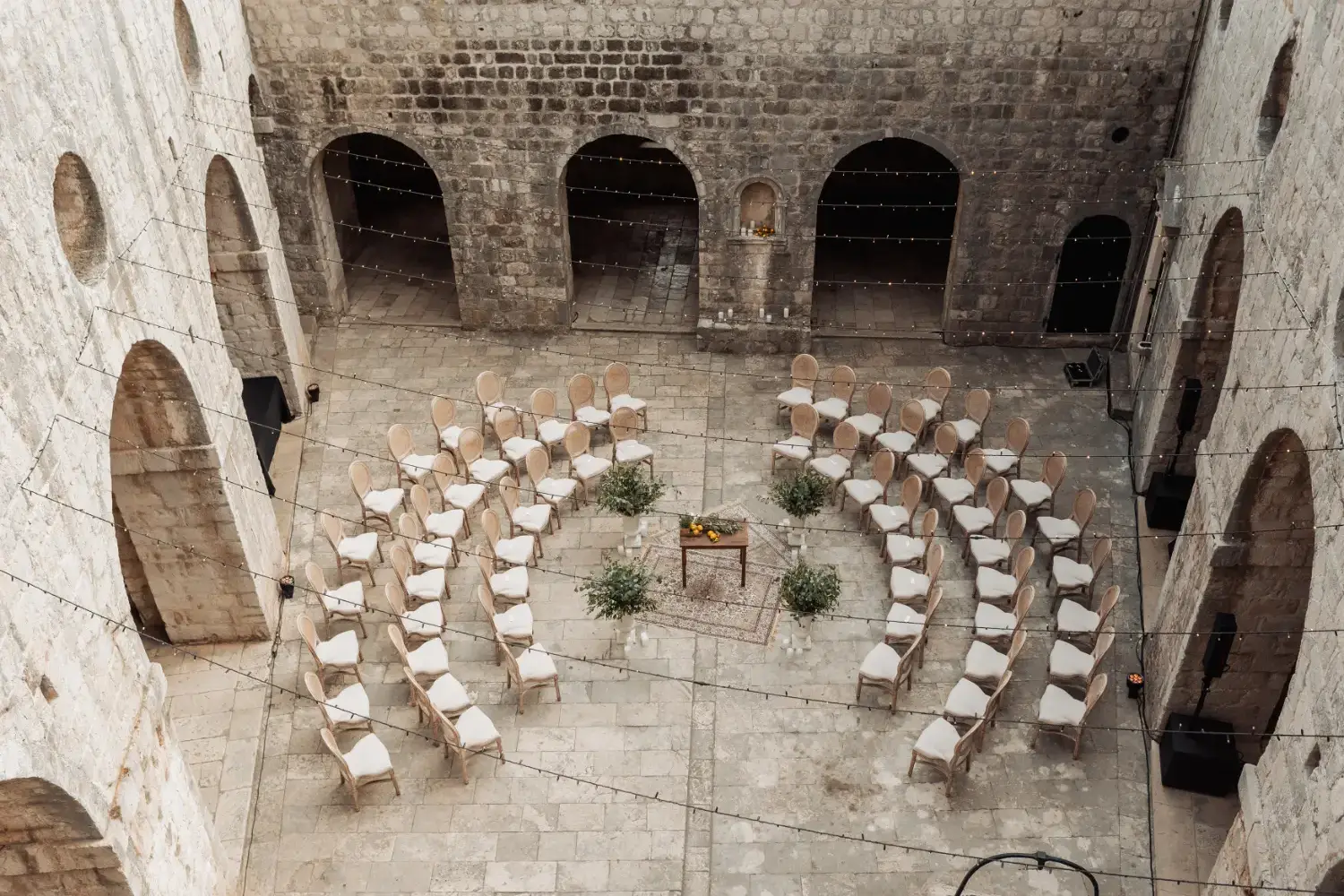
Once you have a rough budget, timeline, and guest count, venue research can begin. This phase is about understanding what’s out there and what aligns with your vision.
Look at different venue types: hotels, barns, restaurants, gardens, destination resorts. Pay attention to what’s included—some venues offer catering and rentals, others are blank slates. Availability also varies wildly, especially for popular dates.
Create a shortlist of favorites and schedule tours when you’re ready. Even if you don’t book right away, seeing venues in person helps solidify your preferences and narrow your options.
Situated in the heart of the Bordeaux vineyards, Château de Garde in Moulon, Gironde, offers a truly remarkable setting. Just ten kilometers from the village of Saint-Émilion, this enchanting estate provides the perfect backdrop for an unforgettable event.
Guests can be welcomed for a minimum stay of three days and two nights, allowing couples to bring their dream wedding to life. Surrounded by six hectares of vineyards, Château de Garde features a spacious park ideal for hosting secular ceremonies, cocktail receptions, or outdoor dinners.
The entire estate is exclusively reserved, granting full access to all event spaces and accommodations. A total of 36 on-site sleeping arrangements are included in the price, with the capacity to host up to 50 guests.
For couples seeking authentic charm combined with timeless elegance for their wedding, Finca Morneta, a traditional Mallorcan estate located in the heart of Mallorca with origins dating back to the 13th century, offers an ideal setting. Recently, the finca has undergone a complete renovation, thoughtfully updated to meet modern standards while preserving its historic character.
The estate features a variety of character-filled interiors with high ceilings and elegant arches, alongside beautifully maintained outdoor spaces. The 2,000 m² garden includes a large pond, a waterfall, and an additional swimming pool, creating a stunning environment for celebrating a special occasion.
Whether the celebration takes place in the expansive garden, by the pool, or within the refined indoor spaces is entirely a matter of personal style and preference.
Celebrate a once-in-a-lifetime union along the radiant coastline of the Athenian Riviera, with the endless blue of the sea as a breathtaking backdrop. Weddings and special events hosted at the 5-star Grand Resort Lagonissi leave a lasting impression, creating cherished memories for every guest long after the celebration ends.
Set on the sun-kissed waterfront of Athens’ southern suburbs, the Grand Resort Lagonissi enchants couples with its spectacular surroundings and romantic atmosphere. Offering tailored wedding packages and panoramic sea views, the resort provides some of the most stunning venues in Athens for an unforgettable “I do.”
From intimate ceremonies to grand celebrations—including weddings, receptions, christenings, galas, birthdays, or private events for up to 1,200 guests—this exceptional destination promises to surpass expectations, delivering extraordinary moments within an atmosphere of refined 5-star luxury.
There’s a common myth that wedding planners are only for huge, expensive weddings. In reality, planners often save couples money by helping avoid costly mistakes and negotiating with vendors.
If a full-service planner isn’t in your budget, consider a partial planner or day-of coordinator. These professionals manage timelines, logistics, and vendor communication so you don’t have to. That means less stress for you and your families.
Think about your personalities and schedules. If you’re detail-oriented and love planning, you may enjoy doing it yourself. If the idea already makes you tired, a planner could be one of the best investments you make.
Amid all the excitement, don’t forget the most important part: you’re not just planning a wedding, you’re planning a marriage. Take time to talk about what that actually means for both of you.
Discuss expectations around communication, finances, careers, family, and future goals. These conversations don’t have to be heavy or scary. Think of them as alignment check-ins, not interrogations.
Some couples choose to do premarital counseling or guided conversations at this stage, which can be incredibly helpful. A strong marriage foundation makes wedding planning feel lighter, more meaningful, and way less stressful.
Getting engaged is one of life’s most joyful milestones, but what you do next truly matters. The first steps after engagement aren’t about booking the most expensive venue or choosing the perfect font—they’re about communication, clarity, and connection. When you take time to celebrate, talk openly, and plan intentionally, everything else falls into place more naturally.
As you move forward, remember that this season is meant to be enjoyed, not endured. You don’t need to have all the answers right away. Focus on the big picture, support each other, and take things one step at a time. Your wedding day will come, but this chapter—the just engaged chapter—is special in its own way. Don’t rush past it.
This website uses cookies to improve the user experience and optimize its performance. By continuing to use this website, you agree to the use of cookies on this website.
Read more

 share
share




.webp)
.webp)
.webp)
.webp)

.webp)
.webp)
.webp)
.webp)
.webp)
.webp)


